



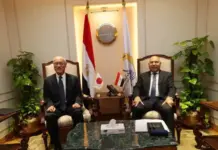

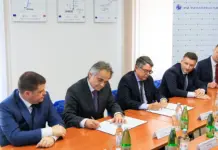









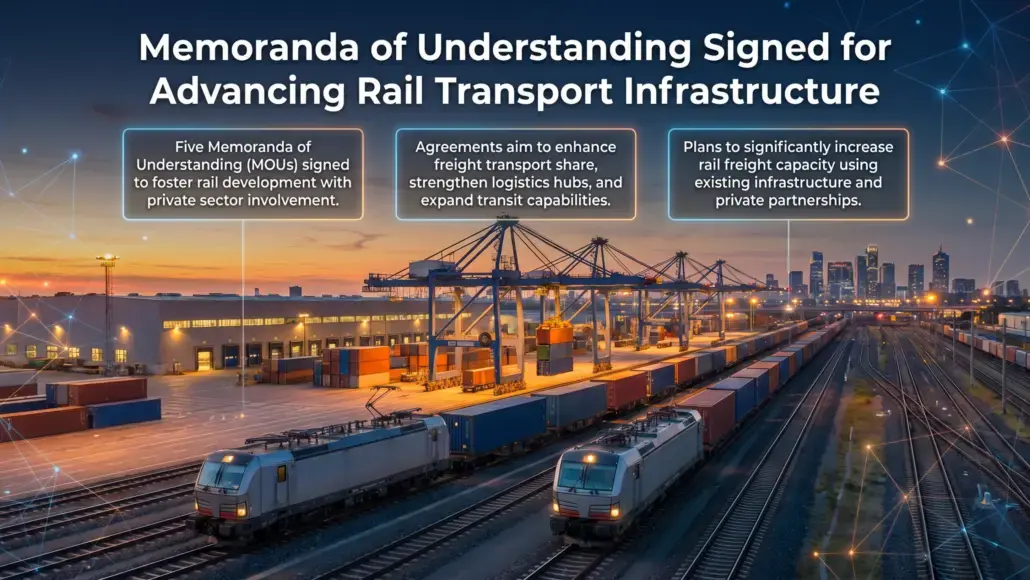
Five significant Memoranda of Understanding (MOUs) have been executed, marking a concerted effort to advance the nation’s rail transport capabilities. The signing ceremony was presided over by the Minister of Transport and Urban Development, alongside key officials including the Managing Director of the Islamic Republic of Iran Railways, the Head of the Mostazafan Foundation, and prominent representatives from the private sector. These collaborative agreements are specifically designed to foster rail transport upgrade in infrastructure, elevate the proportion of freight carried by rail, bolster national logistics networks, expand transit operations, and align with overarching national transport strategies.
One of the newly established rail transport upgrade MOUs centers on the advancement and fortification of logistics, transit, and rail transport cooperation at the Sarakhs Border Logistics Center. This partnership will involve the development of rail infrastructure within the Sarakhs Free Zone, spanning over 1,300 hectares across three distinct logistics levels. The initiative aims to boost the rail transport capacity of the Sarakhs Border Logistics Center and streamline customs procedures through the implementation of essential equipment, such as X-ray machines and weighbridges.
Further strengthening the national logistics framework, an MOU was formalized between the Railways Company and the Mostazafan Foundation of the Islamic Revolution. This agreement focuses on the design, establishment, development, investment in, and operation of rail freight and container logistics terminals throughout the national rail network. The implementation of this cooperation is slated for key logistics hubs including Khaf, Aprin, and Zahedan, leveraging the combined technical and economic strengths of both entities. This partnership directly contributes to enhancing freight transport efficiency.
In a move to expand terminal operations, a logistics cooperation MOU was also signed between the Railways Company and Hopad Darya Shipping Agency and Port Services Company, representing the Shipping Logistics Holding. This agreement aims to develop and operate rail freight and container logistics terminals at strategic locations, including the nation’s ports and the Aprin Logistics Center. The synergy created through this collaboration is expected to improve the flow of goods within the logistics infrastructure.
Another key rail transport upgrade agreement involves the Iran Aluminum Company (Iralco), with an MOU dedicated to enhancing the rail transport of the company’s raw materials and finished products. This collaboration will encompass planning for wagon provision, loading and unloading procedures, operational mechanisms, and the determination of rail transport tariffs.
The Jahad-e-Esteglal Institute is also partnering with the Railways Company through an MOU aimed at developing import routes and facilitating the transport of essential commodities via the rail network. This initiative aligns with strengthening national defense preparedness, diversifying supply sources for basic goods, improving supply chain resilience, and enacting government policies related to food security. The expected outcomes include increased rail freight capacity for essential goods, reduced logistics costs, the establishment of adjacent storage facilities, and a greater reliance on rail for freight transport, contributing to fuel savings and reduced environmental impact.
The Minister of Transport and Urban Development highlighted the critical role of rail transport as a fundamental pillar for national development. The ministry has outlined plans to significantly increase the country’s rail freight capacity, projecting a rise from the current 6.9 million tons to 18 million tons by effectively utilizing existing infrastructure. This ambitious target is a direct outcome of the enhanced collaboration with the private sector and the strategic MOUs signed.
