














Egypt has moved forward with plans to enhance its urban transport infrastructure, with presidential approval granted for a new Chinese concessional loan. This financing is earmarked for the crucial third phase of the Egypt Cairo light rail network, an initiative aimed at serving 10th of Ramadan City. The approval underscores the ongoing strategic importance of the Cairo light rail corridor within Egypt’s broader objectives for industrial and urban development. Furthermore, it signifies a deepening of transport cooperation between Egypt and China. Issues of debt sustainability, project execution, and economic impact remain points of close attention for investors.
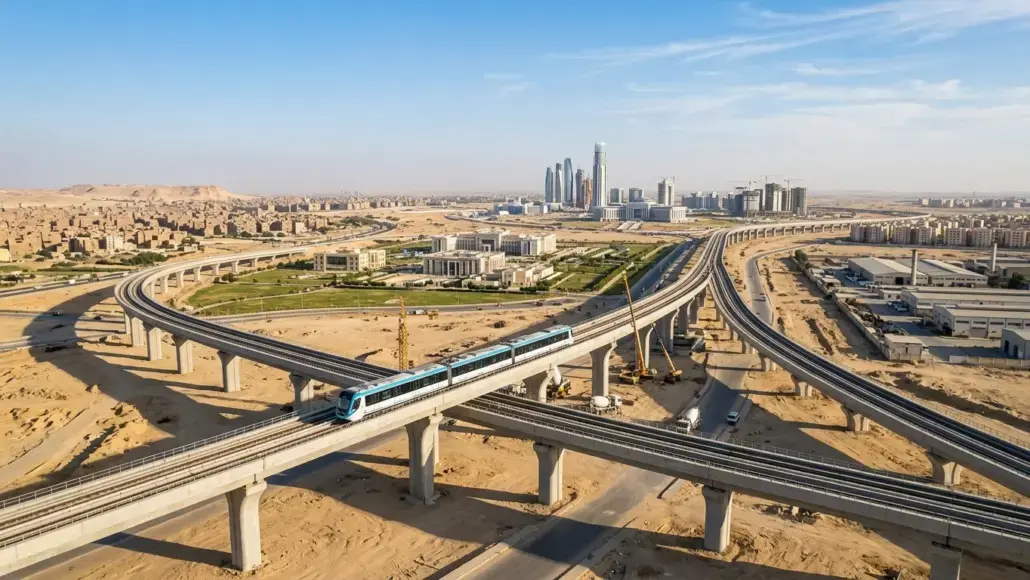
The concessional loan, valued at approximately 1.45 billion yuan (equivalent to US$204 million), received its official endorsement through Presidential Decree No. 652 of 2025, as published in the Official Gazette. This funding will be instrumental in advancing the third phase of the Light Rail Transit (LRT) project. The project is designed to extend an existing network that links Greater Cairo with the New Administrative Capital and the vital industrial and residential centre of 10th of Ramadan City.
While specific details regarding the Chinese lender and the implementing agency have not been publicly disclosed, the agreement firmly positions China as a central partner in financing and delivering a transport system vital for connecting burgeoning urban communities and production zones with the wider Cairo metropolitan area. This project is emblematic of a larger pattern of cooperation between Egypt and China, encompassing rail infrastructure, urban mobility solutions, and extensive development corridors.
For Egyptian policymakers, the LRT represents a cornerstone in their strategy to improve connectivity between Cairo and the rapidly expanding urban and industrial regions situated to the east of the capital. The utilization of concessional financing further highlights China’s consistent role in bolstering major infrastructure projects across both Africa and the Middle East. Although precise terms are yet to be detailed, concessional loans typically offer more favorable conditions than commercial borrowing, including lower interest rates and extended repayment periods. This approach assists Egypt in its continued investment in strategic infrastructure while managing short-term pressures on public finances.
The announcement of this new financing comes at a time of ongoing discourse concerning the long-term economic implications of Chinese-funded infrastructure projects. Concessional loans, while capable of accelerating project delivery and alleviating upfront funding constraints, also contribute to external debt obligations. Critically, these projects necessitate the generation of substantial economic returns over their lifespan. For Egypt, a primary consideration is whether the expanded Egypt Cairo light rail network will effectively support industrial decentralization, enhance mobility for its citizens, and stimulate economic activity along the corridor.
Robust transport links have the potential to encourage both businesses and residents to relocate to emerging urban centers, thereby alleviating pressure on the densely populated Cairo metropolitan area. This initiative is integral to a wider strategy focused on modernizing transport networks, mitigating congestion, and fostering growth in new cities. The ultimate success of the Egypt Cairo light rail project will depend significantly on the efficacy of station integration with industrial zones, logistics facilities, and residential developments in 10th of Ramadan City and its adjacent areas. If executed effectively, the corridor could become a catalyst for transit-oriented development, attracting investment in warehousing and manufacturing, and improving the mobility of the workforce between Cairo and its eastern growth centers.
This particular transaction also sheds light on a growing trend among African nations to leverage diverse funding sources for urban transformation. Chinese capital continues to be a substantial contributor to rail and mass transit projects. However, it is increasingly complemented by financing from Gulf investors, multilateral institutions, and domestic sources. Such diversification enhances financial flexibility and strengthens governments’ capacity to align infrastructure investments with their overarching industrial and economic development objectives.
