












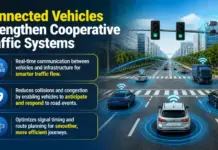






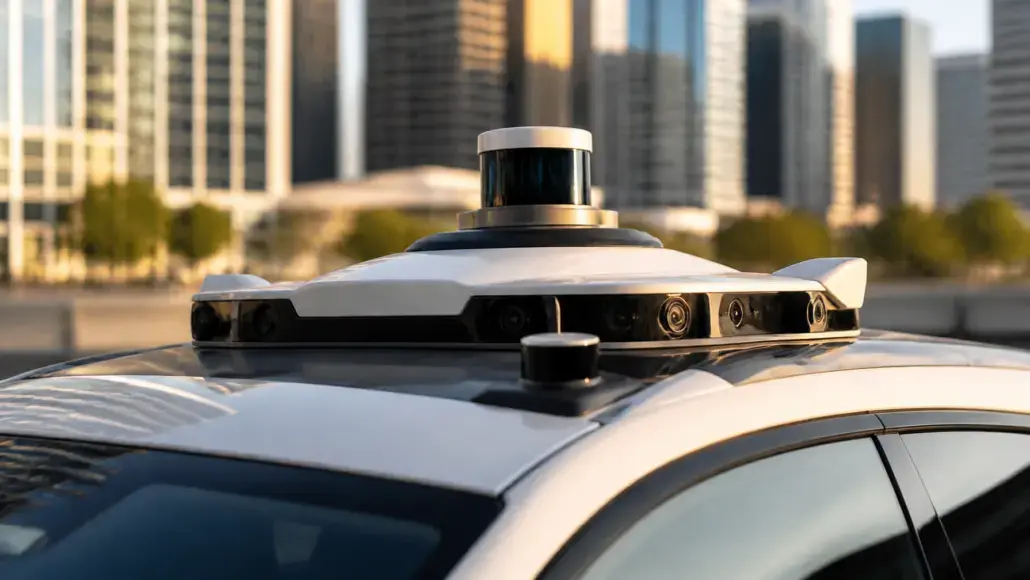
The quest for fully autonomous mobility is, at its core, a challenge of perception. For a vehicle to navigate the complex and often unpredictable environment of a city street or a high-speed highway, it must possess a level of situational awareness that exceeds that of a human driver. This is achieved through a sophisticated suite of autonomous vehicle sensors, a multi-modal array that acts as the vehicle’s eyes and ears. Transport Advancement notes that by combining the strengths of LiDAR, radar, and camera technology through advanced sensor fusion, self-driving systems can build a high-fidelity, 360-degree model of their surroundings, enabling safe and reliable navigation in all weather and lighting conditions. For the autonomous industry, the continuous evolution of these sensor technologies is the key to unlocking Level 4 and Level 5 autonomy.
Each of the primary autonomous vehicle sensors operates on a different physical principle, providing a unique and complementary perspective on the environment. Cameras, utilizing high-resolution CMOS image sensors, are the primary source of semantic information. They can recognize colors, read traffic signs, and interpret the complex social cues of pedestrians and cyclists. However, cameras are inherently limited by depth perception and performance in low-light, glare, or adverse weather conditions like dense fog. To compensate for these weaknesses, autonomous systems integrate LiDAR (Light Detection and Ranging). By emitting millions of near-infrared laser pulses every second and measuring their time-of-flight (ToF), LiDAR creates a precise 3D “point cloud” of the environment, providing sub-millimeter ranging accuracy that is independent of ambient light. This allows the vehicle to “see” the exact geometry of every object around it, from a distant vehicle to a small piece of debris on the road.
The Robustness of 4D Imaging Radar
While cameras and LiDAR provide high-resolution spatial and semantic data, radar (Radio Detection and Ranging) provides the essential element of robustness. Traditional automotive radar operates in the millimeter-wave spectrum (typically 76–81 GHz), providing direct, instantaneous measurements of relative velocity via the Doppler effect. The greatest strength of radar among autonomous vehicle sensors is its ability to penetrate through heavy rain, dense fog, and blowing snow, where optical sensors often fail due to signal attenuation or scattering. However, legacy radar systems often exhibited low angular resolution, struggling to distinguish between a stationary car and an overhead bridge or road sign.
This limitation is being overcome by the emergence of 4D Imaging Radar. By utilizing high-channel MIMO (Multiple-Input Multiple-Output) chipsets with hundreds of virtual channels, modern radar systems can now provide elevation data in addition to range, azimuth, and velocity. This results in a sparse but highly reliable 3D point cloud that can identify the height and shape of an object, allowing the vehicle to differentiate between a manhole cover and a stalled vehicle in its path. When integrated into the autonomous vehicle sensors suite, 4D radar provides a critical layer of redundancy that ensures the vehicle remains aware of its surroundings even when its optical paths are completely obscured by extreme environmental conditions.
Sensor Fusion and the Bird’s-Eye-View (BEV) Paradigm
The true intelligence of a self-driving system lies not in any individual sensor, but in how it combines these diverse data streams through sensor fusion. There are three primary paradigms for fusing autonomous vehicle sensors: early, feature, and late fusion. Early fusion combines the raw data from all sensors into a single spatial matrix before processing, which preserves the maximum amount of information but requires immense compute power and microsecond-level synchronization. Late fusion processes each sensor stream independently and then merges the resulting object tracks, providing a simpler architecture but potentially losing the cross-modal context that is essential for handling complex edge cases where individual sensors might be uncertain.
The industry is increasingly moving toward intermediate, feature-level fusion, often utilizing Bird’s-Eye-View (BEV) representations. By projecting camera, LiDAR, and radar features into a unified 3D coordinate system, the vehicle’s AI can build a consistent model of the world that is much easier for planning and control algorithms to navigate. Modern “BEV Transformers” utilize spatial-temporal cross-attention mechanisms to ensure that the data from different autonomous vehicle sensors is perfectly synchronized in both time and space. This allows the vehicle to track objects as they move between the field of view of different cameras or sensors without losing their identity, providing a seamless “surround-view” of the driving environment.
Advanced Perception and Occupancy Networks
A significant trend in autonomous vehicle sensors is the move toward “Occupancy Networks.” Instead of focusing solely on discrete object classification—where the AI tries to identify every object as a “car,” “pedestrian,” or “cyclist”—occupancy networks predict the 3D volumetric spatial occupancy for every voxel around the vehicle. This approach allows the vehicle to perceive arbitrary, unclassified 3D obstacles, such as fallen cargo, an overturned vehicle, or an unusual piece of construction equipment, even if the AI has never seen that specific object before.
By combining occupancy networks with multi-modal sensor data, autonomous vehicles can achieve a level of safety that accounts for the “long tail” of unpredictable road hazards. This volumetric understanding is essential for executing precise collision avoidance maneuvers and for navigating through complex, unstructured environments like construction zones or accident scenes. The integration of 4D imaging radar data into these occupancy grids further enhances their reliability, providing a depth-aware and velocity-aware model of the world that is far superior to vision-only approaches.
Next-Generation Innovations: FMCW and Solid-State Technology
The evolution of autonomous vehicle sensors is also being driven by hardware breakthroughs that are making these systems smaller, cheaper, and more capable. In the realm of LiDAR, the industry is transitioning from mechanical spinning units to solid-state designs, including MEMS mirrors and Optical Phase Arrays (OPA). These systems have no moving parts, making them far more durable and suitable for mass production in the automotive sector. Furthermore, the emergence of FMCW (Frequency Modulated Continuous Wave) LiDAR is a game-changer. By operating in the coherent optical domain, FMCW LiDAR can measure per-pixel velocity directly, just like a radar, while providing complete immunity to solar glare and interference from other vehicles’ LiDAR systems.
In the camera space, the development of High Dynamic Range (HDR) sensors with LED Flicker Mitigation (LFM) is ensuring that autonomous systems can handle the extreme contrast of a tunnel exit or the rapid flashing of emergency vehicle lights without saturation. These hardware innovations, combined with the power of high-performance zonal compute architectures like NVIDIA’s DRIVE Thor or Qualcomm’s Snapdragon Ride, are allowing for the parallel processing of multi-gigabit data streams with ultra-low latency (<50 ms perception-to-actuation). This ensuring that the vehicle can respond to a safety hazard in milliseconds, fulfilling the promise of truly autonomous and safe transportation.
Strategic Takeaways for Autonomous Perception
The development of a robust and redundant perception stack is the most important technical challenge in the race for self-driving cars. Success requires a holistic approach that balances the strengths and weaknesses of different sensor modalities through intelligent fusion.
Autonomous vehicle sensors are the bedrock of safety and reliability in self-driving technology. By integrating the semantic richness of cameras, the geometric precision of LiDAR, and the environmental robustness of 4D imaging radar, the industry can create perception systems that far exceed human capabilities. The key to successful deployment lies in the effective use of BEV sensor fusion and the adoption of next-generation hardware like FMCW LiDAR and occupancy networks.
For automotive manufacturers and technology developers, the future of autonomous perception is defined by the move toward centralized, high-performance compute and software-defined architectures. Transport Advancement believes that as sensor technology continues to mature and costs decline, the focus will shift from the sensors themselves to the AI algorithms and neural networks that interpret their data. By building a secure, interoperable, and redundant sensor ecosystem, the industry can fulfill the promise of a world where transportation is not only autonomous but undeniably safe for all road users, paving the way for a more efficient and sustainable global mobility network.
