









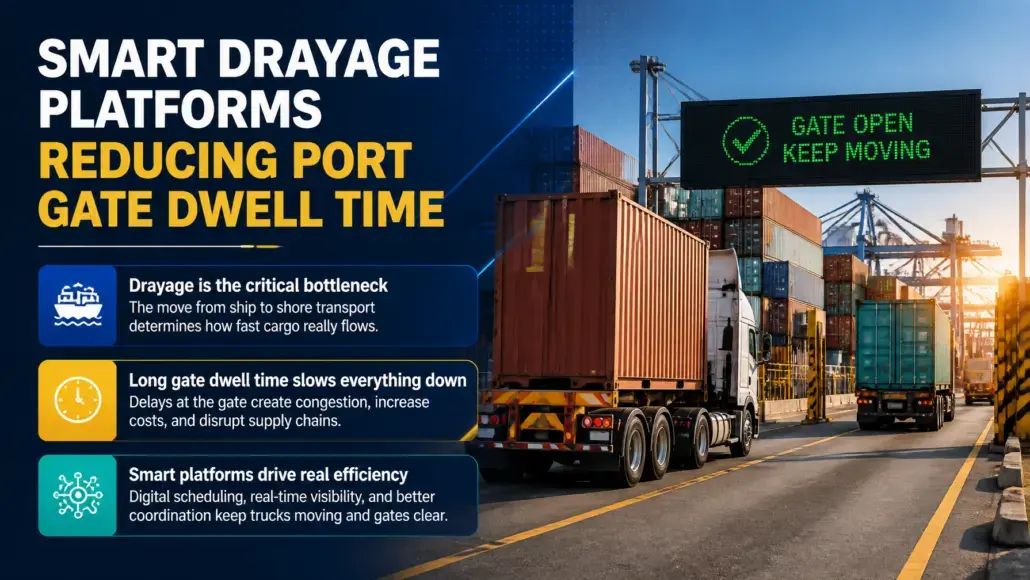
Container terminals have reached a critical juncture where physical expansion is often impossible or prohibitively expensive. In this environment, efficiency becomes the only viable path forward for global trade hubs. The primary bottleneck in this ecosystem is the transition from ocean vessel to land transport, specifically the process of drayage. Recent data from the U.S. Bureau of Transportation Statistics for 2025 indicates that only 17 percent of the top 25 U.S. container ports currently feature on-dock rail. This structural reality places an immense burden on drayage trucks and the gate infrastructure that manages them.
Port gate dwell time reduction is no longer just an operational goal for terminal managers. It has become a strategic necessity for shippers and carriers who are grappling with container dwell times that averaged 5.7 days on import lanes throughout late 2025. Smart drayage platforms are emerging as the central nervous system for these operations, bridging the information gap between the terminal operating system and the drayage carrier. By integrating real-time visibility with automated scheduling, these platforms are systematically dismantling the inefficiencies that lead to terminal congestion and excessive turn times.
Integrating Real-Time Visibility with Terminal Operations
The modern smart drayage platform functions by ingesting data from multiple sources to create a unified operational view. Traditionally, drayage drivers and dispatchers relied on fragmented information from terminal websites, emails, and manual phone calls. This lack of transparency often resulted in trucks arriving at gates only to find that their containers were not yet cleared for pickup or were buried under other units. Today, companies like DP World and PSA International are scaling digital ecosystems to resolve these visibility gaps.
PSA International reported a record throughput of over 105 million TEUs in 2025. To manage this volume, the organization has leaned heavily on its digital platforms like Portnet. These systems allow for a seamless exchange of data between the port and the drayage community. When a drayage management system is connected to these port community systems, it can alert carriers the moment a container is discharged from a vessel and cleared by customs. This precision allows for immediate dispatching, which directly supports the goal of port gate dwell time reduction.
The Impact of Automated Truck Appointment Systems
Automated truck appointment systems represent one of the most significant technological shifts in port gate management. These systems move beyond simple time-slot booking by incorporating predictive analytics and real-time gate capacity data. A peer-reviewed 2025 simulation published in MDPI Systems demonstrated that advanced appointment systems could cut average port truck turnaround times from 88.2 minutes to 78.4 minutes. Furthermore, the study suggested that when integrated with autonomous vehicle tech, these times could drop to approximately 55.9 minutes.
Global terminal operators are putting these findings into practice. A.P. Moller-Maersk through its subsidiary APM Terminals is leading several initiatives in this space. In March 2025, APM Terminals secured a 33-year lease extension at Port Elizabeth in the New York and New Jersey region. This agreement includes a comprehensive terminal optimization plan that prioritizes gate digitization. By refining the truck appointment process, the terminal aims to increase throughput without increasing its physical footprint.
Market Dynamics and the Role of Digital Marketplaces
The financial implications of port dwell times are substantial. The smart port technology market was valued between 3.4 billion and 4.5 billion dollars in 2025. Analysts from Fortune Business Insights and Mordor Intelligence suggest this sector will grow at a compound annual growth rate exceeding 25 percent toward 2030. This growth is driven by the urgent need for Shippers and Beneficial Cargo Owners to mitigate demurrage and detention costs.
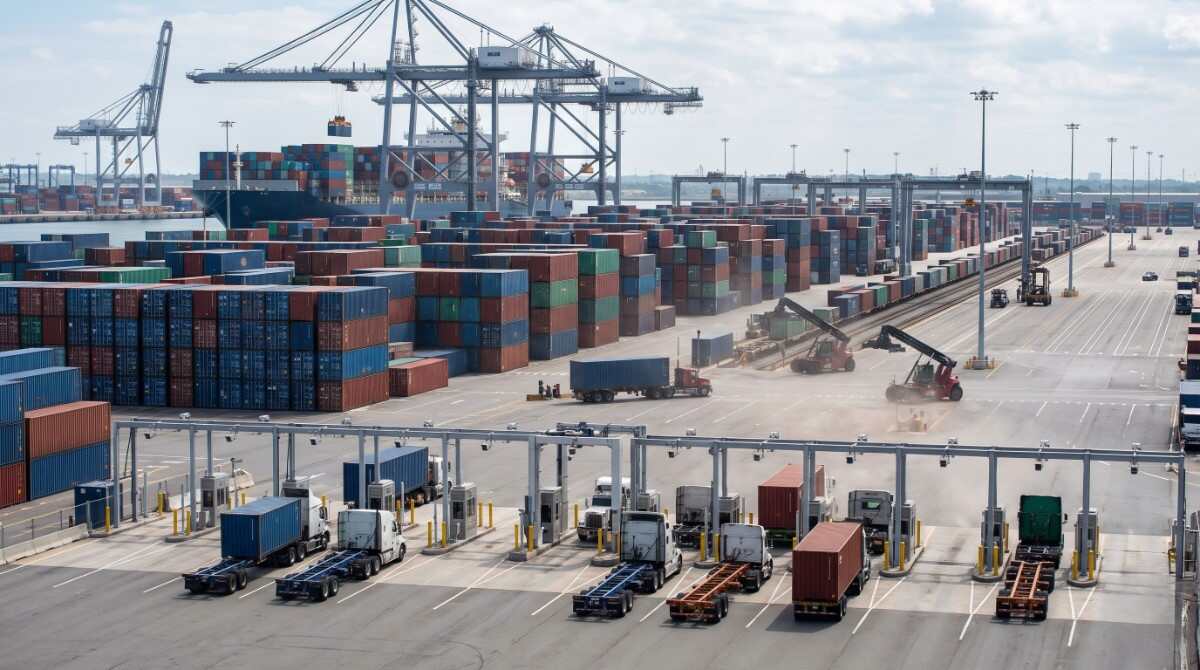
Digital drayage marketplaces are playing an increasingly important role in this market. C.H. Robinson, for instance, operates a sophisticated North America drayage program that includes a digital marketplace and real-time intelligence. In late 2025, the company reported that vessel wait times at major ports still ranged between two and eight days. To counteract this, their platform uses automated port-appointment management to ensure that carriers are utilized effectively the moment a container becomes available. This level of coordination is essential when drayage capacity tightens during peak seasons.
- Digital marketplaces allow smaller drayage carriers to compete for high-volume port contracts.
- Real-time intelligence helps shippers anticipate terminal congestion before it affects their supply chain.
- Automated document handling reduces the time drivers spend at the gate kiosk.
Enhancing Last-Mile Port Logistics
The final mile of port logistics is often where the most significant delays occur. Smart drayage platforms address this by optimizing the movement of chassis and empty containers. Managing chassis availability is a notorious challenge that can lead to gate delays even when containers are ready. Modern platforms now include chassis management modules that track the location and status of every unit in a fleet.
Companies like project44 have expanded their gate visibility solutions to provide deeper insights into the ocean-to-drayage handoff. By publishing global port dwell-time indices, they provide the benchmarking data that terminals need to identify operational weaknesses. When a terminal can see its performance relative to global peers, it is more likely to invest in the OCR gate scanning and API integrations required to stay competitive. These technologies allow trucks to move through gates without stopping, as cameras and sensors capture container numbers and seal status automatically.
Effective terminal management often extends beyond the gate itself. Coordination with other transport modes is vital for long-term efficiency. For example, autonomous shunting tractors streamline rail yards by managing the movement of containers within the intermodal terminal, ensuring that rail-bound freight does not interfere with truck gate operations.
Future Directions in Drayage Technology
Looking toward 2026 and beyond, Transport Advancement believes that the integration of artificial intelligence into drayage platforms will likely focus on prescriptive analytics. Instead of simply reporting that a gate is congested, future platforms will suggest alternative routes or schedule changes to avoid the delay entirely. This proactive approach will be critical as global trade volumes continue to grow and port infrastructure remains constrained.
Strategic partnerships will also shape the landscape. In late 2025, DP World and PSA International were selected to develop the new Bay Terminal in Bangladesh. This project is expected to be a model for greenfield port development, incorporating end-to-end real-time tracking and automated gate infrastructure from the outset. Such projects demonstrate that the industry is moving away from reactive solutions and toward a holistic, technology-first approach to port operations.
References
- “Port Performance Freight Statistics 2025 Annual Report” – U.S. Bureau of Transportation Statistics
- “Global Port Dwell Time Index” – project44
- “Drayage Market Intelligence Report 2025” – C.H. Robinson
- “Simulation of Autonomous Truck Appointment Systems” – MDPI Systems
- “Smart Port Market Outlook 2025-2030” – Fortune Business Insights
- “APM Terminals Port Elizabeth Extension Announcement” – A.P. Moller-Maersk
