

















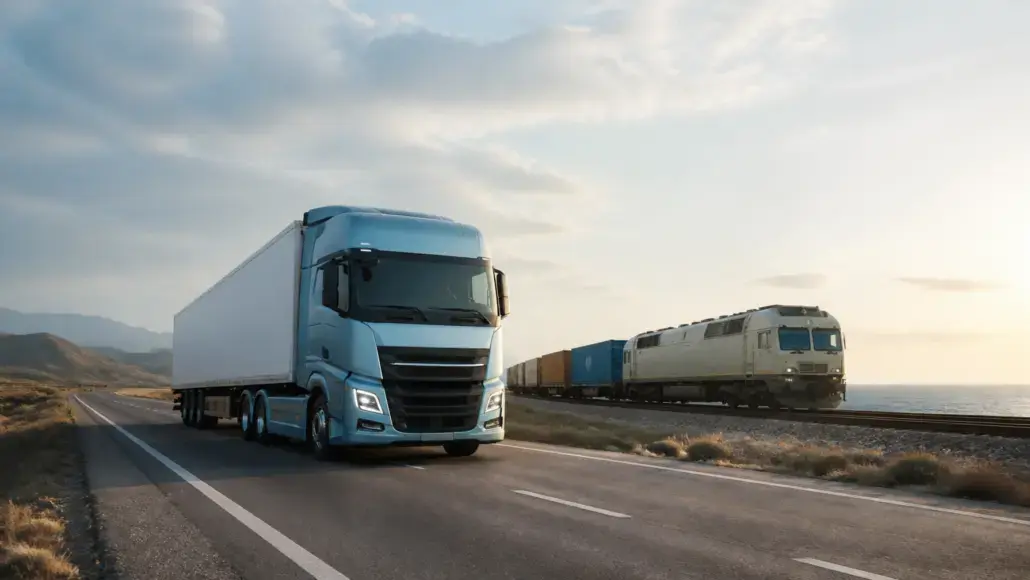
The urgent requirement to transition the global economy toward a sustainable future has placed the spotlight firmly on the heavy transport sector. Responsible for a significant portion of global greenhouse gas emissions, the decarbonization of long-haul trucking, shipping, and rail is no longer optional but a strategic imperative. In this context, the debate often centers on a perceived rivalry between two primary contenders: hydrogen and battery engine technology. However, as the industry matures, it is becoming increasingly evident that these technologies are not mutually exclusive competitors but rather complementary solutions tailored to specific duty cycles and operational requirements. Transport Advancement notes that by understanding the unique strengths and limitations of both hydrogen and battery engine technology, we can chart a more effective and nuanced path toward a zero-emission transport landscape that maintains the global flow of goods while protecting the planet.
The Evolution of Battery Electric Solutions in Heavy Freight
Battery engine technology has seen an unprecedented surge in development over the last decade, primarily driven by the successes in the passenger vehicle market. In the realm of heavy transport, battery electric vehicles (BEVs) offer the highest tank-to-wheel efficiency, converting a vast majority of the electricity stored in the battery into forward motion. For short-to-medium haul applications, such as urban distribution, regional delivery, and port drayage, battery engine technology is already demonstrating its superiority. The simplicity of the electric drivetrain—comprising fewer moving parts than a traditional diesel engine—translates into significantly lower maintenance costs, higher reliability, and reduced total cost of ownership over the vehicle’s lifespan.
However, the challenges for battery engine technology in heavy transport arise when we consider the weight and volume of the batteries required for extreme long-haul missions. A Class 8 truck requiring a 1,000-mile range would currently need a battery pack so large and heavy that it would significantly reduce the vehicle’s payload capacity. In an industry where every pound of freight equals revenue, this payload penalty is a significant hurdle. While energy density is improving annually, the physical constraints of lithium-ion chemistry remain a factor. Despite this, the rapid rollout of high-power charging infrastructure, such as megawatt charging systems, is extending the reach of battery electric trucks, making them viable for longer routes that were previously considered the exclusive domain of internal combustion or alternative fuels.
Advancing Battery Chemistry and Thermal Management
The future of battery engine technology in heavy transport is closely tied to innovations in solid-state batteries and silicon-anode designs. These advancements promise to increase energy density while reducing the reliance on scarce minerals like cobalt and nickel, which have complex ethical and environmental supply chains. Furthermore, thermal management systems in heavy-duty BEVs are becoming increasingly sophisticated. Managing the heat generated during both high-load operation and rapid megawatt-scale charging is critical for maintaining battery longevity and safety. Advanced cooling circuits, phase-change materials, and predictive software are being integrated into vehicle designs to ensure that battery engine technology can withstand the rigorous demands of 24/7 logistics operations across diverse climates.
Hydrogen Fuel Cells: The Powerhouse for Long-Haul Mobility
Where battery solutions face limitations in weight and range, hydrogen and battery engine technology finds its other half in fuel cell systems. Hydrogen fuel cell electric vehicles (FCEVs) generate electricity onboard through a chemical reaction between hydrogen and oxygen, with water vapor being the only tailpipe emission. The primary advantage of hydrogen in the context of heavy transport is its high energy-to-weight ratio. A hydrogen-powered truck can carry significantly more energy for less weight than a battery-equivalent, making it an ideal candidate for long-haul routes and operations involving heavy payloads where every pound of freight capacity matters.
Furthermore, refuelling a hydrogen truck is a process that closely mirrors the diesel experience in terms of time. A full tank of high-pressure hydrogen can be replenished in 10 to 20 minutes, providing a range of 500 to 800 miles. This rapid turnaround is essential for long-distance hauling and multi-shift operations where the vehicle needs to be back on the road almost immediately to maintain profitability. By integrating hydrogen and battery engine technology within the same broader ecosystem, fleet operators can utilize fuel cells for the most demanding routes while relying on batteries for more predictable, shorter-distance work, creating a balanced and resilient fleet.
The Role of Green Hydrogen and Efficiency
A critical component in the success of hydrogen and battery engine technology is the source of the hydrogen itself. To achieve true decarbonization, the industry must shift from grey hydrogen (produced from natural gas) to green hydrogen, which is produced through electrolysis powered by renewable energy. While the round-trip efficiency of hydrogen—from production to storage and back to electricity—is lower than that of direct battery storage, the operational benefits in specific use cases often outweigh the efficiency loss. As the cost of electrolyzers drops and renewable energy becomes more abundant, the economic case for hydrogen in heavy transport continues to strengthen, providing a scalable solution for sectors that are difficult to electrify directly through batteries alone.
Synergies and the Hybrid Approach
The most promising development in the industry is the emergence of a hybrid approach that combines hydrogen and battery engine technology within a single vehicle. Most modern fuel cell trucks are actually fuel cell hybrids, featuring a medium-sized battery pack to buffer power demands and capture energy through regenerative braking. This synergy allows the fuel cell to operate at a steady, efficient rate, which extends its lifespan, while the battery handles the peaks in demand during acceleration, climbing steep grades, or powering auxiliary systems. This integrated approach maximizes the benefits of both systems, offering the range and fast refuelling of hydrogen alongside the responsiveness and energy recovery capabilities of battery technology.
Infrastructure: The Shared Challenge and Strategic Investment
Regardless of which technology takes the lead in a particular segment, the success of both hydrogen and battery engine technology depends on the rapid deployment of infrastructure. For batteries, this means high-voltage grid connections, substations, and megawatt chargers; for hydrogen, it involves a complex network of production sites, pipelines, liquid or gaseous storage, and high-pressure refuelling stations. The dual-track development of these infrastructures requires significant capital investment and proactive policy support from governments. We are increasingly seeing the rise of multi-fuel hubs—logistics centers that provide both high-power electric charging and hydrogen refuelling, catering to a diverse fleet of zero-emission vehicles and simplifying the transition for carriers.
Regulatory Landscape and Global Market Trends
The transition to hydrogen and battery engine technology is being accelerated by increasingly stringent environmental regulations. In Europe, the Euro 7 standards and CO2 reduction targets for heavy-duty vehicles are pushing manufacturers to abandon internal combustion. In the United States, the Advanced Clean Trucks (ACT) regulation in California and other states is mandating a growing percentage of zero-emission vehicle sales. These policies, combined with significant subsidies like those found in the U.S. Inflation Reduction Act, are providing the necessary financial bridge for companies to invest in these new technologies. Furthermore, global manufacturers such as Volvo, Daimler, and Scania are investing billions into both platforms, ensuring that the next generation of heavy transport will be defined by this technological duality.
Beyond the Truck and Into the Global Supply Chain
The impact of hydrogen and battery engine technology extends beyond road transport to maritime and rail sectors. In shipping, green hydrogen and its derivatives, like ammonia or methanol, are being explored for large ocean-going vessels that traverse thousands of miles, while battery systems are finding homes in short-sea ferries and harbor tugs. In rail, hydrogen fuel cells are an excellent alternative for non-electrified tracks where installing overhead lines would be prohibitively expensive or geographically impossible. The convergence of these technologies across different modes of transport creates a unified front in the battle against climate change, proving that a diversified energy portfolio is the most robust strategy for a clean and efficient future.
In conclusion, the transition of heavy transport is not a winner-take-all race between different power sources. Instead, it is a coordinated deployment of hydrogen and battery engine technology, each applied where it is most efficient and effective. Transport Advancement believes that by leveraging the high efficiency of batteries for shorter distances and the high energy density of hydrogen for the long haul, the transport industry can achieve its decarbonization goals without sacrificing the operational performance that the global economy depends on. As innovation continues and infrastructure scales, the combination of hydrogen and battery engine technology will stand as the dual pillars of a new, sustainable era in heavy-duty mobility, ensuring that our logistics networks remain both robust and environmentally responsible.
