

















As the world intensifies its efforts to decarbonize the transportation sector, the focus has shifted toward solutions that can handle the most demanding segments of the industry. While battery electric vehicles have made significant inroads in short-haul logistics and urban delivery, the long-distance, heavy-payload market requires a fundamentally different approach. Hydrogen fuel cells have emerged as a frontrunner, offering the range and rapid refuelling times necessary for interstate and transcontinental freight. However, the hardware—the trucks themselves—is only one part of the complex equation. The true bottleneck, and the most critical area for strategic investment, is the development of a robust and scalable hydrogen refuelling infrastructure for heavy-duty transport. Transport Advancement notes that without a reliable, high-capacity network of stations, the transition to a hydrogen-based logistics economy will remain stalled at the pilot phase, unable to achieve the scale required to impact global emissions.
The Architecture of a Heavy-Duty Hydrogen Station
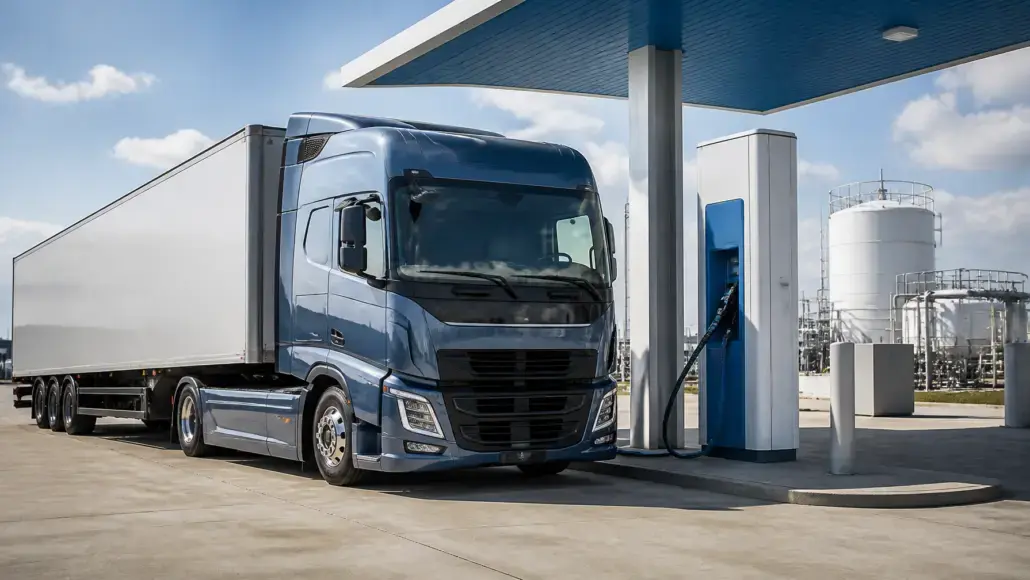
A hydrogen refuelling infrastructure for heavy-duty transport differs fundamentally from the hydrogen stations designed for passenger cars or small commercial vans. A heavy-duty truck might require 50 to 100 kilograms of hydrogen for a single fill, compared to the 4 to 6 kilograms typically needed for a fuel cell sedan. This order-of-magnitude difference in scale necessitates significant changes in how hydrogen is stored, pressurized, and dispensed. High-capacity compressors, massive storage tanks (often utilizing liquid or high-pressure gaseous technology), and advanced cooling systems are the core components of these sites. To ensure that a truck can refuel in 15 to 20 minutes, the dispensing equipment must handle flow rates and thermal dynamics that would be completely unmanageable for smaller systems.
Furthermore, the physical footprint of these stations must accommodate the turning radii, staging requirements, and heavy loads of Class 8 trucks. This means that hydrogen refuelling infrastructure for heavy-duty transport cannot simply be bolted onto existing passenger gas stations with limited space. Instead, these facilities are being designed as purpose-built hubs, often located at major logistics interchanges, busy ports, and existing industrial truck stops. The design of these sites also incorporates a high degree of redundancy; because a single station failure can ground an entire commercial fleet, modern infrastructure projects are prioritizing multi-dispenser layouts, onsite backup storage, and remote monitoring to ensure 99.9% operational uptime.
Gaseous vs. Liquid Hydrogen Storage: The Strategic Choice
One of the key technical debates in the rollout of hydrogen refuelling infrastructure for heavy-duty transport is the choice between gaseous and liquid hydrogen delivery systems. Gaseous hydrogen, typically stored at 350 or 700 bar, is the current industry standard. It is relatively straightforward to manage and utilizes established compression technologies, but it requires massive storage tanks to hold the quantities needed for a high-traffic truck hub. Liquid hydrogen, on the other hand, is stored at extremely low temperatures (-253°C) and offers much higher energy density. This allows a station to store significantly more fuel in a smaller physical footprint, which is ideal for high-traffic locations where land is at a premium. However, liquid hydrogen infrastructure involves more complex boil-off management and specialized cryogenic handling equipment. As the market scales, we are likely to see a mix of both, with liquid hydrogen becoming the preferred choice for the highest-capacity hubs and busiest freight corridors.
Building the Global Hydrogen Corridors
For fleet operators and logistics companies to gain the confidence to invest in expensive fuel cell trucks, they need the ironclad assurance that their vehicles will never be out of reach of a reliable pump. This necessity has led to the concept of hydrogen corridors—strategic freight routes where hydrogen refuelling infrastructure for heavy-duty transport is deployed at regular, predictable intervals. In Europe, the Alternative Fuels Infrastructure Regulation (AFIR) mandates the placement of hydrogen stations at least every 200 kilometers along the Trans-European Transport Network (TEN-T) by 2030. In North America, public-private partnerships are identifying the busiest freight arteries, such as the I-5 on the West Coast or the I-95 corridor in the Northeast, for early infrastructure clusters to support zero-emission shipping.
These corridors are not just about the physical stations; they are about creating a predictable and efficient energy ecosystem. By concentrating hydrogen refuelling infrastructure for heavy-duty transport along specific routes, stakeholders can optimize the entire supply chain. Hydrogen production facilities—often called hubs—can be located near these corridors, reducing the cost, risk, and carbon footprint of transporting the fuel to the end-dispensers. This hub-and-spoke model is essential for bringing down the delivered cost of hydrogen, which is currently one of the primary barriers to widespread commercial adoption.
Scaling Through Public-Private Partnerships and Policy
The capital requirements for building a comprehensive, nationwide hydrogen refuelling infrastructure for heavy-duty transport are immense. A single high-capacity station can cost between $3 million and $7 million, depending on its specific capacity, technology, and site requirements. Consequently, government support is playing a pivotal role in the early stages. Programs like the U.S. Regional Clean Hydrogen Hubs (H2Hubs) and various EU funding mechanisms are providing billions in grants and tax credits to de-risk these massive projects. At the same time, energy giants, automotive manufacturers, and industrial gas companies are forming unprecedented joint ventures to leverage their combined expertise in molecule management, vehicle design, and infrastructure operation. These partnerships are crucial for ensuring that the infrastructure is built to rigorous industrial standards and can scale rapidly once vehicle production ramps up.
The Challenge of Hydrogen Supply, Logistics, and Purity
Building the dispensers and storage tanks is only half the battle; the other half is ensuring a steady, reliable supply of high-purity, low-carbon fuel. A successful hydrogen refuelling infrastructure for heavy-duty transport must be backed by a resilient upstream supply chain. Currently, most hydrogen is delivered to stations by tube trailers, but as demand grows, this method will become increasingly inefficient and costly. Future infrastructure will likely rely on onsite electrolysis—where hydrogen is produced right at the station using renewable electricity and water—or dedicated hydrogen pipelines for high-volume hubs, similar to the natural gas networks we use today.
The color or carbon intensity of the hydrogen is also paramount. To meet global sustainability goals and corporate ESG targets, the hydrogen refuelling infrastructure for heavy-duty transport must increasingly serve green hydrogen. This adds another layer of operational complexity, as the production of green hydrogen is directly tied to the availability and intermittency of renewable energy sources like wind and solar. Smart grid integration allows stations to produce and store hydrogen when renewable power is abundant and electricity prices are low, using the stored hydrogen as a form of long-duration energy storage. This synergy between the transport and energy sectors is a hallmark of the emerging hydrogen economy.
Safety, Global Standards, and Digital Integration
Safety is, and will always be, the top priority in the development of hydrogen refuelling infrastructure for heavy-duty transport. Hydrogen has different physical properties than diesel; it is significantly lighter than air, odorless, and highly flammable under specific conditions. Modern stations are equipped with a suite of advanced sensors, automated shut-off valves, specialized venting systems, and flame detectors to mitigate risks. Furthermore, global standardization is critical for market fluidity. Just as a diesel nozzle fits any truck regardless of the brand, the industry is working toward universal standards for hydrogen dispensing protocols (such as the SAE J2601 standards) to ensure seamless interoperability across different vehicle manufacturers and geographic regions.
Digital integration is also transforming the refuelling experience and station management. Fleet managers can now use real-time data and cloud-based platforms to track station availability, live pricing, and fuel quality certificates. Drivers can use dedicated apps to reserve refuelling slots, avoiding costly wait times and ensuring that the station has sufficient pressure for their specific vehicle needs. Automated billing and payment systems further streamline the transaction process, making the transition from fossil fuels more seamless and operationally efficient for the end-user. Predictive maintenance, powered by AI and IoT sensors, ensures that equipment is serviced before a failure occurs, maximizing the reliability of the entire network.
Economic Impact and the Long-Term Path Forward
The long-term economic case for hydrogen refuelling infrastructure for heavy-duty transport is intrinsically tied to the concept of economies of scale. As more stations are built and more fuel cell trucks hit the road, the unit cost of both the infrastructure equipment and the fuel itself will naturally decline. Many industry analysts and energy agencies predict that green hydrogen will reach price parity with diesel by the end of this decade, especially when factoring in the potential for rising carbon taxes, clean fuel subsidies, and the declining costs of renewable energy. For the logistics industry, investing in or supporting hydrogen infrastructure represents a massive opportunity to future-proof operations against the inevitable decline of fossil fuel availability and the increasing pressure to reach Net Zero.
In conclusion, the establishment of a robust, reliable, and scalable hydrogen refuelling infrastructure for heavy-duty transport is the absolute cornerstone of the clean energy transition in the logistics and transport sector. It is a complex, capital-intensive, and multi-faceted undertaking that requires the perfect alignment of technology, government policy, and market demand. However, the progress made in just the last few years—from the first pilot stations to the massive, multi-megawatt hydrogen hubs now under construction—is truly staggering. As these networks continue to expand and the supply of green hydrogen stabilizes, Transport Advancement believes that hydrogen refuelling infrastructure for heavy-duty transport will become the silent, powerful engine driving a more sustainable, efficient, and resilient global economy for generations to come.
