





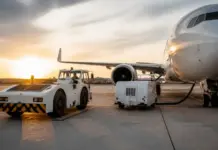



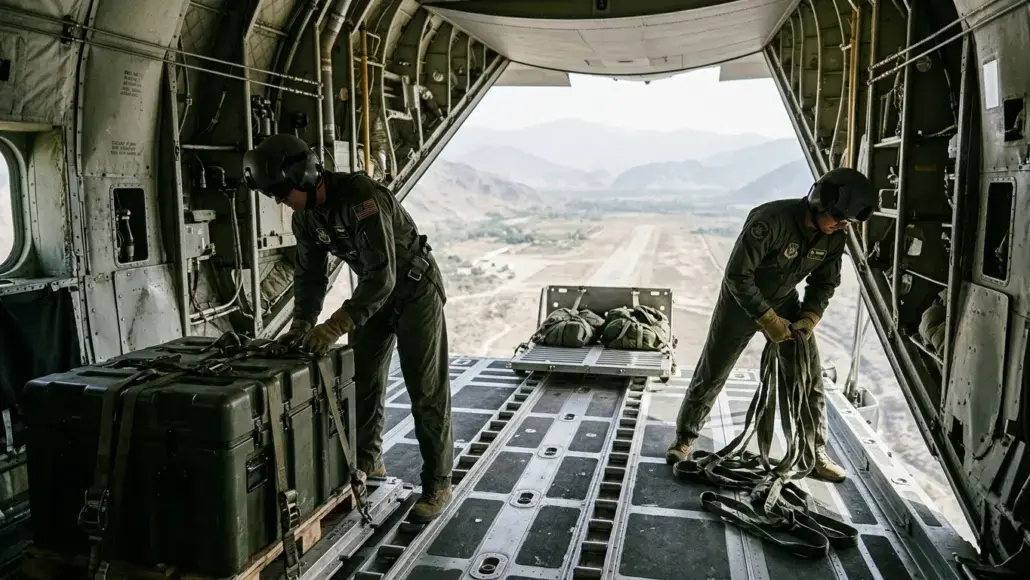
Extraction-as-a-Service (EaaS) is emerging as a disruptive business model in the aerospace and logistics sectors, offering a flexible and scalable alternative to traditional cargo deployment methods. At its core, EaaS allows organizations to outsource the complex technical and operational requirements of aerial extraction to specialized providers. Instead of maintaining their own fleets of specialized aircraft, training dedicated loadmasters, and managing expensive extraction parachute inventories, companies can now subscribe to a delivery capability. This shift from ownership to service is particularly relevant in an era where agility and cost-efficiency are paramount. Transport Advancement notes that by leveraging the expertise of EaaS providers, both commercial enterprises and government agencies can access high-end tactical logistics on-demand, transforming a once-exclusive capability into a utility for the broader market.
The rise of Extraction-as-a-Service is driven by the increasing need for rapid response in remote and underserved regions. For a mining company operating in a landlocked part of Africa or a disaster relief agency responding to a sudden earthquake in the Pacific, the ability to deliver heavy equipment without a runway is a critical requirement. However, the high barrier to entry—including the cost of certified LAPES-capable aircraft and the risk management associated with low-altitude extractions—has historically kept this capability out of reach for many. EaaS lowers this barrier by providing a ready-to-use infrastructure that includes everything from flight planning and risk assessment to the actual deployment of the cargo. This turnkey approach is what defines the value proposition of the EaaS model.
The Operational Framework of Extraction-as-a-Service
To understand how Extraction-as-a-Service works in practice, one must look at the integrated framework that supports it. An EaaS engagement typically begins with a digital logistics platform where the client specifies the payload, the destination, and the required delivery window. The provider then handles the selection of the appropriate aircraft, the configuration of the extraction parachute system, and the coordination with local aviation authorities. Because the provider specializes in this single task, they can achieve economies of scale and a level of operational proficiency that an in-house logistics department simply cannot match. This specialization also leads to higher safety standards, as the provider’s entire business model depends on the successful and safe delivery of cargo.
Furthermore, EaaS providers often utilize modular and standardized extraction systems that can be quickly adapted to different types of aircraft. This interoperability is key to the scalability of the service. Whether the mission requires a large strategic airlifter for a 20-ton pallet or a smaller tactical plane for medical supplies, the EaaS provider can deploy the right tool for the job. The ‘as-a-service’ element also extends to the data and analytics side of the operation. Clients receive detailed post-mission reports, including GPS landing data and G-force measurements from the extraction, allowing them to verify the integrity of their cargo and refine their future logistics strategies.
Scalability and Flexibility in Cargo Deployment
One of the most significant advantages of Extraction-as-a-Service is the inherent scalability it offers. Traditional logistics models are often sticky—once an organization invests in a particular type of aircraft or delivery system, they are committed to that path for years. EaaS, by contrast, allows for rapid scaling up or down based on current needs. During a period of high demand, such as a large-scale construction project or a widespread humanitarian crisis, an organization can tap into multiple EaaS providers to surge their delivery capacity. Conversely, during quieter times, they can scale back their usage without being burdened by the sunk costs of idle aircraft and equipment.
This flexibility is particularly valuable for military aviation and government agencies. By utilizing EaaS for non-combat logistics or training exercises, the military can preserve its core tactical assets for high-priority missions while still maintaining a robust supply chain. It also allows for the rapid integration of new technologies. Because EaaS providers are constantly competing for business, they are incentivized to invest in the latest innovations, such as autonomous cargo ejection or next-gen drag systems. This means that clients always have access to the state-of-the-art in aerial logistics without having to fund the research and development themselves.
The Role of Advanced Extraction Parachute Solutions in EaaS
The technical foundation of Extraction-as-a-Service is built upon reliable and advanced extraction parachute solutions. These are the tools that make the service possible. EaaS providers maintain extensive inventories of specialized parachutes that are rated for different weights, speeds, and environmental conditions. By managing this inventory centrally, the provider can ensure that every parachute is maintained to the highest standards and is ready for immediate deployment. For the client, this eliminates the logistical headache of managing a specialized and often temperamental piece of equipment that is only used occasionally.
Moreover, the integration of smart technology into these parachute systems is a key differentiator for top-tier EaaS providers. By using IoT-enabled parachutes that can report their condition and deployment status in real-time, providers can offer a higher level of assurance to their clients. This transparency is vital for the commercial adoption of aerial extraction, as it provides the data needed for insurance and regulatory compliance. In the EaaS model, the extraction parachute is no longer just a piece of nylon; it is a data-generating node in a wider digital logistics network. This fusion of physical equipment and digital services is what makes Extraction-as-a-Service a truly modern solution.
Economic Impact and the Democratization of Tactical Logistics
The economic impact of Extraction-as-a-Service is profound, as it democratizes access to a capability that was once the sole domain of the world’s most powerful militaries. By lowering the cost and complexity of aerial extraction, EaaS enables smaller organizations and developing nations to participate in high-speed global logistics. This has the potential to unlock economic development in remote regions that have previously been cut off from global markets due to a lack of infrastructure. A local farming cooperative in a mountainous area, for example, could use an EaaS provider to air-extract their high-value produce to a nearby regional hub, bypassing days of treacherous mountain roads.
From a business perspective, EaaS transforms a capital expenditure (CAPEX) into an operational expenditure (OPEX). This is a highly attractive proposition for finance departments, as it allows for better cash flow management and more predictable logistics costs. Instead of a multi-million dollar investment in aircraft and equipment, the organization simply pays for the successful delivery of their cargo. This pay-per-drop model aligns the interests of the provider and the client, fostering a relationship based on performance and reliability. As the EaaS market matures, we can expect to see even more innovative pricing structures, such as subscription-based models for ongoing logistics support.
Future Trends: Integration with Autonomous Systems and AI
Looking toward the future, the evolution of Extraction-as-a-Service will be closely linked to the development of autonomous systems and artificial intelligence. We can envision a future where EaaS is delivered entirely by autonomous cargo drones. These drones would operate from regional hubs, automatically picking up payloads and performing low-altitude extractions with robotic precision. AI-driven logistics platforms would manage the entire network, optimizing flight paths and extraction sequences to maximize efficiency and minimize fuel consumption. In this scenario, EaaS becomes a fully automated utility, moving goods through the air with the same efficiency that packets of data move through a fiber-optic cable.
The integration of AI will also allow for predictive extraction. By analyzing global trends, weather patterns, and local demand, EaaS platforms could anticipate where a delivery might be needed before the client even asks for it. For instance, in anticipation of a forecast flood, an EaaS provider could pre-position emergency supplies and autonomously deliver them to vulnerable areas the moment the disaster strikes. This proactive approach to logistics would represent a major leap forward in humanitarian and disaster response. The as-a-service model provides the ideal platform for these innovations, as it allows for the rapid deployment of new technologies across a wide range of clients and use-cases.
Conclusion: Simplifying Complexity for a Better World
In conclusion, Extraction-as-a-Service (EaaS) is more than just a new way to move cargo; it is a fundamental shift in how we approach the challenges of global logistics. By simplifying the complexity of aerial extraction and making it available as a scalable service, EaaS is enabling a more agile, responsive, and inclusive global supply chain. The combination of expert knowledge, advanced extraction parachute technology, and digital innovation ensures that even the most difficult-to-reach places on earth are no longer isolated. As the world becomes more interconnected, the ability to deliver heavy loads from the sky on-demand will be a vital capability for progress and prosperity.
The journey of EaaS is just beginning, but its potential to transform industries and save lives is already clear. Whether it is supporting a remote industrial project, delivering aid in a crisis, or providing a cost-effective solution for military aviation, Extraction-as-a-Service is proving that the sky is not a limit, but a gateway to a world of possibilities. Transport Advancement believes that by moving from a model of ownership to a model of access, we are unlocking the true power of aerial logistics for everyone. In the end, EaaS is about more than just extractio. It is about providing the tools and services needed to build a more resilient and connected world.
