












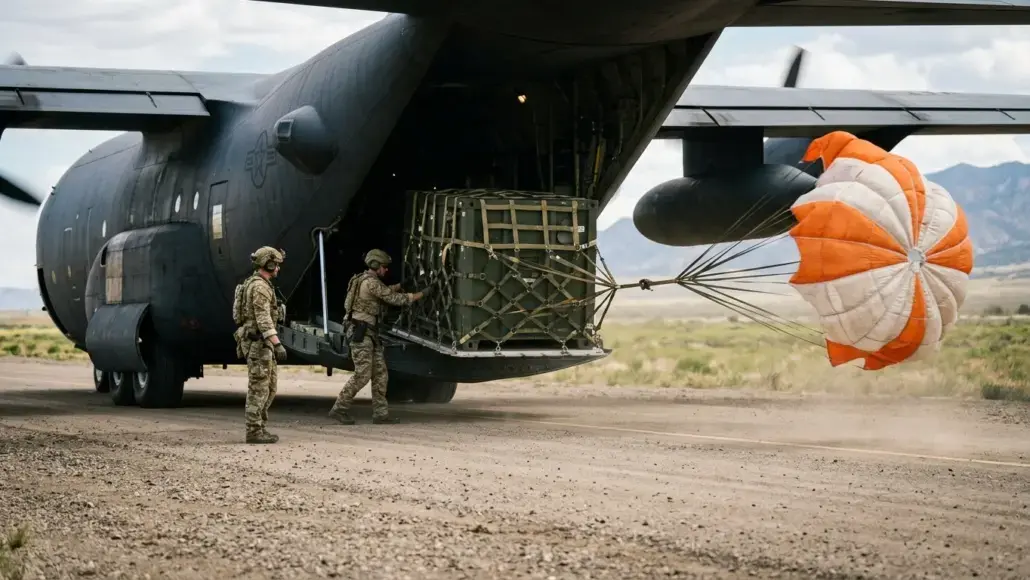
Next-gen drag systems are at the forefront of a technological revolution in the aerospace industry, offering a sophisticated approach to managing the forces required for rapid cargo extraction. For decades, the extraction of heavy pallets from tactical aircraft has relied on relatively simple parachute designs that, while effective, often lacked the nuance needed for modern, high-speed operations. Today, the integration of advanced materials, computational fluid dynamics, and active control surfaces is giving rise to a new class of aerodynamic drag systems. These systems are designed to provide a more controlled, predictable, and efficient extraction force, significantly enhancing both aircraft safety and the survivability of the cargo itself. As tactical logistics becomes more demanding, Transport Advancement notes that the evolution of these drag systems is proving to be a critical factor in maintaining the operational edge.
The concept of ‘drag’ in cargo extraction is centered on the need to overcome the massive inertia of a twenty-ton pallet in a matter of seconds. Traditional extraction parachute systems generate this force by simply expanding a large surface area in the slipstream. However, this creates a sudden, binary jolt that can stress the airframe and risk damaging sensitive cargo. Next-gen drag systems move away from this blunt-force approach, utilizing variable-geometry designs and smart materials that can modulate the amount of drag generated in real-time. This allows for a profiled extraction, where the force is applied gradually to break static friction and then optimized to maintain a constant speed through the aircraft’s ramp. This level of refinement is transforming cargo extraction from a violent event into a precision maneuver.
The Engineering of Aerodynamic Drag Systems and Variable Geometry
At the heart of next-gen drag systems is the use of variable geometry in parachute and drag-ribbon design. Unlike a traditional canopy that has a fixed shape, these advanced systems can alter their aerodynamic profile while in flight. This is achieved through the use of high-strength tendons and actuators that can pull or release specific parts of the drag device. By changing the shape, the system can increase or decrease the drag coefficient as needed. For example, during the initial phase of extraction, the system might adopt a high-drag configuration to ensure the pallet clears the ramp quickly. Once the pallet is in the air, the system can transition to a lower-drag, stabilizing configuration to prepare for the deployment of the main recovery chute.
This variable-drag capability is particularly useful when operating at different altitudes and airspeeds. Air density changes significantly with altitude, meaning a fixed-size parachute will generate different amounts of force depending on how high the aircraft is flying. Next-gen drag systems compensate for this by adjusting their surface area or angle of attack to maintain a consistent extraction profile. This predictability is a major boon for flight crews, as it reduces the variability in aircraft handling during the critical seconds of a drop. The use of carbon-fiber composites and advanced polymers in the construction of these systems ensures that they are both incredibly strong and lightweight, allowing for higher payload capacities.
Enhancing Aircraft Safety through Controlled Extraction Force
One of the primary drivers behind the development of next-gen drag systems is the enhancement of aircraft safety. The extraction of heavy cargo is one of the most dangerous phases of flight for a tactical airlifter. The sudden movement of weight toward the rear of the plane causes a rapid shift in the center of gravity, which can lead to a dangerous pitch-up moment. If the extraction force is inconsistent or if the pallet becomes hung on the ramp, the results can be catastrophic. Next-Gen drag systems mitigate these risks by providing a smoother, more regulated extraction. By avoiding the sudden peak-force jolts of older systems, they reduce the structural fatigue on the aircraft’s floor and ramp assemblies.
Furthermore, these systems are often integrated with the aircraft’s fly-by-wire flight control system. This integration allows the aircraft to anticipate the extraction force and automatically apply the necessary control inputs to maintain level flight. In an emergency, such as a partial parachute failure, next-gen drag systems can quickly adjust their configuration to minimize the impact on the aircraft’s stability. This active safety approach is a significant upgrade over traditional mechanical systems, providing pilots with a much greater margin for error. As the size and weight of tactical cargo continue to grow, the role of these advanced drag systems in protecting the multimillion-dollar aircraft and its crew cannot be overstated.
Innovation in Tactical Logistics and Air Cargo Deployment
The impact of next-gen drag systems extends beyond safety, driving significant innovation in the field of tactical logistics. In a modern conflict or disaster response, the ability to deploy cargo in a wide range of conditions is essential. Traditional extraction parachute systems are often limited by wind envelopes and airspeed restrictions. Next-Gen systems, with their ability to modulate drag, can operate effectively in higher winds and at a broader range of airspeeds. This expands the operational window for cargo delivery, allowing missions to proceed even when the weather or tactical situation is less than ideal.
Moreover, the increased efficiency of these systems allows for the delivery of more complex payloads. For instance, modular infrastructure components, such as mobile power units or water purification systems, often have specific orientation requirements during extraction to avoid damage. Next-gen drag systems can provide the stability and control needed to ensure these items leave the aircraft in the perfect orientation. This capability is turning the cargo plane into a high-speed delivery platform for sophisticated technology, rather than just a way to move bulk supplies. The smart nature of these drag systems is a key component of the broader trend toward digital, data-driven logistics.
The Role of Computational Fluid Dynamics (CFD) in System Design
The development of next-gen drag systems is heavily reliant on the use of high-fidelity computational fluid dynamics (CFD) simulations. Designing a system that can reliably modulate drag at 150 knots while attached to a moving aircraft is an incredibly complex engineering challenge. CFD allows engineers to see the air flow around the drag device and the aircraft in extreme detail, identifying areas of turbulence or pressure that could lead to instability. This digital testing environment allows for the rapid iteration of designs, significantly shortening the development cycle for new systems.
Through CFD, designers can also explore exotic drag configurations, such as annular or cross-chutes, that were previously too difficult to model or control. These new shapes can offer better stability and more efficient drag-to-weight ratios. The ability to simulate thousands of different extraction scenarios—from varying altitudes to extreme weather—ensures that when a system is finally built and tested in the real world, it is as safe and reliable as possible. This fusion of digital engineering and physical material science is what defines the next-gen label, moving the industry toward a future where every part of the cargo extraction process is optimized for performance.
Future Outlook: Smart Materials and Bio-Inspired Drag
Looking to the future, the next phase of next-gen drag systems will likely involve the use of smart materials that can change their properties in response to electrical or thermal stimuli. Imagine a drag ribbon that can stiffen or soften on command, or a parachute fabric that can change its porosity to regulate the amount of air passing through it. These materials would allow for even more precise control over the extraction force, potentially eliminating the need for complex mechanical actuators and tendons. This would result in systems that are even lighter, more reliable, and easier to maintain.
We may also see the adoption of bio-inspired drag designs. Nature has evolved many ways to manage aerodynamic forces, from the shape of a bird’s wing to the way certain seeds use drag to travel long distances. By mimicking these natural designs, engineers can create drag systems that are more stable and efficient than anything we have today. The integration of these bio-inspired designs with AI-driven control systems will result in a generation of extraction tools that are truly intelligent. As we continue to push the boundaries of what is possible in air cargo innovation, next-gen drag systems will remain a cornerstone of our ability to move heavy loads through the sky with grace and precision.
Conclusion: Engineering Excellence in the Air
In conclusion, next-gen drag systems represent a triumph of engineering excellence, transforming the critical act of cargo extraction into a highly controlled and efficient process. By moving beyond the limitations of traditional extraction parachute designs, these systems provide the stability, safety, and predictability needed for modern tactical logistics. The combination of variable-geometry aerodynamics, high-strength materials, and digital integration ensures that both the aircraft and its cargo are protected during the most demanding phases of a mission. This technology is a testament to the ongoing innovation within the aerospace sector, proving that even the most fundamental forces of nature—like drag—can be mastered and harnessed for progress.
As the global demand for rapid, heavy-lift logistics continues to rise, Transport Advancement believes that the importance of these advanced drag systems will only grow. They are the silent partners in every successful aerial delivery mission, providing the invisible force that makes it all possible. From humanitarian aid to military resupply, the ability to extract cargo safely and efficiently is a vital capability that saves lives and supports global stability. Next-gen drag systems are not just an improvement on the past. They are a bridge to a future where the air cargo industry is smarter, safer, and more capable than ever before.
