















The horizon of urban transportation is no longer confined to the asphalt of city streets or the subterranean tunnels of subway systems. We are standing at the threshold of a new era where electric Vertical Take-Off and Landing (eVTOL) vehicles promise to democratize the skies. However, this transition toward digital aviation brings with it a profound shift in risk. Unlike the legacy systems of the past century, the air taxi ecosystem is built upon a foundation of hyper-connectivity. Every maneuver, every battery discharge, and every navigation update relies on a seamless stream of data. Transport Advancement notes that this evolution makes air taxi cybersecurity not merely a technical requirement but a fundamental pillar of public safety and trust.
Traditional aviation has long relied on air-gapped systems and proprietary communication channels that were difficult for external actors to penetrate. In contrast, the modern connected aircraft used in urban air mobility (UAM) utilizes commercial-off-the-shelf technologies, wireless protocols, and cloud-integrated flight management systems. This openness is necessary for the high-frequency, short-haul nature of air taxi operations, yet it creates a significantly expanded attack surface. As these vehicles integrate into the broader smart city infrastructure, the boundary between the aircraft and the digital world blurs, demanding a reimagined approach to air taxi cybersecurity that prioritizes resilience over mere perimeter defense.
The Architecture of Vulnerability in Digital Aviation
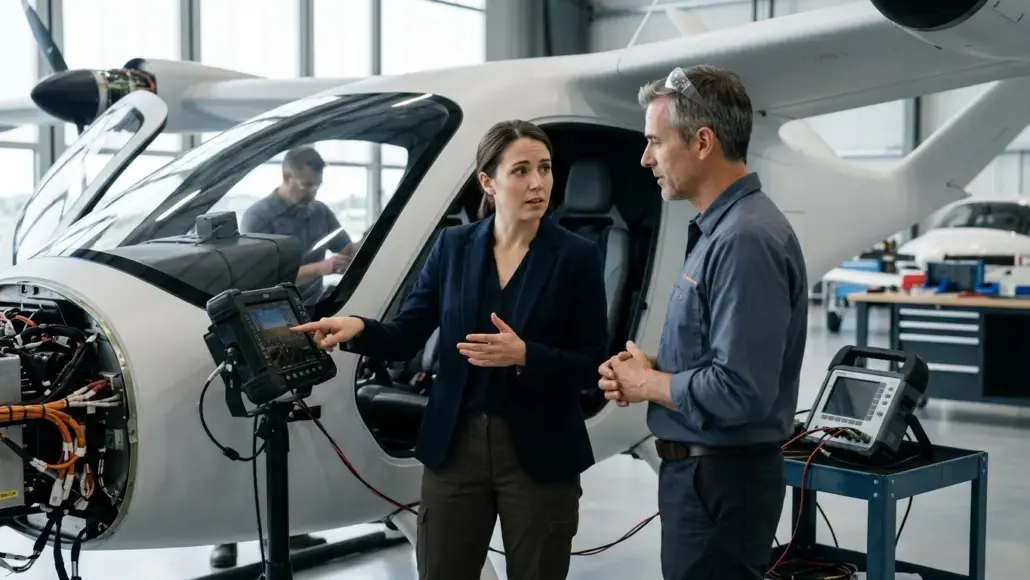
To understand the gravity of eVTOL security, one must first appreciate the sheer complexity of the systems involved. A single air taxi is a node in a massive network that includes vertiport management systems, air traffic service providers, and fleet operations centers. This connectivity is a double-edged sword. While it enables the precision required for autonomous flight, it also introduces multiple entry points for malicious actors. A breach in a ground-based charging station could theoretically propagate through the fleet, or a compromised passenger Wi-Fi portal could serve as a gateway to more critical flight control systems if proper network segmentation is not maintained.
Furthermore, the move toward autonomous flight removes the ultimate failsafe: the human pilot. In conventional aviation, a pilot can often detect and override anomalous system behavior caused by software glitches or cyber interference. In a fully automated UAM environment, the flight control computer is the sole arbiter of the vehicle’s path. If the integrity of the data driving these decisions is compromised, the consequences for aviation safety could be catastrophic. The challenge lies in ensuring that the software controlling these vehicles is not only bug-free but also hardened against sophisticated cyber threats designed to spoof sensors or manipulate navigation logic.
Navigating the Spectrum of Cyber Threats
The types of threats facing the UAM sector are as diverse as the technology itself. We are no longer just concerned with a teenager in a basement trying to ‘hack’ a plane for notoriety. The landscape now includes state-sponsored actors seeking to disrupt critical infrastructure, hacktivists making political statements, and organized criminal groups looking for ransomware opportunities. In the context of air taxi cybersecurity, one of the most pressing concerns is Signal Interference and Spoofing. Because eVTOLs rely heavily on Global Navigation Satellite Systems (GNSS) for positioning, a localized jamming or spoofing attack could lead a vehicle off-course or trick it into believing it is at a different altitude than it truly is.
Beyond navigation, the integrity of Vehicle-to-Everything (V2X) communication is paramount. Air taxis must communicate with other aircraft to maintain separation and with ground sensors to navigate urban canyons. A ‘man-in-the-middle’ attack that alters these communications could lead to mid-air collisions or grounded fleets. Moreover, the supply chain for digital aviation components is global and complex. A single compromised firmware update from a third-party vendor could introduce a backdoor into thousands of vehicles, highlighting the need for rigorous software bill of materials (SBOM) tracking and continuous monitoring throughout the aircraft’s lifecycle.
Data Protection and the Privacy Paradox
While physical safety is the primary focus, data protection represents another significant hurdle. Connected air taxis generate and consume vast quantities of data, including flight telemetry, passenger biometrics for boarding, and high-definition video feeds for situational awareness. This data is a goldmine for those interested in corporate espionage or personal surveillance. Ensuring that passenger movement patterns remain private while maintaining the transparency required for regulatory oversight is a delicate balancing act. Encrypting data at rest and in transit is a starting point, but the industry must also grapple with the ethics of data sovereignty and the long-term storage of sensitive flight records.
Modern data protection strategies in the UAM space must go beyond traditional encryption. They require a zero-trust architecture where every request for data access—whether from a ground technician or a remote server—is strictly authenticated and authorized. This is especially critical when dealing with over-the-air (OTA) updates. While OTA updates are essential for patching vulnerabilities and improving performance, they are also a high-value target. If an attacker manages to sign a malicious update with a legitimate certificate, they could effectively take control of a vehicle’s core functions before it ever leaves the vertiport.
Regulatory Frameworks and the Path to Certification
The aviation industry is famously risk-averse, governed by stringent standards that have made flying the safest mode of transport in history. However, existing regulations were not designed for the rapid iterative cycles of the software-defined aircraft. Organizations like the FAA and EASA are currently working alongside industry bodies to adapt standards such as DO-326A and ED-202A for the UAM era. These frameworks shift the focus from ‘safety by accident’ to ‘security by design,’ requiring manufacturers to demonstrate that cybersecurity has been integrated into every stage of the eVTOL’s development, from initial concept to end-of-life disposal.
Achieving certification for a connected aircraft now requires a comprehensive security risk assessment that accounts for both intentional and unintentional threats. This process involves rigorous testing, including red-teaming and penetration testing, to identify weak points before they can be exploited in the real world. However, the challenge remains that cyber threats evolve much faster than regulatory cycles. To maintain aviation safety, the industry must move toward a model of continuous airworthiness, where the security posture of an aircraft is monitored and updated in real-time, rather than only during major overhaul intervals.
Strengthening Resilience through Collaboration
No single company can solve the challenges of air taxi cybersecurity in isolation. The interdependency of the UAM ecosystem means that the security of a vertiport in one city may impact the safety of a flight arriving from another. This necessitates a culture of radical transparency and information sharing. Aviation Information Sharing and Analysis Centers (A-ISACs) play a vital role in this regard, allowing competitors to share threat intelligence and best practices without compromising their proprietary interests. When a new vulnerability is discovered in a common communication protocol, the entire industry must be notified immediately to prevent a widespread outage.
In addition to organizational collaboration, the role of artificial intelligence (AI) in defending these systems cannot be overstated. As the volume of data generated by connected aircraft exceeds the capacity for human analysis, AI-driven security orchestration and automated response (SOAR) systems will become essential. These systems can detect anomalous patterns in network traffic that might indicate a budding cyber attack, allowing for micro-segmentation of affected systems before the threat can spread. By leveraging machine learning, the UAM industry can move from a reactive posture to a proactive one, anticipating threats before they manifest as physical risks.
The Human Element in a Machine-Driven World
Despite the move toward autonomous flight and automated security, the human element remains the most significant variable in the cybersecurity equation. From the developers writing the code to the ground crews performing maintenance, human error remains a primary vector for cyber threats. Social engineering attacks targeting employees with administrative access to fleet management software can bypass even the most sophisticated technical defenses. Therefore, a robust cybersecurity culture is just as important as a robust firewall. This involves ongoing training for all stakeholders to recognize the subtle signs of a digital intrusion and a commitment to ‘just culture’ reporting where employees feel safe to disclose security lapses without fear of retribution.
As we look toward the future, the success of the air taxi industry will depend on more than just the efficiency of its batteries or the quietness of its rotors. It will depend on the quiet confidence that every passenger feels when they step into a vehicle, knowing that the digital invisible threads holding them aloft are secure. The transition to digital aviation is an invitation to innovate, but it is also a mandate to protect. By treating cybersecurity as a core component of flight physics rather than an IT afterthought, we can ensure that the urban skies remain as safe as they are accessible.
The journey toward fully integrated, secure urban air mobility is complex and fraught with technical hurdles. Yet, the progress made in eVTOL security and the evolving landscape of air taxi cybersecurity provide a roadmap for a resilient future. Transport Advancement believes that by embracing a holistic approach that combines advanced technology, rigorous regulation, and a culture of collaborative defense, the dream of the connected air taxi can become a safe and sustainable reality for cities across the globe. The sky is indeed the limit, provided we have the digital fortitude to reach it safely.
