







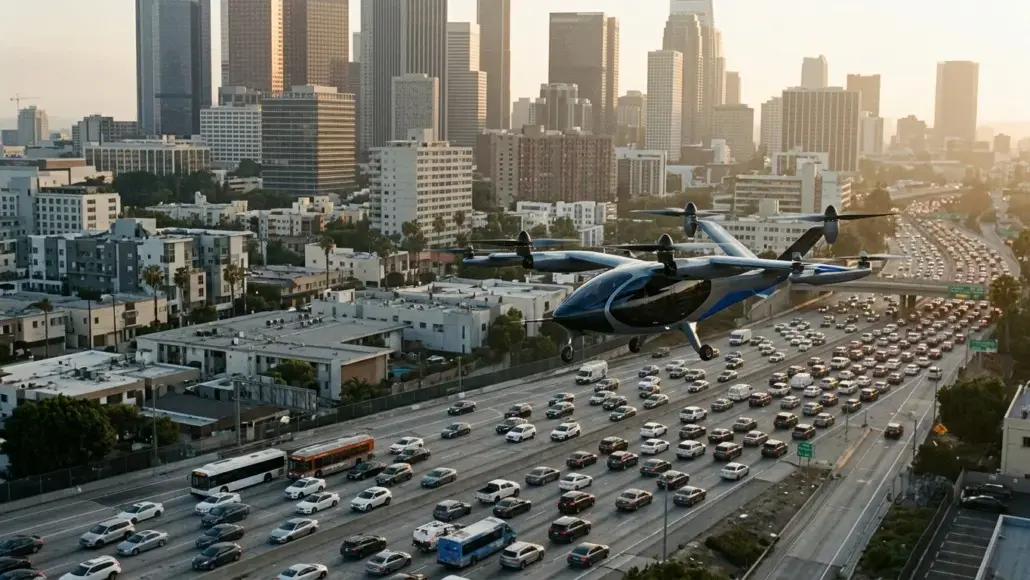
The modern urban experience is increasingly defined by the stagnant crawl of the morning commute. For decades, the solution to rising traffic congestion has been to build more roads, wider highways, and deeper tunnels. Yet, the phenomenon of induced demand often ensures that every new lane is filled almost as quickly as it is paved. As metropolitan populations swell toward unprecedented densities, the two-dimensional constraints of our current infrastructure have reached a breaking point. This is where the sky offers a new frontier. The emergence of air taxis represents more than just a futuristic novelty. It is a fundamental shift in the geometry of urban mobility, moving from the saturated planes of the earth into the vast, underutilized volume of the lower atmosphere.
Transport Advancement notes that this transition is being spearheaded by the development of Advanced Air Mobility (AAM), a concept that envisions a safe and efficient system for air passenger transport within metropolitan areas. Unlike the noisy, fuel-hungry helicopters of the past, the current revolution is built upon the foundation of eVTOL aircraft—electric vertical takeoff and landing vehicles. These machines combine the vertical agility of a rotorcraft with the horizontal efficiency of a fixed-wing airplane, all while operating on electric propulsion. By leveraging the third dimension, cities can begin to decouple economic growth from ground-level gridlock, offering a bypass to the bottlenecks that stifle productivity and quality of life.
The Engineering Behind the Ascent
At the heart of the movement toward air taxis lies a breakthrough in aerospace engineering known as distributed electric propulsion. In traditional aviation, a single large engine or a pair of turbines provides the necessary thrust, creating significant noise and a single point of failure. Modern eVTOL aircraft utilize multiple small electric motors distributed across the airframe. This redundancy is a cornerstone of their safety profile; if one or even two motors fail, the remaining units can compensate to ensure a controlled descent or continued flight. This engineering philosophy dramatically lowers the risk profile for urban aviation, making it a viable candidate for mass public transit.
Furthermore, the shift to electric power addresses the two most significant barriers to urban flight: noise and emissions. Internal combustion engines are inherently loud, making frequent low-altitude flights over residential areas socially untenable. Electric motors, however, produce a fraction of the acoustic signature. Many eVTOL aircraft are being designed to blend into the ambient background noise of a city, appearing no louder than a passing breeze or a distant air conditioner once they reach cruising altitude. This quiet operation is essential for gaining public acceptance and integrating air taxis into the fabric of daily life without degrading the acoustic environment of the neighborhoods they serve.
Beyond the noise, the promise of sustainable mobility is what truly separates this era from previous attempts at flying cars. By utilizing battery technology and, eventually, hydrogen fuel cells, air taxis can operate with zero localized emissions. As cities worldwide strive to meet carbon neutrality goals, replacing high-emission ground vehicles with electric aerial alternatives offers a path toward a cleaner, more breathable urban atmosphere. This alignment with green energy initiatives ensures that advanced air mobility is viewed not just as a luxury for the elite, but as a critical component of a future-proof, smart transportation ecosystem.
Reimagining the Urban Landscape through Infrastructure
The successful implementation of air taxis requires more than just the aircraft themselves; it necessitates a radical rethinking of urban infrastructure. Traditional airports are massive, distant, and require miles of tarmac. In contrast, the air taxi ecosystem relies on vertiports—compact, localized hubs designed for quick turnarounds. These vertiports can be integrated into existing structures, such as the tops of parking garages, transit centers, or even commercial office buildings. By placing takeoff and landing zones closer to where people actually live and work, the total door-to-door travel time is significantly reduced, which is the primary value proposition for any passenger transport system.
Integrating these hubs into a city’s broader smart transportation network is vital for creating a seamless experience. A commuter might take an electric scooter to a local vertiport, board an eVTOL aircraft for a fifteen-minute flight across the city, and then use a ride-sharing service to reach their final destination. This multi-modal approach ensures that air taxis complement, rather than compete with, existing public transit. When air taxis are synchronized with digital twin technology and real-time traffic data, the entire urban mobility network can be optimized to prevent congestion before it even begins to form.
However, building this infrastructure presents unique urban planning challenges. Developers and city officials must navigate complex zoning laws and ensure that vertiports are accessible to a diverse range of neighborhoods to avoid creating transportation deserts. The goal is to move toward a democratic model of urban aviation where the benefits of shortened travel times are accessible to a broad segment of the population. As the scale of production for eVTOL aircraft increases and operational costs drop, the price point for a seat on an air taxi is expected to rival that of a premium ground-based ride-sharing service, making the sky an attainable route for many.
Alleviating the Weight of Traffic Congestion
The primary driver for the adoption of air taxis is the staggering cost of traffic congestion. In major global hubs, the average commuter loses hundreds of hours per year to gridlock, a drain on both personal well-being and national GDP. Ground-based solutions often face the last mile problem, where the final stretch of a journey takes as long as the rest of the trip combined due to localized street-level crowding. Air taxis bypass these terrestrial constraints entirely. By traveling at speeds of 100 to 150 miles per hour in a straight line, they turn a grueling hour-long crawl through traffic into a ten-minute hop.
This reclamation of time has profound socioeconomic implications. When the barriers of distance and traffic are lowered, the geographical boundaries of the labor market expand. People can live further from city centers in more affordable areas without sacrificing their careers to a punishing commute. This decentralization can help ease the housing crises in major cities by reducing the desperate need to live within a small radius of the central business district. Urban mobility, therefore, becomes a tool for social mobility, allowing for a more flexible and distributed way of life that prioritizes human time over the mechanical limitations of the road.
Furthermore, the reduction of cars on the road leads to a secondary benefit for those who remain on the ground. As a significant portion of high-value, time-sensitive trips migrate to the air, the pressure on surface streets is relieved. This can lead to a de-tuning of urban roads, where space previously reserved for six lanes of traffic can be reclaimed for parks, pedestrian walkways, and cycling paths. In this sense, the success of advanced air mobility is not measured only by the number of vehicles in the sky, but by the increased livability and greenery of the streets below.
Navigating the Regulatory and Safety Airspace
For air taxis to become a daily reality, the industry must satisfy the rigorous safety standards of aviation authorities like the FAA and EASA. The certification process for eVTOL aircraft is remarkably stringent, requiring manufacturers to prove that their vehicles are as safe as commercial airliners. This involves rigorous testing of battery systems, flight control software, and structural integrity. The transition from piloted vehicles to fully autonomous passenger transport will likely happen in phases, with initial flights featuring highly trained pilots who oversee automated systems, eventually moving toward remote supervision and full autonomy as the technology matures and public trust grows.
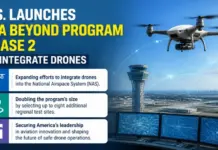
Airspace management is another critical hurdle. Current air traffic control systems are designed for high-altitude commercial flights or low-volume helicopter movements. A city with hundreds of air taxis buzzing between vertiports requires a new, digitized approach known as Unmanned Aircraft System Traffic Management (UTM). This digital airspace will use AI-driven algorithms to deconflict flight paths in real-time, accounting for weather conditions, emergency vehicle corridors, and temporary flight restrictions. This level of smart transportation integration is necessary to ensure that the traffic we are trying to solve on the ground does not simply migrate into a chaotic and dangerous sky.
Public perception also plays a pivotal role in the regulatory landscape. People are naturally hesitant about new technologies, especially those that involve flying over densely populated areas. Industry leaders are focusing on transparency and community engagement to address concerns about privacy, safety, and noise. Demonstrating the tangible benefits of sustainable mobility and the rigorous safety protocols in place is essential for shifting the narrative from one of skeptical curiosity to one of enthusiastic adoption. The goal is to prove that air taxis are not a disruption in the negative sense, but a harmonious addition to the city’s ecosystem.
The Economic Vitality of Advanced Air Mobility
The economic engine behind the air taxi movement is substantial. Trillions of dollars are expected to flow into the AAM sector over the coming decades, driven by a combination of venture capital, aerospace giants, and automotive manufacturers entering the fray. This influx of capital is accelerating the development of ancillary technologies, such as high-density solid-state batteries and advanced lightweight composites, which have applications far beyond aviation. The creation of a new transportation category also generates a wealth of high-tech jobs, from aircraft maintenance and vertiport operations to software development for fleet management.
From a consumer perspective, the economic shift moves from vehicle ownership toward mobility-as-a-service. Much like the transition seen with ride-hailing apps on the ground, the air taxi model thrives on high utilization rates. By sharing the cost of the aircraft and its operation across thousands of passengers, the per-seat cost becomes manageable. This shift reflects a broader trend in modern urban living where access is valued over ownership. When transport becomes a utility that can be summoned on demand, the need for private car ownership—and the massive amounts of urban space dedicated to parking those cars—begins to evaporate.
The ripple effects of this economic transition will be felt in real estate and urban development. Properties that were once considered too far from the city’s pulse will see a surge in value as they become effectively closer via an air taxi link. Conversely, the premium on living directly next to a noisy, congested highway may decrease as the sky becomes the preferred route for the time-conscious traveler. We are looking at a restructuring of urban value that prioritizes connectivity and environmental quality, driven by the efficiency of the air taxi model.
A Vision for the Future of Flight
As we look toward the horizon, the integration of air taxis into the urban fabric represents the next great leap in human mobility. Just as the elevator allowed cities to grow vertically toward the heavens, the eVTOL aircraft allows our transit systems to expand into the air. This is not about replacing the car or the train; it is about adding a much-needed layer of flexibility to a world that is moving faster than its infrastructure can currently support. The convergence of electric propulsion, autonomous systems, and digital infrastructure is creating a perfect storm for innovation that will redefine the 21st-century city.
The journey ahead is complex and requires the cooperation of engineers, policymakers, and citizens alike. We must ensure that this technology is developed with an eye toward equity and sustainability, making sure that the sky remains a resource for all. By moving beyond the limitations of the pavement, we can create cities that are more connected, less congested, and infinitely more breathable. The era of urban aviation is no longer a distant dream found in the pages of science fiction; it is a burgeoning reality that promises to return to us our most precious and non-renewable resource, our time. Through the thoughtful implementation of air taxis, Transport Advancement believes that the gridlock of today will give way to the fluid, efficient, and elevated mobility of tomorrow.
