











Egypt’s President Abdel-Fattah El-Sisi has directed the government to strengthen strategic partnerships aimed at attracting greater foreign direct investment into Egypt’s civil aviation sector. The plan includes establishing integrated investment zones around Egyptian airports, as part of wider efforts to support the development of the country’s aviation infrastructure.
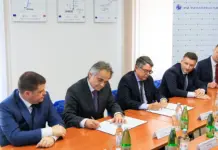
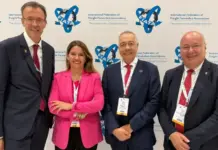
The directive was issued during a meeting attended by Prime Minister Mostafa Madbouly, Minister of Civil Aviation Sameh El-Hefny, and the president’s adviser for financial affairs, Lieutenant General Ahmed El-Shazly. According to the Egyptian presidency, discussions focused on the ongoing development of the civil aviation sector. El-Hefny outlined measures involving the modernization of airport infrastructure, capacity expansion and improvements to passenger services.
He also presented the ministry’s future activities, emphasizing that continued investment in the modernization and expansion of Egyptian airports is intended to meet the requirements of the country’s overall development. The minister said the modernization program is also designed to keep pace with steady growth in global tourism and travel while reinforcing Egypt’s position, supported by its strategic geographical location.
El-Sisi stressed that continued efforts are required to develop the civil aviation sector through airport infrastructure modernization, improved services and adherence to the highest safety and security standards. According to the president, these measures are expected to improve the competitiveness of Egyptian airports at both regional and international levels. He also emphasized the need to strengthen private sector participation in the management and operation of airports.
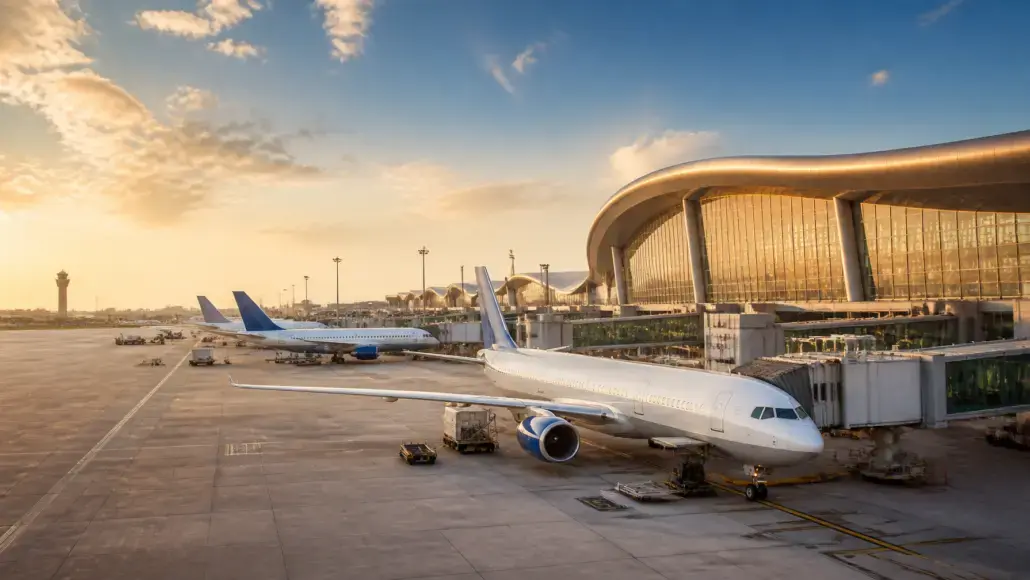
The meeting further examined the strategic vision for, and progress of, Terminal Building No. 4 at Cairo International Airport. El-Hefny said the project will involve construction of a new passenger terminal with a capacity of around 40 million passengers annually. The additional capacity is intended to substantially expand Cairo Airport’s capabilities while supporting the state’s objective of positioning Egypt as a major regional centre for aviation, transport, and logistics services.
The project will incorporate the latest international approaches to airport design and operation, including artificial intelligence (AI) and digital technologies, alongside a smart and sustainable operating system. The minister said this system is expected to improve passenger service quality, raise operational efficiency and meet the highest environmental sustainability standards.
Cairo Terminal 4 project advances
During the meeting, El-Sisi instructed that the new passenger terminal should be built according to the highest international standards covering design, technology, sustainability and operational efficiency. He said the project should become a leading international model for airport development.
The president also called for complaints concerning service quality at various airports to be monitored and addressed seriously and promptly. The aim is to improve the travel experience while strengthening passengers’ confidence in airport services.
The Terminal 4 project was initially announced in September 2025, when El-Hefny told local television that construction would take around four years and cost an estimated $4.5 billion. At that time, the project was expected to add 30 to 40 million passengers of capacity to the 28 million currently handled by Terminals 1, 2, and 3 combined.
Prime Minister Madbouly subsequently described the facility in August as one that would “become a leading model” in airport design and operation worldwide. By this month, officials had increased the capacity target to a full 40 million passengers annually. Once operational, the terminal would bring Cairo Airport’s total capacity to roughly 70 million.
Private-sector participation under Vision 2030
The directive forms part of a broader effort to attract private capital into Egyptian aviation. In June 2025, El-Sisi ordered that Hurghada International Airport be offered for private-sector partnership by the end of that year. The move was included within a wider portfolio covering 11 major Egyptian airports being developed with the International Finance Corporation as technical advisor.
The initiative is being pursued under Egypt’s Vision 2030 strategy, which seeks to transform the country’s airports into regional hubs while retaining state ownership.
