


























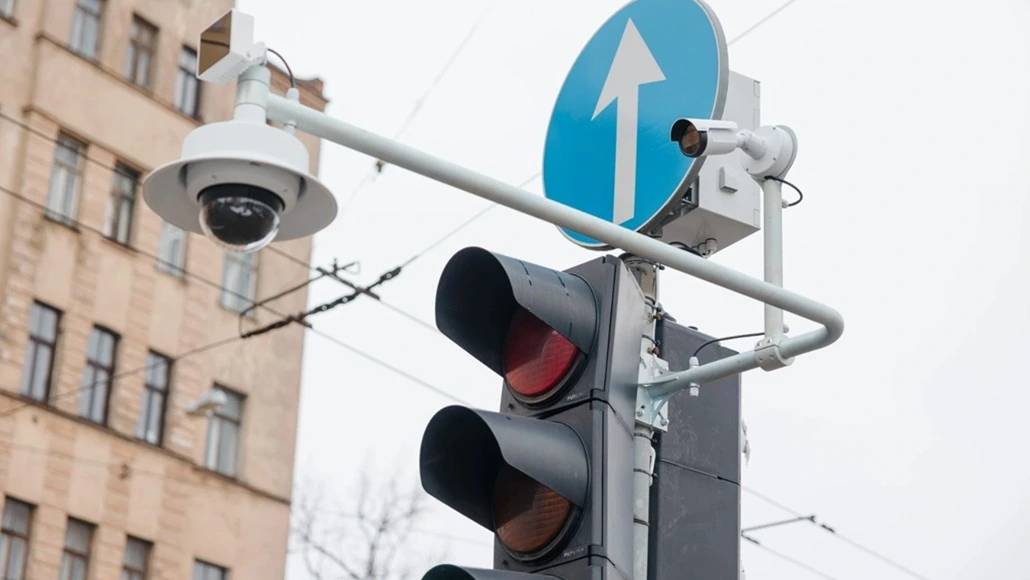
Fresh insights from LMT Group highlight the growing impact of its traffic monitoring solution in the Latvian capital of Riga, where red-light violations have fallen sharply over a six-month period. Since the system was deployed across 9 locations, violations dropped by 66%, declining from a peak of 3,636 incidents in August 2025 to 1,134 in February 2026. The traffic monitoring solution has demonstrated how automated systems can significantly improve compliance and reshape urban traffic behavior. Prior to its rollout in March 2025, enforcement relied heavily on manual patrols, with Riga Municipal Police issuing 1,250 red-light violation tickets across the entire city in 2024, underscoring the efficiency gains enabled by digital monitoring tools.
Beyond enforcement numbers, the traffic monitoring solution has revealed new behavioral patterns among drivers. Data shows that the highest risk period for red-light violations occurs between 4 and 5 p.m., rather than later in the evening rush as commonly assumed. This finding contrasts with expectations that violations would peak after 5 p.m., when commuters are returning home. In comparison, morning traffic sees roughly half the number of violations. “Smart control systems have become an indispensable tool for organizing the city’s circulatory system – the traffic flow – preventing the intentional creation of congestion and ensuring priority for public transport,” said Andrejs Aronovs.
The broader safety context across Europe adds urgency to such initiatives. According to European Commission data, 19,400 people died in road accidents in Europe in 2025, with Latvia ranking fourth in the EU for fatalities. Although fatal accidents declined by 3% in 2025 despite increasing vehicle numbers, the region has yet to meet its Vision Zero target of eliminating road deaths. Against this backdrop, the traffic monitoring solution developed by LMT Group offers both enforcement and analytical capabilities. Gints Jakovels noted that the company’s solutions “help authorities respond more effectively, while also giving city planners the evidence they need to improve infrastructure and reduce risks for everyone on the road.”
The system’s functionality extends well beyond detecting red-light violations. It can classify and track objects, recognize vehicle licence plates, identify traffic signals, and flag infractions such as illegal bus lane usage and unlawful stopping at intersections. Once a violation is detected, the data is transmitted to Riga Municipal Police and the Road Traffic Safety Directorate (CSDD) for assessment and penalties. In addition, the traffic monitoring solution delivers valuable analytics by mapping traffic flows and movement trends, allowing urban planners to make informed infrastructure decisions. Currently deployed in six Latvian cities and serving more than 800,000 residents, the system has proven its scale. It is detecting significantly more violations at a single intersection than the entire fleet of 360-degree police camera cars recorded nationwide in 2024. The technology is also in use in Graz, further illustrating its expanding footprint.
