













Nigeria is at the forefront of a burgeoning wave of maritime infrastructure investment across West and Central Africa, with commitments exceeding $27 billion earmarked for regional port expansion projects. This substantial financial influx is drawing considerable international attention to the region’s evolving port landscape and its potential as a critical trade and logistics hub.
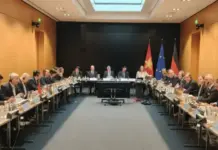
The significant developments were highlighted during the Mid-Year Session of the Board of Directors of the Port Management Association of West and Central Africa (PMAWCA), held in Lagos. Nigeria’s Minister of Marine and Blue Economy, Dr. Adegboyega Oyetola, who officially opened the session on 18th May 2026, emphasized Nigeria’s proactive stance in expanding its port capacity and implementing comprehensive maritime reforms. These initiatives are strategically designed to cement Nigeria’s position as the preeminent trade and logistics hub within West and Central Africa.
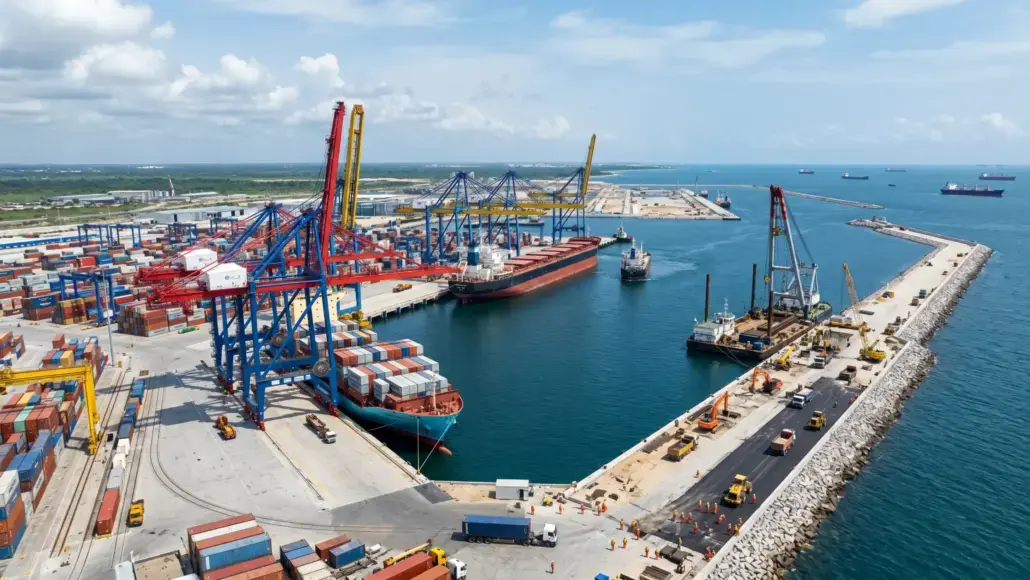
Dr. Oyetola announced that the Federal Government has greenlit the development of additional deep seaports across the nation. This strategic move is intended to bolster supply chain resilience and enhance Nigeria’s competitiveness on the global maritime stage. These new deep seaports will complement existing infrastructure, reinforcing the nation’s standing as the preferred maritime and logistics destination for the sub-region.
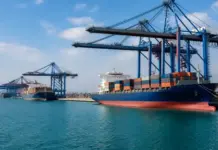
Furthermore, existing seaports are slated for extensive upgrades. These improvements will include critical channel deepening efforts, aimed at facilitating the entry of larger vessels. “These upgrades are critical to ensuring that our ports remain globally competitive and capable of supporting larger volumes of trade in the years ahead,” the minister stated, underscoring the importance of modernizing facilities to meet growing trade demands.
The administration of President Bola Tinubu remains steadfast in its commitment to modernizing the nation’s ports. This modernization drive encompasses infrastructure enhancements, widespread digital transformation, and a concerted effort to improve operational efficiency. According to the minister, a combination of coordinated policy interventions and enhanced inter-agency collaboration has been instrumental in significantly reducing logistics bottlenecks at major Nigerian seaports.
“These efforts have contributed to improved cargo evacuation, reduced vessel waiting time, greater operational efficiency, and a more predictable business environment for port users and investors,” Oyetola said.
The minister urged delegates to champion initiatives that strengthen logistical resilience in port operations and regional supply chains. The focus is also on promoting sustainable port management practices, fostering innovation, embracing digital transformation, and ensuring inclusive community development linked to maritime activities.
Dr. Abubakar Dantsoho, President of PMAWCA and Managing Director of the Nigerian Ports Authority (NPA), echoed the sentiment of a significant resurgence in maritime infrastructure investment across the sub-region, totaling over $27 billion in regional port expansion. He cited several major undertakings, including the $20 billion Simandou-Morebaya Deep Sea Port project in Guinea, the $2 billion Port San Pedro in Côte d’Ivoire, the $1.5 billion Lekki Deep Sea Port in Lagos, and the $1.2 billion Ndayane Port in Dakar.
Significant investments are also underway in Ghana and Senegal, with Tema port developments accounting for $1.5 billion. Nigeria’s Apapa and Tin Can Island ports are also beneficiaries of ongoing $1 billion investments, complemented by a $600 million investment from APM Terminals. These figures illustrate the scale of the regional port expansion drive.
Dr. Dantsoho further articulated that ports in West and Central Africa must evolve beyond their traditional roles as mere cargo gateways. They are envisioned to become powerful engines for broader blue economy growth, integrating maritime value creation across sectors such as sustainable fisheries, renewable marine energy, coastal tourism, aquaculture, and marine biotechnology.
The Governor of Lagos State, Babajide Sanwo-Olu, represented by the Commissioner for Transport, Oluwaseun Osiyemi, noted that the conference, which convened over 350 international trade facilitators and industry leaders, reflects a growing confidence in Nigeria’s capability to shape the future of regional maritime trade. The Lagos port corridor, spanning Apapa, Tin Can Island, and Lekki, handles a substantial portion of the country’s international trade, making discussions on port efficiency, logistics, and trade facilitation paramount for businesses and livelihoods nationwide.
Governor Sanwo-Olu emphasized that the meeting serves to strengthen institutional relationships among African nations and foster collective solutions to shared maritime challenges, including port congestion, digitalization, climate vulnerability, and security concerns. He reiterated that regional cooperation is indispensable for enhancing intra-African trade and unlocking the immense economic potential of the maritime sector. The Lagos State government remains dedicated to supporting initiatives that bolster port operations, advance trade facilitation, and promote regional maritime integration.
