













Vietnamese authorities are intensifying efforts to bolster multimodal transport connectivity, addressing persistent imbalances within the freight transport system that currently impede logistics efficiency and dampen supply chain competitiveness. A conference on 21st May convened by Vietnam’s Ministry of Construction (MoC) focused on promoting this vital integration, identifying critical bottlenecks in current operations, and charting a course for future development.
Vietnam’s minister of Construction Trần Hồng Minh highlighted the substantial trade volume recorded last year, with import-export turnover approaching US$930 billion and cargo transport exceeding 3 billion tonnes, a significant 14.1 per cent increase year-on-year. Road transport emerged as the dominant mode, carrying over 2.2 billion tonnes, up 14.7 per cent, while container throughput at seaports reached nearly 34.3 million TEUs, marking a 12 per cent rise. These figures contributed significantly to Vietnam’s robust GDP growth of 8.02 per cent.
However, global disruptions, including geopolitical conflicts and evolving tariff policies, have profoundly impacted supply chains. Coupled with volatile fuel prices affecting freight rates and international shipping routes, these factors underscore the urgent need for a more resilient and efficient transport network. In this context, Vietnam’s multimodal transport connectivity has notable shortcomings.
“The transport market share remains imbalanced, with road transport accounting for a large proportion of freight volume at around 75 per cent, while high-volume transport modes such as railways remain underdeveloped and account for a very small share of just 0.18 per cent,” stated Minister Minh.
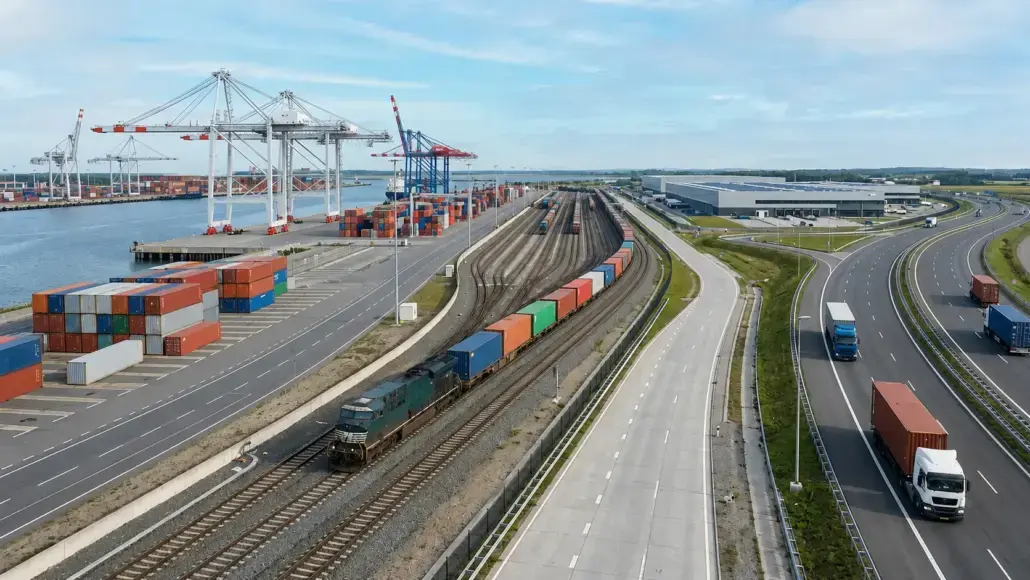
Furthermore, the nation’s shipping fleet is limited, with a considerable portion of freight handled by foreign carriers. Inland waterway transport, despite its inherent advantages in cost-effectiveness for large volumes, faces developmental hurdles due to waterway and bridge clearance limitations. Crucially, interconnections between rail transport and key hubs like seaports and inland container depots (ICDs) are largely absent.
Đỗ Công Thuỷ, deputy director of MoC’s Department of Transport and Traffic Safety, emphasized that multimodal transport has become a global standard for optimizing supply chains. This approach leverages the synergy of different transport modes rather than operating them in isolation, maximizing the strengths of each. In contrast, Vietnam’s multimodal transport activities constitute less than 10 per cent of the total, a stark contrast to developed nations where figures range from 25 to 40 per cent.
Thuỷ underscored that the solution extends beyond merely constructing new infrastructure. It lies in the effective organization, connection, and optimization of the existing system. The total value of Vietnam’s transport infrastructure is estimated at approximately VNĐ5 quadrillion (US$191.1 billion), representing nearly half of the nation’s total infrastructure assets. Last year alone, freight transport volume surpassed 3 billion tonnes, with cargo turnovr of 612 billion tonne-kilometres, while passenger transport facilitated approximately 6.1 billion trips, with a turnover of around 312 billion passenger-kilometres.
The prevailing distribution of freight transport volume highlights the imbalance: road transport accounts for 75.1 per cent, inland waterways 19.8 per cent, maritime transport 4.9 per cent, railways a mere 0.18 per cent, and aviation 0.02 per cent. This disparity strongly advocates for the acceleration of multimodal transport development.
Vietnam’s current multimodal network is structured around four primary economic corridors: North-South, East-West, the northern logistics region, and the southern logistics region. Within these corridors, inland waterways exhibit limited integration with road and rail networks. This is often due to the location of inland ports on provincial roads, complicating connections to national highways.
Additional challenges include constrained cargo-handling capacities and inefficient loading and unloading processes. These inefficiencies result in reduced cargo throughput, longer vehicle turnaround times, and consequently, elevated freight costs.
“Connectivity between railway transport and inland waterways and seaports has not received sufficient investment and synchronised development. The inland container depot system serving as a hub connecting transport modes also remains limited,” Thuỷ noted.
Moving forward, the successful development of multimodal transport connectivity will necessitate a holistic approach. This includes implementing policy mechanisms, strategic investment planning, providing targeted support for transport enterprises, and embracing digital and green transformation initiatives to enhance overall logistics efficiency and bolster supply chain competitiveness.
