

















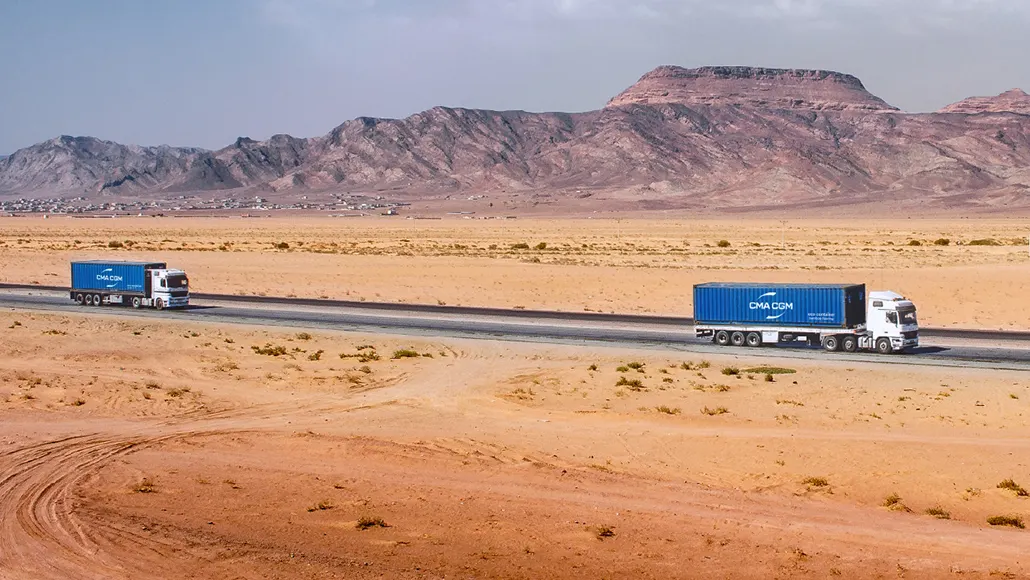
Amid escalating tensions in the Middle East and restrictions impacting maritime traffic through the Strait of Hormuz, CMA CGM Group has found the answers in other modes of transport. Facing significant navigation constraints, the company is actively working to sustain customer supply chains and maintain uninterrupted trade flows to and from the region. To address these challenges, the Group is leveraging its global network agility and integrated logistics capabilities by rolling out alternative multimodal transport solutions that combine maritime, rail and road transport. These multimodal transport solutions are designed to preserve the continuity and efficiency of logistics operations despite ongoing disruptions in Hormuz.
Strategically positioned south of the Strait of Hormuz, Khor Fakkan, Fujairah and Sohar have been identified as key entry points for cargo flows heading into the Gulf. From these ports, CMA CGM has established logistics corridors connecting major hubs within the United Arab Emirates, including Khalifa, Jebel Ali and Sharjah. In addition, the network extends to other countries bordering the Arabian Gulf through a mix of regional land and maritime transport. This structured approach, built around multimodal transport solutions, ensures that supply chains across the region remain fluid and operational under challenging conditions.
The port of Jeddah, situated on the Red Sea, serves as another viable alternative to routes passing through the Strait of Hormuz. From Jeddah, CMA CGM is deploying road corridors, with or without maritime links, to facilitate onward transportation to key destinations such as Saudi Arabia (Dammam), the United Arab Emirates, Qatar, Bahrain, Kuwait and Iraq. This configuration also allows cargo flows to connect seamlessly with the Mediterranean and Asia while avoiding exposure to the Strait. These diversified routes further reinforce the Group’s reliance on multimodal transport solutions to mitigate risk and maintain connectivity.
In parallel, CMA CGM is utilizing Omani ports as a third major bypass option, offering dependable road connections to the United Arab Emirates and routes to the Upper Gulf that combine road and feeder services. This framework provides a stable alternative for both regional and cross-border logistics flows. Through the deployment of these integrated systems, the company demonstrates its capacity to anticipate geopolitical disruptions and deliver resilient, flexible and secure logistics services, underpinned by its continued investment in multimodal transport solutions.
