
















The fundamental reshaping of transport systems through intelligent technologies simultaneously reshapes human roles, skill requirements, and employment opportunities throughout transport sector. Workforce transformation in intelligent transport represents one of the most significant career disruptions affecting any industry, with direct consequences for millions of workers worldwide and broader societal implications for employment, community stability, and social cohesion. Unlike previous technological transitions affecting specific occupations or regions, intelligent transport transformation spans every geographic region and every occupation within transport sector, creating simultaneous need for workforce adaptation, organizational capability development, and public policy enabling smooth transition.
Digital skill sets now represent foundation competencies for virtually all transport sector employment. Workers previously succeeding through mechanical knowledge and hands-on experience must now develop proficiency with digital systems, data interpretation, and technology platforms managing modern transport operations. Equipment operators controlling vehicles, cranes, and other transport machinery increasingly interact with autonomous systems and digital controls rather than mechanical controls that required physical strength and intuitive understanding. Maintenance workers diagnosing and repairing equipment use diagnostic software, sensor data analysis, and digital troubleshooting rather than mechanical intuition and physical testing. Planning and coordination roles depend on interpretation of analytics, scenario analysis, and data-driven decision-making rather than experience-based judgment alone. This digital foundation requirement cascades through entire transport sector, creating universal need for workforce development supporting rapid skill transition.
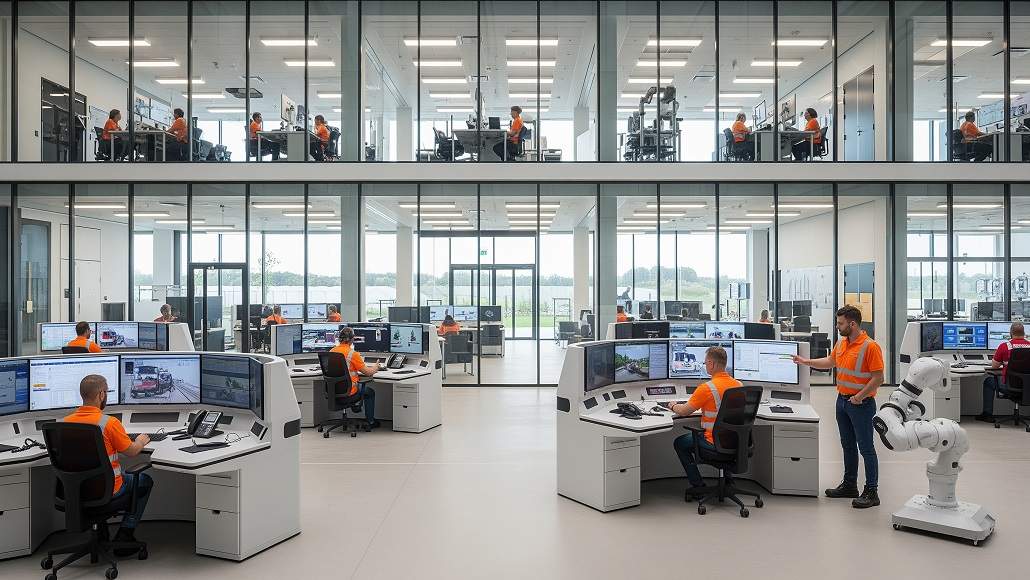
Human-machine collaboration fundamentally redefines employment relationships throughout intelligent transport systems. Rather than automating entire occupations, intelligent systems augment human capabilities, enabling workers to focus on elements requiring human judgment, creativity, and adaptability while machines handle routine, hazardous, or cognitively routine tasks. Safety drivers accompanying autonomous vehicles represent quintessential human-machine collaboration, with humans monitoring system performance and intervening when intelligent systems encounter situations exceeding their operating parameters. Fleet management specialists analyze AI-generated optimization recommendations, evaluate trade-offs between cost, service quality, and efficiency objectives, and make strategic decisions that algorithms cannot make. Remote operations of transport equipment from control centers enables human operators located thousands of miles away to control vehicles or equipment through digital interfaces, expanding employment geography and improving access to technical talent.
Remote operations transform employment geography and create unprecedented opportunities for distributed workforce models previously impossible in transport sector. Equipment normally requiring human presence in dangerous or uncomfortable environments vessel bridges in severe weather, construction equipment in hazardous conditions, emergency vehicles responding to dangerous scenes enables remote operator control from safe control centers. This shift expands employment opportunities to workers unable to work in hazardous or geographically isolated locations, including workers with disabilities or family obligations limiting geographic mobility. Remote operations combined with global communication systems enables 24/7 operations supported by workforce distributed across time zones, improving equipment utilization and addressing labor shortages in regions facing demographic challenges and workforce constraints.
Data-driven decision-making represents transformative shift in how transport professionals perform their work. Rather than relying primarily on experience and intuition, modern transport professionals increasingly make decisions informed by analytical insights, predictive models, and optimization algorithms. A logistics planner determining optimal routes no longer relies on traffic knowledge and experience but uses algorithms analyzing real-time traffic, weather patterns, vehicle characteristics, and cost parameters to generate optimal recommendations. A maintenance scheduler determining when to perform equipment maintenance no longer relies on fixed schedules but uses predictive algorithms analyzing equipment condition, usage patterns, and degradation rates to identify optimal maintenance timing. A fleet manager determining which vehicles to operate or idle uses algorithms analyzing demand patterns, utilization rates, and profitability to optimize fleet composition. These shifts require workers to develop data interpretation skills, understand algorithm limitations, and apply analytical insights within business and operational constraints.
Safety drivers in autonomous vehicle environments represent new employment category combining vehicle operation knowledge with understanding of autonomous system capabilities and limitations. Safety drivers must monitor vehicle operation, remain alert to system performance degradation or failures, and intervene when situations exceed autonomous system operating parameters. This differs fundamentally from traditional driving, which requires continuous active operation. Safety driving requires different cognitive skills sustained attention and pattern recognition rather than continuous decision-making and reaction. Safety driver employment creates transition opportunities for workers from traditional driving occupations, though skill requirements differ sufficiently to necessitate training and capability development.
Fleet operation technicians supporting autonomous vehicle operations require knowledge of both vehicle systems and digital technologies managing fleet operations. Rather than mechanics maintaining individual vehicles, fleet operation technicians support entire fleets through remote diagnostics, software updates, and predictive maintenance coordination. This occupational transformation enables higher-level maintenance expertise to support larger vehicle populations through digital systems and remote diagnostics while reducing need for mechanics located at every vehicle location. Fleet technician roles require understanding of vehicle systems, digital diagnostics tools, and data systems enabling remote monitoring and coordination.
Artificial intelligence and automation system specialists represent entirely new employment categories created by intelligent transport transformation. These specialists understand how AI systems function, what training data systems require, how to interpret AI-generated recommendations, and how to identify when AI systems malfunction or provide inappropriate guidance. Transport organizations increasingly employ machine learning specialists developing custom models optimizing transport-specific problems, data engineers managing data pipelines enabling AI system training, and AI systems specialists ensuring that automated systems function correctly and achieve intended outcomes. These specialized roles require advanced technical education—often master’s degrees or PhDs in computer science, machine learning, or statistics—and represent significant opportunity for workers developing expertise in transport-specific AI applications.
Remote operations specialists coordinate operations of equipment controlled remotely from centralized control facilities. These specialists require understanding of vehicle systems, situational awareness of remote operating environments, and ability to respond rapidly to operational challenges. Unlike traditional equipment operation where operators physically occupy equipment, remote operations specialists monitor multiple remote-controlled systems simultaneously, shifting focus and attention among different operations as operational needs change. This cognitive demand differs from single-asset operation, requiring training and capability development enabling effective performance in multi-asset remote operations environments.
Customer service roles transform through intelligent transport systems creating new interaction patterns. Rather than primarily human interaction, transport customers increasingly interact with digital systems for booking, payment, and issue resolution, with human agents handling exceptions and complex situations. This shift reduces routine customer interaction requirements while increasing emphasis on problem-solving and relationship management skills for remaining human agent roles. Contact center agent roles emphasize empathy, problem-solving ability, and interpersonal skills rather than procedural knowledge and transaction handling. These shifts require workforce development emphasizing soft skills and emotional intelligence alongside technical competence.
Maintenance and repair roles evolve as vehicles shift from mechanical systems requiring hands-on troubleshooting toward software-intensive systems requiring diagnostic software expertise. Traditional mechanics diagnosing problems through physical inspection and mechanical testing must develop software diagnosis capabilities using diagnostic tools and sensor data. Electricians and electronics technicians expand from support roles toward central roles as vehicle complexity shifts from mechanical to electrical and electronic systems. This occupational evolution creates opportunity for workers developing expertise in electric vehicle systems, power electronics, and software-based vehicle control, while reducing opportunities for workers whose skills are concentrated in mechanical systems increasingly absent from modern vehicles.
Organizational readiness for workforce transformation emerges as critical success factor determining whether organizations benefit from intelligent transport advantages or struggle with transition disruptions. Organizations successfully managing workforce transformation invest substantially in reskilling programs enabling existing workers to develop required capabilities for evolved occupations. These programs combine online learning, classroom instruction, apprenticeships, and on-the-job training enabling workers to acquire new skills while maintaining employment. Organizations partner with educational institutions developing transport-specific curricula aligned with industry needs. Hiring practices evolve to emphasize learning potential and adaptability alongside technical skills, recognizing that specific technical knowledge becomes outdated quickly but ability to learn and adapt remains perpetually valuable.
Diversity and inclusion in workforce transformation becomes critical imperative ensuring that transformation benefits extend broadly rather than concentrating among already-privileged populations. Women and underrepresented minorities historically underrepresented in technical transport roles face barriers to accessing training, mentorship, and advancement opportunities. Organizations explicitly addressing these barriers through targeted recruitment, mentorship programs, and inclusive culture development expand talent pools and ensure that intelligent transport transformation creates opportunity broadly. Gender-balanced workforce leveraging diverse perspectives and experiences creates innovation advantages and improves organizational decision-making.
Economic transition support for workers whose occupations face elimination requires public policy complementing organizational investments. Workers unable to transition to evolved occupations despite training support require income protection, health care access, and regional economic development enabling employment alternatives. Policy mechanisms including wage insurance, extended unemployment benefits, relocation assistance, and education funding support workers facing disruption from intelligent transport transformation. Communities dependent on transport employment require economic development strategies preparing for employment shifts and creating alternative opportunities for workers whose skills no longer match available positions.
Future transport employment emphasizes adaptability, continuous learning, and growth mindset over specific technical knowledge quickly becoming obsolete. Workers thriving in intelligent transport era demonstrate curiosity about new technologies, willingness to challenge established practices, and openness to continuous skill development throughout career. Organizations building workforce culture embracing continuous learning create environment where workers view skill development as normal expectation rather than unusual burden. Career paths in future transport emphasize progression through increasing responsibility and decision-making authority rather than narrow technical specialization. Compensation and recognition systems reward workers demonstrating adaptability and learning commitment alongside technical competence.
Workforce transformation in intelligent transport systems represents opportunity to address long-standing challenges in transport sector including safety, efficiency, and equity. By strategically investing in workforce development, creating advancement opportunities for workers from underrepresented populations, and building organizational cultures emphasizing continuous learning, transport organizations can ensure that intelligent technology transformation benefits people as well as improving operational performance. The alternative implementing intelligent systems without matching workforce evolution creates technological capabilities that cannot reach full potential, worker displacement without adequate support, and social disruption that undermines benefits that intelligent transport systems promise. The human dimension of transport transformation deserves equivalent attention to technological innovation, ensuring that people and technology progress together toward future where both are optimized.
