














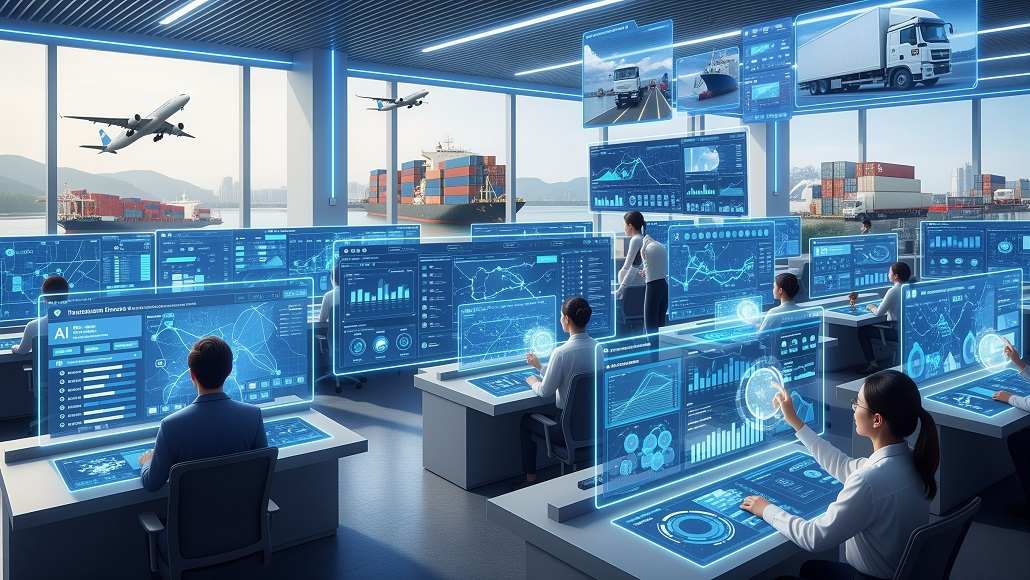
The traditional approach to transport management relied heavily on human expertise, historical precedent, and experienced judgment. Dispatchers decided which routes trucks should follow based on their knowledge of road networks and traffic patterns. Maintenance planners determined when equipment should be serviced based on manufacturer recommendations and past experience. Demand forecasters projected future needs based on trend analysis and intuition. While this human-centric approach worked reasonably well for decades, it suffers from fundamental limitations. Humans cannot process the vast quantities of data modern transport systems generate. Expertise becomes concentrated in individuals whose departure creates organizational vulnerability. Judgment, however experienced, introduces subjectivity and inconsistency.
Industrial artificial intelligence represents a transformative evolution in transport decision-making. By analyzing enormous datasets, identifying subtle patterns, optimizing complex trade-offs, and continuously improving through machine learning, AI systems are enabling transport organizations to make decisions that are more accurate, more consistent, and more optimized than human judgment alone could achieve. The shift from reactive, experience-based decisions to proactive, data-driven strategies is creating transport networks that are more efficient, more reliable, and more resilient.
AI-Driven Demand Forecasting and Capacity Planning
Transport organizations face constant uncertainty about future demand. A shipping company must decide whether to purchase additional containers. An airline must determine how many flights to schedule on each route. A rail operator must allocate train sets to different corridors. Decisions made with inaccurate demand forecasts result in either excess capacity that wastes resources or insufficient capacity that disappoints customers and leaves revenue on the table.
Traditional demand forecasting relied on statistical analysis of historical demand data, adjusted for known factors like seasonality, economic growth, or specific events. While reasonably effective for stable conditions, this approach struggles when demand patterns shift, new factors emerge, or unexpected disruptions occur. Industrial AI systems approach demand forecasting with far greater sophistication. These systems analyze hundreds of input variables simultaneously historical demand patterns, economic indicators, competitor activities, weather forecasts, event schedules, promotional campaigns, and countless other factors that influence transportation demand.
Machine learning models learn the relative importance of different variables and how they interact to influence demand. As new data arrives, the models update continuously, refining their understanding of demand drivers. A transport company implementing AI-based demand forecasting might analyze weather patterns, fuel prices, e-commerce activity, traffic incidents, and dozens of other factors to predict cargo volumes. An airline might incorporate schedule changes by competitors, fuel prices, aircraft utilization patterns, and macroeconomic indicators into demand predictions. These sophisticated models routinely achieve forecast accuracy improvements of 15-30% compared to traditional statistical approaches.
The business impact of improved demand forecasting is substantial. More accurate capacity planning prevents expensive excess inventory or service shortages. Airlines scheduling flights based on AI forecasts fill more seats, reducing operating costs per passenger. Shipping companies right-sizing container fleets minimize unnecessary capital expenditure while ensuring sufficient capacity. Rail operators allocating train sets more efficiently serve more passengers with fewer assets. These improved forecasts also enable more responsive service adding trains or flights when demand surges, reducing capacity during slower periods.
Predictive Maintenance Transforming Asset Management
Equipment failures represent one of the most expensive and disruptive problems in transport operations. A train that breaks down unexpectedly disrupts service for thousands of passengers and cancels downstream connections. A cargo handling crane that fails stops port operations. A vehicle that breaks down leaves customers stranded. Traditional approaches to preventing failures relied on preventive maintenance servicing equipment at fixed intervals regardless of actual condition or reactive maintenance repairing equipment only after failure occurred. Preventive maintenance prevented many failures but often involved servicing equipment that remained in perfect condition. Reactive maintenance kept costs low until catastrophic failures occurred.
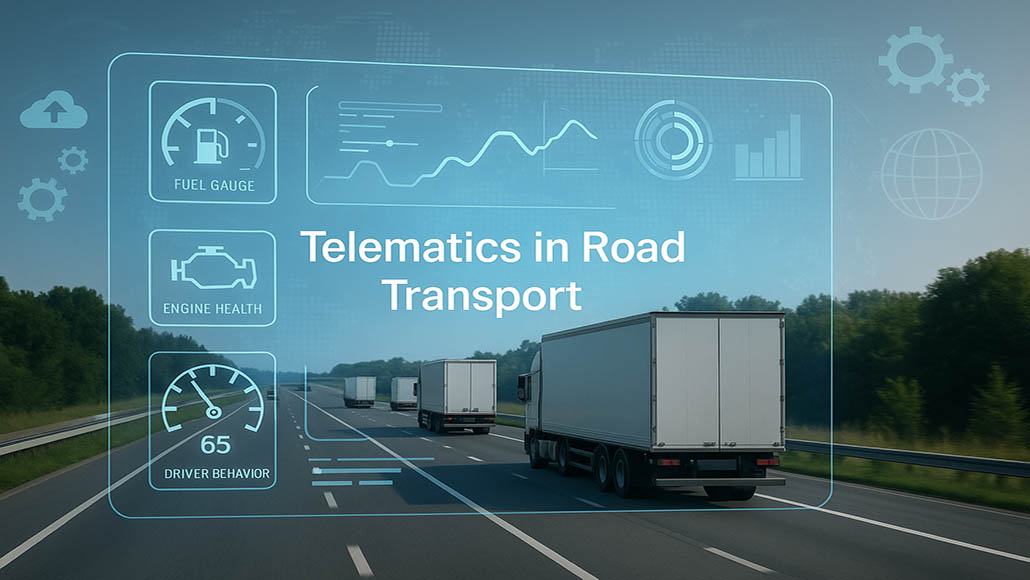
Predictive maintenance powered by industrial AI offers a fundamentally superior approach. IoT sensors embedded throughout transport equipment continuously monitor critical parameters vibration, temperature, pressure, electrical currents, and dozens of other variables that indicate equipment condition. These sensor streams feed into machine learning models trained on historical equipment failure data. The models learn to recognize the subtle patterns that precede specific failure modes. When sensor data matches patterns associated with impending failure, the system alerts maintenance teams to schedule preventive service.
The advantages are profound. Maintenance can be scheduled during planned downtime windows, minimizing service disruptions. Parts can be acquired before they are needed, reducing repair duration. Maintenance teams arrive prepared with necessary equipment and expertise. The system identifies failures before they cascade into secondary damage. Predictive maintenance implementation typically reduces unexpected equipment failures by 40-60%, extends asset lifespan by 10-25%, and reduces total maintenance costs by 15-30%. For complex transport systems, these improvements translate into millions of dollars in annual savings.
A maritime shipping company, for example, might deploy sensors monitoring engine vibration, temperature, and pressure throughout its vessel fleet. Machine learning models trained on historical engine failure data recognize patterns that precede bearing failures, seal degradation, or other common problems. When these patterns appear in real-time sensor data, the system schedules the vessel for servicing at the next convenient port. The vessel arrives for maintenance with a specific diagnosis and required parts ready, minimizing downtime. Service is completed before significant wear occurs, extending engine lifespan.
Real-Time Route Optimization and Dynamic Routing
Route planning represents a deceptively complex optimization problem. A delivery company with hundreds of vehicles and thousands of daily stops must assign packages to vehicles, determine sequence of deliveries, and route vehicles to minimize distance, time, and fuel consumption while satisfying timing constraints and customer preferences. The mathematical complexity is enormous the number of possible solutions grows exponentially with the number of stops. Experienced dispatchers using maps and expertise can create reasonably efficient routes, but these judgmental approaches cannot consider all variables or update dynamically as conditions change.
Industrial AI systems approach route optimization with mathematical sophistication that human planners cannot match. Algorithms analyze network topology, real-time traffic data, historical travel times, weather conditions, vehicle capacity, load characteristics, delivery time windows, fuel costs, and driver regulations simultaneously. The systems identify routing solutions that might not be intuitively obvious but deliver superior results. Moreover, these solutions update dynamically. If a traffic incident creates unexpected congestion on a planned route, the system reroutes the vehicle, notifying the driver before the congestion is even encountered.
Machine learning models continuously improve route optimization by learning from actual travel times experienced on different routes and times. A model learns that Tuesday morning traffic on a specific corridor differs from Thursday evening. It learns which routes handle heavy loads efficiently and which tolerate only light loads. It learns how different drivers interact with different routes. This continuous learning means that route optimization progressively improves, delivering better results month after month.
Transport companies implementing AI-driven route optimization document fuel consumption reductions of 10-20%, delivery time improvements enabling 15-30% more stops per vehicle per day, and cost savings of 8-15%. For a company operating thousands of vehicles, these improvements translate into millions of dollars in annual savings. Moreover, better routing means lower emissions, improving environmental impact alongside financial results.
Performance Analytics and Continuous Improvement
Transport organizations generate enormous quantities of operational data vehicle locations, delivery times, fuel consumption, maintenance records, customer feedback, safety incidents, and countless other metrics. Traditionally, this data was recorded but rarely analyzed systematically. Organizations relied on summary reports and individual experience to identify problems and opportunities.
Industrial AI systems apply sophisticated analytics to transport operational data, uncovering patterns and insights that human analysis would miss. Performance analytics systems analyze thousands of variables to identify what combinations of conditions and actions produce the best outcomes. These systems identify best practices performed by some operators and recommend them to others. They detect anomalies vehicles consuming unusual fuel volumes, routes taking longer than expected, equipment degrading faster than normal. They quantify the impact of different variables on outcomes.
Consider a taxi or ride-sharing company. Performance analytics might reveal that on rainy evenings, drivers who accept slightly longer pickup distances complete more rides per hour than drivers choosing the nearest available rides, because they position themselves more efficiently for the next request. This insight might not be obvious to individual drivers, but analytics systems can discover it and communicate it throughout the workforce. Similarly, analytics might identify that particular drivers achieve significantly higher ratings from customers and analyze what their behavioral patterns reveal about best practices.
Analytics systems also enable organizations to measure the impact of changes. When an airline implements a new boarding procedure, analytics compare the new procedure’s efficiency against the previous approach, quantifying improvements or problems. When a transit authority adjusts schedule timing, analytics measure the impact on on-time performance, customer satisfaction, and system reliability. This evidence-based approach to operational improvement replaces intuitive judgment with data-driven verification.
From Reactive to Proactive Management
Perhaps the most fundamental shift that industrial AI enables is the transformation from reactive to proactive management. Reactive management addresses problems after they occur fixing failed equipment, addressing customer complaints, responding to disruptions. This approach is inherently expensive and disruptive. Proactive management uses predictive analytics to address problems before they materialize scheduling maintenance before failure, optimizing operations to prevent disruptions, anticipating customer needs before complaints arise.
Industrial AI enables proactive management at scale. Predictive models forecast which vehicles are most likely to fail in the coming month and prioritize their maintenance. Demand forecasts anticipate periods of high demand, enabling advance capacity preparations. Performance analytics identify operational inefficiencies before they accumulate into serious problems. Customer analytics predict which customers are at risk of switching to competitors, enabling targeted retention efforts.
The transition from reactive to proactive is profound. It transforms transport operations from crisis-management focused to continuous-improvement focused. Instead of managers constantly firefighting unexpected problems, they can concentrate on strategic improvements and optimization. Service becomes more reliable because disruptions are prevented rather than merely repaired. Costs decline because expensive emergency interventions are replaced by planned maintenance and optimization.
The Future of Transport Intelligence
Industrial artificial intelligence is advancing rapidly, with capabilities improving monthly. Deep learning systems are becoming more sophisticated. Transfer learning enables models trained on one transport network to improve performance on different networks. Explainable AI helps users understand why systems make specific recommendations. These advances promise even more dramatic improvements in transport decision-making in coming years.
However, the most significant opportunity lies in integrating multiple AI systems into coherent transport ecosystems. A system that combines demand forecasting, route optimization, predictive maintenance, and performance analytics will achieve synergies greater than the sum of individual components. A transport organization that makes decisions based on integrated AI insights will optimize simultaneously across capacity, cost, reliability, environmental impact, and customer satisfaction.
The organizations and regions that embrace industrial AI most effectively will achieve transport systems that are dramatically more efficient, reliable, and sustainable than those using traditional approaches. For transport operators, customers, and society broadly, the adoption of industrial artificial intelligence in transport decision-making represents one of the most significant technological advances in the sector’s history.
