



























Bridges are dynamic structures that undergo constant movement due to thermal expansion, traffic loads, wind forces, and seismic activity. Managing these movements while maintaining a continuous and safe driving surface is one of the most significant challenges in bridge engineering.
Failure to accommodate these shifts can lead to severe structural damage, including cracking of the deck and corrosion of the supporting piers. Transport Advancement notes that advanced bridge expansion joint systems provide the necessary flexibility to allow for these movements while protecting the underlying infrastructure from water, salt, and debris.
Market Overview and Primary Joint Classifications
The global bridge expansion joints market reached a valuation of approximately 2.0 billion dollars in 2025. This growth is largely driven by the modernization of aging transportation networks in developed regions and the construction of massive new highway projects in emerging economies. As bridge designs become more complex, several primary joint types have emerged to address diverse operational requirements:
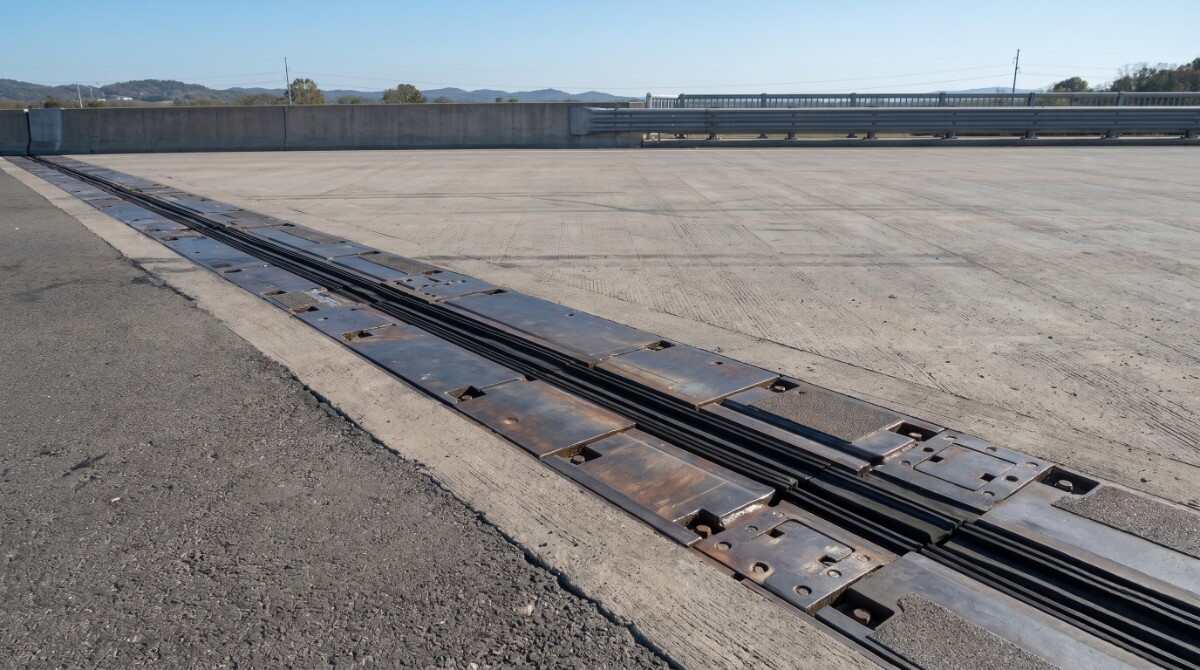
- Modular Expansion Joints: Sophisticated systems consisting of multiple transverse beams that can handle movements of several meters on large-span bridges.
- Single-Gap Joints: Simplified designs for smaller movements, providing a watertight seal and smooth surface for standard spans.
- Asphaltic Plug Joints: Flexible, polymer-modified bitumen joints that offer low noise and easy installation for medium traffic loads.
- Cantilever Joints: Using heavy-duty steel plates to bridge gaps where movement is primarily longitudinal.
Industry Leaders and Low-Maintenance Solutions
Maintenance and repair of expansion joints represent a major source of infrastructure downtime. Traditional joint designs often require frequent cleaning and parts replacement, leading to recurring lane closures on busy transport corridors. These closures cause traffic congestion and economic losses. Consequently, there is a strong industry movement toward low-maintenance joint technologies.
Major global companies are implementing these solutions through recent projects and product launches:
- Mageba: A globally present specialist, Mageba has provided massive modular expansion joints for iconic projects, handling movements of several meters while ensuring structural safety.
- Sika (Watson Bowman Acme): Sika has developed innovative systems that focus on Ease of Installation and long-term durability, utilizing advanced polymer seals that remain flexible across extreme temperature ranges.
- Trelleborg: Specializing in high-performance polymer components, Trelleborg provides custom-engineered sealing elements that maintain watertightness in critical highway bridges and tunnels.
- DS Brown (PCC Group): A leading manufacturer of bridge components that has introduced high-performance elastomeric joints designed to resist the chemical stresses of de-icing salts.
- Granite Construction: As a major contractor, Granite utilizes advanced expansion joint technologies in its large-scale bridge rehabilitation projects to minimize future maintenance requirements.
Digital Infrastructure and Environmental Methods
The transition toward digital infrastructure management is also impacting the expansion joint sector. Many modern systems are now being equipped with sensors to monitor movement, vibration, and temperature in real time. This data can be integrated into broader bridge health monitoring systems to provide early warning of potential issues. For example, predictive maintenance for ageing highways relies on this type of real-time information to identify components that are nearing the end of their service life before they fail. This proactive approach allows for planned maintenance during low-traffic periods.
Environmental sustainability is becoming an important factor in the design of bridge expansion joint systems. Manufacturers are exploring ways to use recycled materials and reduce the carbon footprint of their production processes. Additionally, the development of joints with lower noise profiles helps to mitigate the noise pollution associated with highway traffic. These silent joints use specialized surface geometries to break up the impact of vehicle tires, creating a more pleasant environment for surrounding communities and wildlife.
Regulatory and Financial Considerations
The regulatory standards for bridge expansion joints are becoming more globalized, with many countries adopting international testing protocols. These standards ensure that joints are evaluated for durability, watertightness, and safety under standardized conditions. This harmonization allows global manufacturers to supply their products to multiple markets with greater efficiency. It also provides bridge owners with a wider range of proven solutions to choose from, fostering competition and innovation in the industry.
Financial considerations are driving the adoption of more robust and reliable bridge expansion joint systems. The cost of a joint is typically a small fraction of the total bridge cost, but its failure can lead to damages that are many times more expensive. Therefore, investing in a high-quality joint system is a highly effective way to manage the financial risk associated with infrastructure ownership. This is particularly true for bridges funded through private finance initiatives where the long-term maintenance costs are a central component of the financial model.
Next Generation of Infrastructure Resilience Technologies
Future developments in expansion joint technology may include the use of shape-memory alloys and other smart materials that can adapt to changing conditions. These materials could potentially adjust their stiffness or geometry in response to temperature changes or traffic loads, further improving the performance and durability of the joint. While these technologies are still in the early stages of development, they point toward a future where bridge components are more responsive and resilient than ever before.
The ongoing evolution of bridge expansion joint systems is a testament to the importance of specialized engineering in the maintenance of global infrastructure. Transport Advancement believes that by providing the flexibility needed to accommodate movement while protecting structural integrity, these systems play a crucial role in ensuring the safety and efficiency of our highway networks. As the industry continues to move toward more durable and digitally-integrated solutions, the impact of these components on infrastructure resilience will only grow.
References
- “Bridge Expansion Joints Market Trends & Growth Outlook” – Data Bridge Market Research
- “Bridge Expansion Joints Market Demand, Size & Forecast” – The Insight Partners
- “Global Bridge Expansion Joints Market Revenue 2026” – 6Wresearch
- “AI Takes the Wheel in Highway Repairs” – Bentley Systems
- “Advanced Drainage Systems Announces Fiscal Year 2026 Results” – Advanced Drainage Systems
