



















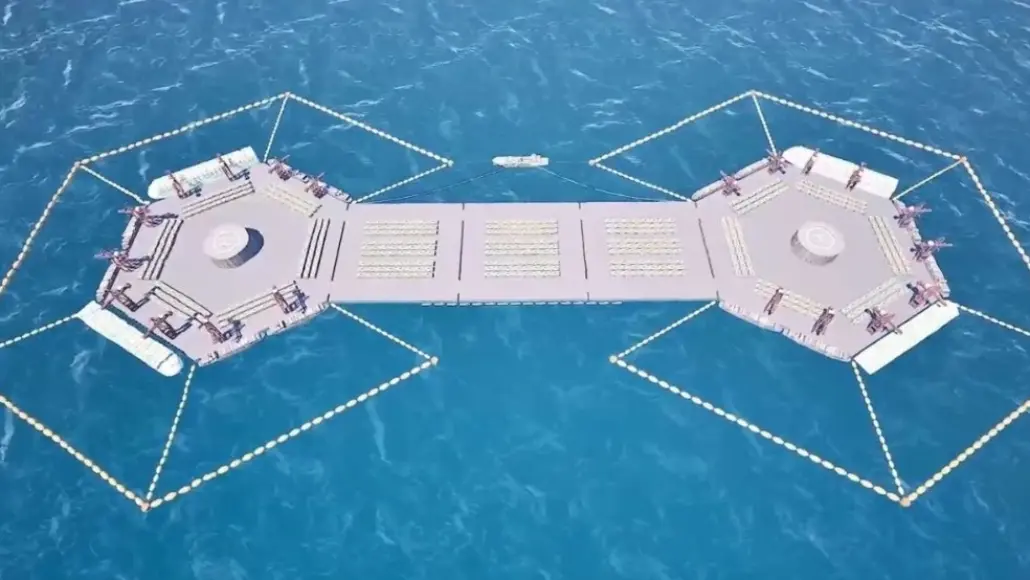
Chinese shipbuilder Jiangnan Shipyard has expanded its vision for nuclear-powered maritime transport with the introduction of a nuclear-powered logistics hub concept. Revealed during Posidonia in Athens, the proposal marks a progression from the company’s previous work on nuclear-powered containerships by introducing a broader framework that combines cargo movement, energy generation and vessel support within a single integrated system. The nuclear floating logistics hub is designed to function as a container transhipment terminal, an energy production centre and a charging station for future vessels operating across an interconnected maritime network.
Central to the concept is an offshore floating platform powered by molten salt reactor (MSR) technology. The platform would produce electricity for multiple purposes, including supplying power to ships within the network and supporting green fuel production.
According to Jiangnan Shipyard, the nuclear floating logistics hub forms part of a potential zero-emission ocean container logistics ecosystem aimed at advancing the long-term decarbonisation of international shipping. The envisioned system would bring together nuclear-powered deepsea containerships, offshore container transfer terminals, pure-electric feeder vessels and green-fuel production facilities. Under the proposed arrangement, large nuclear-powered boxships would undertake long-haul voyages, while offshore transhipment hubs would distribute cargo through smaller feeder vessels powered by electricity or alternative fuels such as ammonia.
In addition to nuclear energy generation, the floating platform would incorporate renewable energy assets including solar panels and wind turbines. The design also includes hydrogen production and green-fuel manufacturing capabilities, reinforcing the role of the nuclear floating logistics hub as a multi-purpose maritime energy centre.
The latest proposal follows Jiangnan’s presentation of a 24,000 teu nuclear-powered containership design at Marintec China in 2023. That vessel concept received approval in principle from classification society DNV and was based on fourth-generation molten salt reactor technology. Earlier this year, the shipbuilder further strengthened its position in the nuclear sector by obtaining manufacturing and installation licences from China’s nuclear safety authorities covering equipment for small floating reactors and related nuclear systems.
The new concept indicates that Jiangnan views nuclear power as extending beyond ship propulsion and into the wider development of maritime energy infrastructure. Through the nuclear floating logistics hub, the company is positioning nuclear technology as a potential enabler for shipping operations, port activities and fuel production.
Although interest in nuclear propulsion continues to grow as the industry pursues long-term decarbonisation goals, challenges remain concerning regulation, international conventions, port access, public acceptance and operational oversight. While the floating nuclear terminal remains at the concept stage, the proposal highlights how leading Chinese shipbuilders are examining possibilities beyond alternative fuels and considering what a fully integrated zero-carbon maritime supply chain could look like in the decades ahead.
