













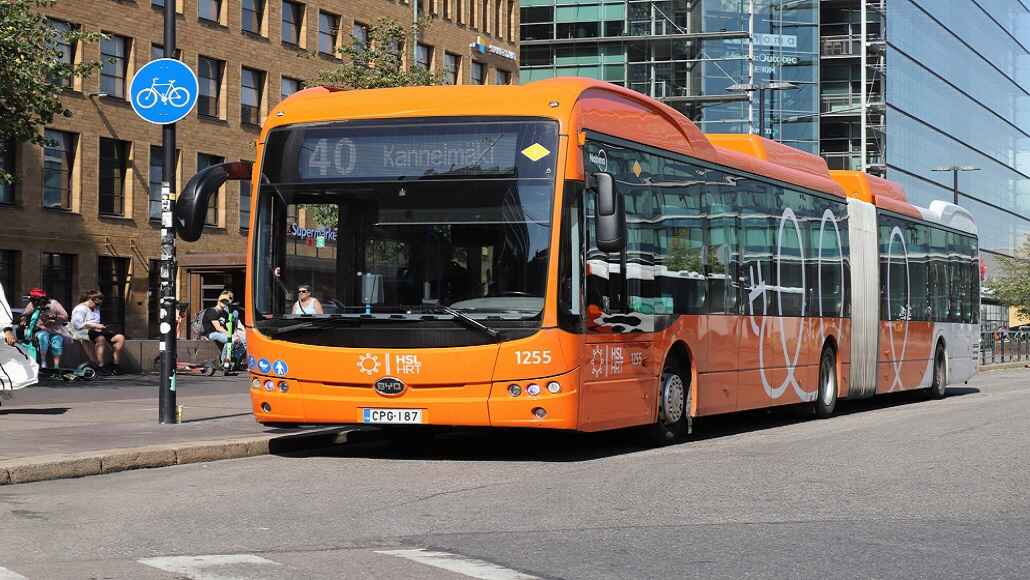
In 2024, all new city buses in the Netherlands, Finland, and Iceland will be battery-electric, demonstrating their complete adoption of electric public transportation.
According to Transport & Environment (T&E), almost half (49 percent) of new city buses in the EU were zero-emission (ZE), signalling a significant move away from fuel.
With a 57 percent zero-emission share, Spain led the larger markets, closely followed by the UK (56 percent) and Italy (44%). With barely one-third of their new buses powered by hydrogen or electricity, France and Germany fell behind.
In an opinion piece, Max Molliere, an E-mobility Data Analyst at T&E, stated that “the days of diesel buses are numbered, but also thanks to city-level policies such as zero-emission zones and fleet targets.”
As a result, the market for city buses is transitioning to zero-emission vehicles at a significantly faster rate than what is mandated by the EU’s Clean Vehicle Directive and the CO2 limits for buses and trucks. City buses are expected to achieve completely zero sales by 2027 at this rate of expansion, they stated.
The T&E data shows that several nations are lagging behind, despite the general uptick. Although Estonia made a significant change last year, Austria, Czechia, Hungary, Estonia, Slovakia, and Croatia have been sluggish to embrace zero-emission buses. By the end of 2024, 84% of Estonia’s new city buses were battery-electric, following the April launch of electric buses in Tallinn.
In addition, the demand for hydrogen buses is growing, since fuel cell models are expected to double their market share to 3% by 2024. Nonetheless, with 46% of new sales, battery-electric buses continue to dominate the market.
Europe Initially
Molliere also advocated for more intelligent government procurement practices.
The adoption of made-in-Europe ZE city buses can be encouraged by new public procurement criteria, they stated. To guarantee that public funds are used to support European jobs and manufacturing, tenders should concentrate on battery-electric and fuel cell buses rather than petrol and hybrid technologies.
Previously accounting for 20% of EU sales, hybrid city buses fell to 16% in 2024. The transition to entirely electric fleets was further supported by the low 14 percent of buses that still ran on petrol.
Molliere feels confident about the EU’s future, even though some nations are still catching up, he stated,
We should see the transition accelerate accordingly in trailing countries if 2025 is the turning point when more than half of new city buses are zero-emission, as we predict.
