



















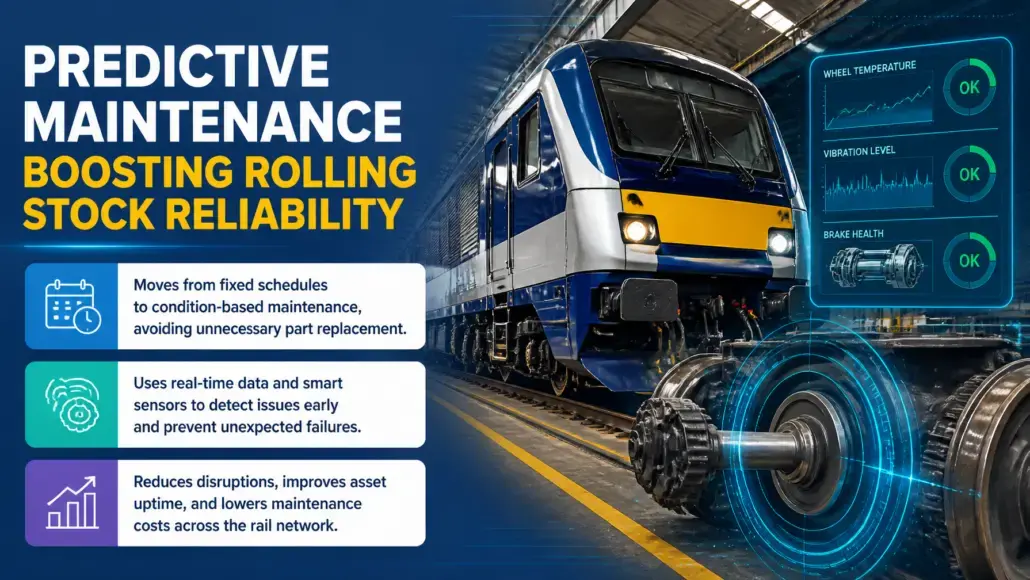
The global rail industry is undergoing a digital renaissance. For over a century, the maintenance of locomotives and freight wagons followed a rigid schedule of inspections based on time or mileage. While this preventive approach ensured a baseline of safety, it was inherently inefficient. It often led to the replacement of perfectly functional parts while failing to catch unexpected component failures that caused costly track blockages and service disruptions. Transport Advancement observes that the shift toward predictive maintenance for rolling stock is now changing this dynamic by utilizing real-time sensor data and AI to monitor asset health.
This transition is supported by a rapidly growing market. The railway predictive maintenance sector was valued at approximately 1.46 billion dollars in 2025 and is projected to reach 3.92 billion dollars by 2034, according to Growth Market Reports. This represents a compound annual growth rate of 11.6 percent, with the rolling stock segment accounting for the largest share of the market. Global rail operators are realizing that data-driven maintenance is the key to maximizing fleet availability and reducing the total cost of asset ownership.
Harnessing IoT and Sensor Telemetry
The foundation of predictive maintenance of rolling stock is the installation of sophisticated sensors across critical components of the train. These sensors monitor parameters such as bearing temperature, vibration, motor current, and wheel profile. By streaming this data to a central cloud platform, operators can create a digital twin of every locomotive in their fleet. AI algorithms then analyze this data to identify patterns that precede a failure.
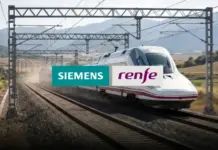
Leading global engineering firms are embedding these capabilities into their long-term service agreements. Siemens Mobility, for instance, signed a multi-decade contract in early 2026 to provide full service for a fleet of 61 Mireo Plus B battery-powered trains in Germany. This contract includes the use of their Railigent platform, which provides continuous condition monitoring to ensure nearly 100 percent availability. Similarly, Alstom has continued to expand the deployment of its HealthHub system, which uses wayside and onboard sensors to monitor the health of fleets across Europe and Asia.
Major Industrial Developments in Rail AI
The integration of advanced computing at the edge is the latest development in this field. By processing data on the train itself, operators can receive immediate alerts about critical safety issues without waiting for a cloud connection.
- Hitachi Rail became the first transport firm to adopt the NVIDIA IGX Thor platform for real-time onboard AI in October 2025. This allows for high-speed processing of sensor data to detect faults in real time.
- Wabtec signed a major agreement with Transnet Engineering in early 2026 to boost freight locomotive availability in South Africa through condition-based maintenance.
- Knorr-Bremse is accelerating the rollout of its iCOM condition monitoring platform, focusing on retrofitting freight wagons with digital monitoring tools to improve brake system reliability.
- Siemens Mobility also established a maintenance partnership with CARGOUNIT in late 2025 to provide long-term service for a large fleet of Vectron locomotives across Central Europe.
These projects show that predictive maintenance is no longer a standalone software product. it is an integral part of the rail asset itself. When a locomotive can self-diagnose its health, the entire rail network becomes more resilient and predictable.
Financial and Operational Impact
The business case for predictive maintenance of rolling stock is compelling. Research from McKinsey suggests that predictive maintenance can reduce downtime by 30 to 50 percent and extend the useful life of an asset by 20 to 40 percent. For a rail operator, where a single locomotive can cost several million dollars, extending the life of that asset has a direct and significant impact on the balance sheet.
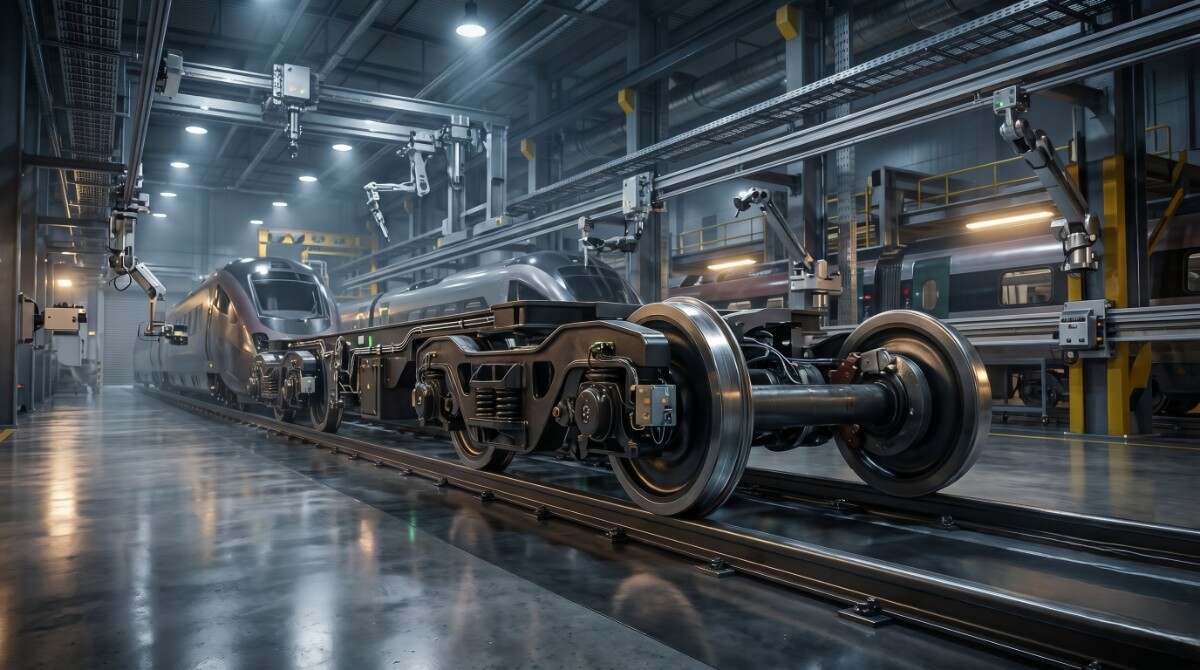
Furthermore, the ability to predict failures allows for more efficient workshop management. Instead of having dozens of locomotives waiting for unscheduled repairs, a workshop can schedule maintenance based on the actual condition of the fleet. This reduces the inventory of spare parts that a carrier needs to hold and ensures that the most skilled technicians are assigned to the most critical tasks.
- Condition-based monitoring reduces the frequency of unnecessary manual inspections.
- Predictive alerts allow for over-the-air software fixes for minor electronic glitches.
- Improved reliability leads to better on-time performance, increasing the competitiveness of rail against road transport.
Extending Reliability to Inland Waterway Networks
While the rail sector is a leader in this technology, the principles of data-driven asset management are beginning to spread to other modes of transport. For instance, the same sensors used to monitor rail bearings can be adapted for the engines and propulsion systems of barges. As inland waterway freight modernization continues, the integration of predictive maintenance will be essential for ensuring the reliability of locks, dams, and the vessels that move bulk cargo through them.
This modal shift is critical for global sustainability goals. Rail and water transport are significantly more carbon-efficient than trucking. However, to win market share from the road, these modes must match the reliability and visibility that modern shippers expect. Predictive maintenance is the technology that bridges this gap, providing the assurance that a train or barge will arrive on schedule without mechanical failure.
The Future of Autonomous Rail Maintenance
Looking toward 2027 and beyond, the next frontier in rail maintenance is the use of autonomous robots and drones for inspection and repair. Several rail operators are already trialing drones equipped with thermal cameras to inspect tracks and overhead lines for signs of overheating or wear. In the workshop, robotic arms are being used to perform automated wheel turning and brake inspections.
The ultimate vision is a fully autonomous maintenance loop, where the train identifies its own fault, schedules its own repair, and is serviced by a robotic system upon arrival at the depot. This level of automation will further reduce costs and improve safety by removing human workers from high-risk environments. Transport Advancement notes that by investing in predictive maintenance for rolling stock today, the rail industry is taking the first step toward this autonomous future, ensuring that rail remains a modern and vital component of the global logistics network.
References
- “Railway Predictive Maintenance Market Analysis 2025-2034” – Growth Market Reports
- “Rolling Stock Management Market Forecast 2025-2030” – Mordor Intelligence
- “NVIDIA IGX Thor in Hitachi Rail Announcement” – Hitachi Rail
- “Siemens Mobility Mireo Plus B Service Agreement” – Siemens Mobility
- “Wabtec Transnet Engineering Maintenance Partnership” – Wabtec
- “Predictive Maintenance: The Downtime Reduction Opportunity” – McKinsey
