










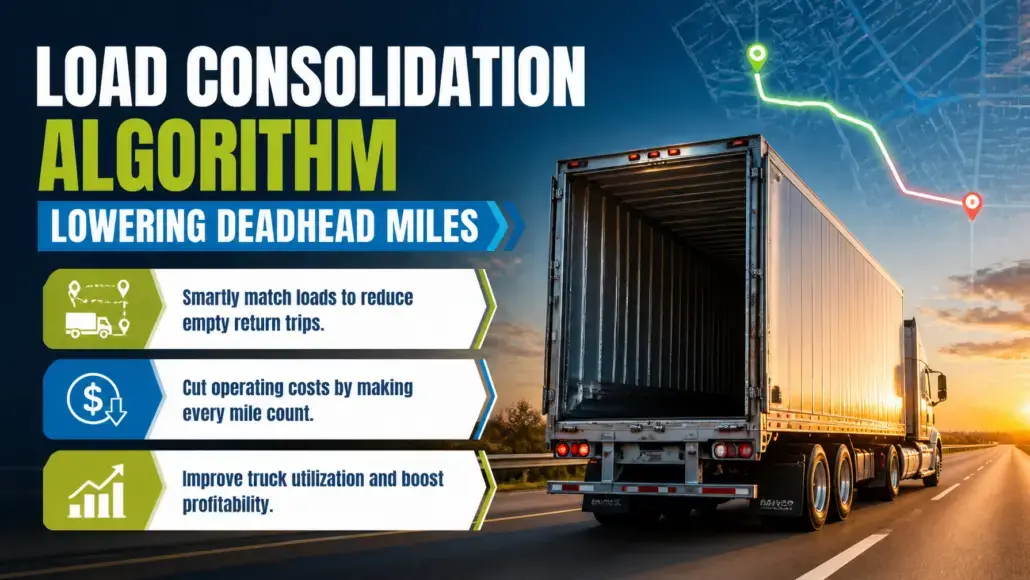
The trucking industry is currently facing a period of intense pressure. Operating costs, from fuel to insurance, have risen steadily, while a prolonged freight recession has kept spot market rates under pressure. In this environment, the inefficiency of ‘deadheading’, driving a truck with an empty trailer, is an expensive luxury that few carriers can afford. Transport Advancement observes that reducing empty miles has become the top priority for logistics managers, leading to a surge in the adoption of load consolidation algorithm efficiency as a core business strategy.
The scale of the deadhead problem is staggering. Data from Eurostat released in 2025 showed that 21.8 percent of all road freight vehicle-kilometres in the European Union were run empty. In the United States, the American Transportation Research Institute (ATRI) reported in its July 2025 study that empty miles rose to 16.7 percent for for-hire carriers. Industry analyses estimate that deadheading costs carriers approximately 37,000 dollars per truck per year. For a mid-sized fleet, these losses represent millions of dollars in missed revenue and wasted operational resources.
The Evolution of Algorithmic Freight Matching
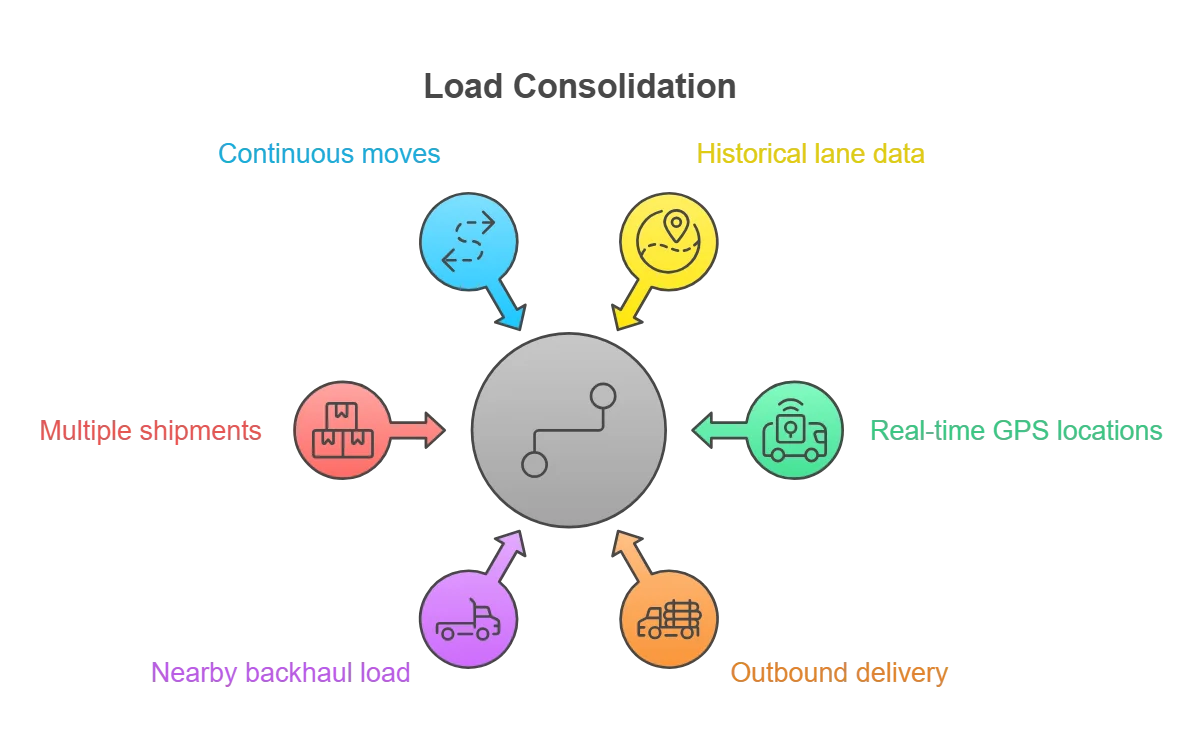
Load consolidation algorithm is the primary tool used to combat these empty miles. Modern algorithms do more than just match a load to a truck. they identify continuous moves and bundle multiple shipments to maximize network density. By analyzing historical lane data and real-time GPS locations, these systems can pair a carrier’s outbound delivery with a nearby backhaul load, ensuring that the truck remains utilized throughout its entire journey.
Global technology leaders are aggressively investing in these capabilities. C.H. Robinson, which manages over 14,000 employees and one of the world’s largest freight networks, announced a massive 5.8 billion dollar agreement to acquire RXO in late 2025. This acquisition was explicitly designed to combine the two companies’ network densities and AI capabilities. By merging these ecosystems, the combined entity aims to reach a level of scale where their load consolidation algorithms can find matches for almost any lane, significantly reducing the probability of a truck running empty.
Shared Truckloads and Pooling Models
Another significant trend is the rise of shared truckloads or truckload pooling. Instead of a truck leaving a facility with a partially empty trailer, load consolidation algorithm efficiency allows for multiple shippers to share the space. This is particularly valuable for small and medium-sized enterprises (SMEs) that do not have enough volume to fill a full truck.
Major developments in this area include:
- Uber Freight launched dedicated tours for carriers in March 2025, which use algorithmic load bundling to create multi-stop routes that minimize deadhead.
- Flock Freight published a 2025 shipper study showing that 58 percent of truckloads were underutilized, driving increased adoption of its shared truckload pooling software.
- Loadsmart has expanded its “Truckload” offering, which uses proprietary algorithms to bundle multiple loads for enterprise shippers, reducing their transportation costs by up to 20 percent.
- Flexport was named to the 2026 TIME100 list of most influential companies for its AI logistics technology that facilitates consolidation for over 13,000 businesses globally.
- Uber Freight’s Powerloop program focuses on drop-trailer pooling, allowing carriers to pick up pre-loaded trailers and avoid the “dwell time” that often precedes a deadhead move.
Strategic Impact of Network Density
The effectiveness of any load consolidation algorithm is directly proportional to the density of the freight network it manages. The more loads and trucks a system can see, the higher the probability of finding a perfect match. This is why the digital freight brokerage market is consolidating so rapidly. Fortune Business Insights values the digital brokerage market at 7.6 billion dollars in 2025, with a projected surge to 68.9 billion dollars by 2034.
High-density networks allow for lane pairing, where a carrier consistently moves freight back and forth between two cities. This predictability allows carriers to offer better rates to shippers and provides a more stable lifestyle for drivers, who can return home more frequently. Companies like project44 are providing the visibility layer that makes this possible, allowing shippers and carriers to see exactly where their assets are and where the most profitable opportunities lie.
- Automated backhaul matching increases the number of revenue miles per truck.
- Multi-stop routing reduces the need for expensive last-minute capacity sourcing.
- Network density allows for more accurate predictive pricing models.
Managing Inbound Returns and Reverse Logistics
Load consolidation is not limited to outbound freight. There is a growing opportunity to use the same algorithms to manage the flow of returned goods. When a truck completes a delivery at a retail store, it is often empty on its return trip to the distribution center. By using reverse logistics automatioN, carriers can use that empty capacity to bring back customer returns or store-to-store transfers.
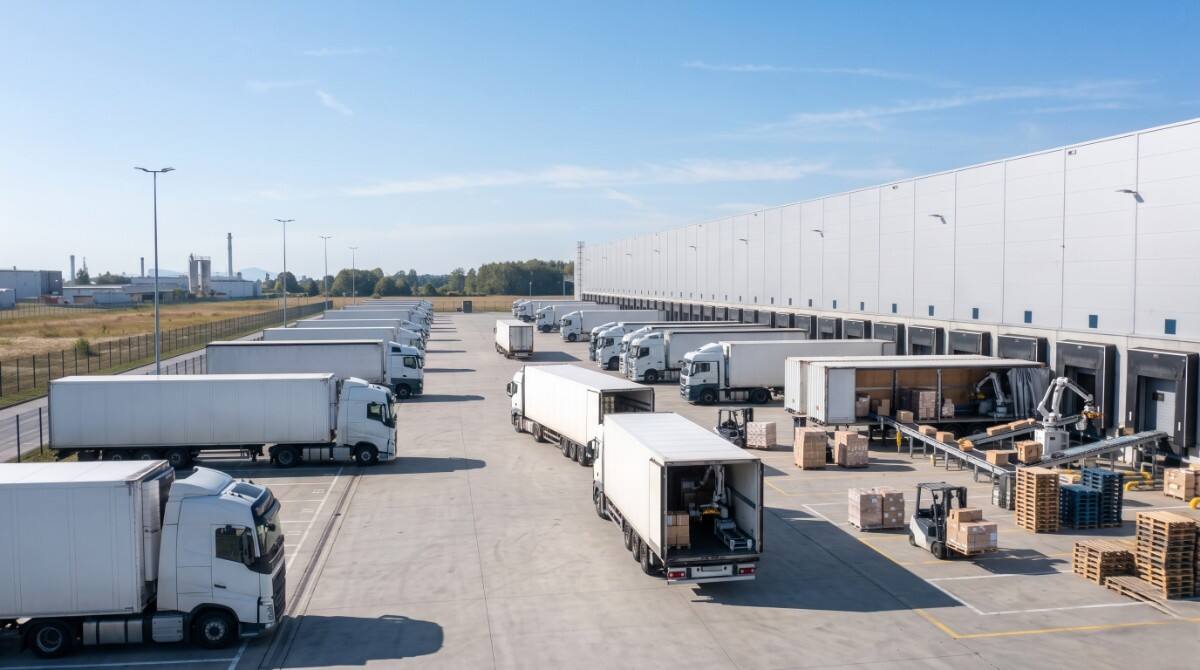
This integration of forward and reverse logistics is a key component of the circular supply chain. It requires a high level of coordination between the warehouse and the transportation fleet. A smart yard management system can alert the carrier that a load of returns is ready for pickup the moment they finish their delivery, ensuring that the truck is reloaded immediately and deadhead miles are avoided.
Future Directions in Freight Orchestration
Looking toward 2027, the focus of load consolidation algorithm efficiency will be on autonomous orchestration. This refers to systems that can autonomously negotiate prices and schedule shipments without any human intervention. We are already seeing the first signs of this with AI-powered agents that can book loads on digital marketplaces in milliseconds.
The transition to zero-emission trucking will further accelerate the need for consolidation. Because electric and hydrogen trucks often have a shorter range and higher initial costs than diesel vehicles, maximizing their utilization is essential for a positive ROI. Transport Advancement notes that by reducing empty miles, load consolidation algorithms are not just improving carrier profits. they are the essential technology that will make the green transition in trucking economically viable.
References
- “EU Road Freight Empty Running Statistics 2025” – Eurostat
- “ATRI Analysis of the Operational Costs of Trucking 2025” – American Transportation Research Institute
- “C.H. Robinson and RXO Acquisition Announcement” – C.H. Robinson
- “Shipper Research Report on Underutilization 2025” – Flock Freight
- “Digital Freight Brokerage Market Forecast 2025-2034” – Fortune Business Insights
- “Uber Freight Powerloop Tour Launch” – Uber Freight
