















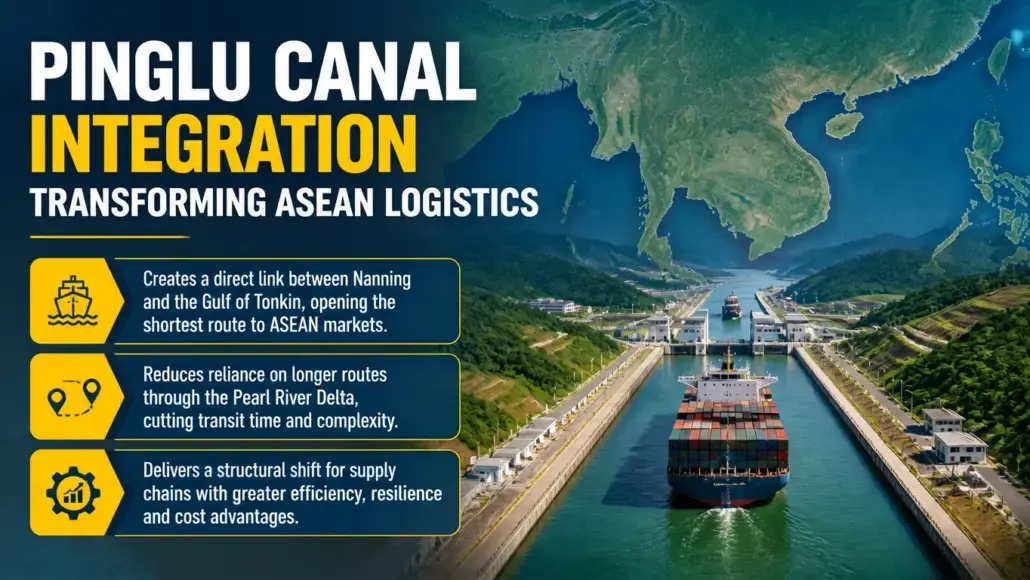
The official opening of the Pinglu Canal in late 2026 marks a decisive shift in the connectivity between Southwest China and the ASEAN region. This massive engineering project, spanning 134.2 kilometres, creates a direct link between Nanning and the Gulf of Tonkin. It effectively ends the historical reliance on much longer routes through the Pearl River Delta. For regional logistics directors and supply chain planners, the canal represents more than just a new waterway. It is a structural transformation of how goods move between Chinese industrial hubs and Southeast Asian markets.
Construction on the Pinglu Canal reached its final milestone in September 2026 with the successful completion of the Madao and Qishi cascade navigation hubs. These hubs allow for the passage of 5,000 tonne class vessels, providing a level of capacity previously unavailable in the region’s inland water network. The investment of approximately 72.7 billion yuan reflects a long term commitment to waterborne freight as the primary driver of regional economic integration. Transport Advancement notes that by reducing the inland transport distance to the sea by over 560 kilometres, the project fundamentally alters the cost structures of the New International Land Sea Trade Corridor.
Engineering Excellence and Resource Efficiency
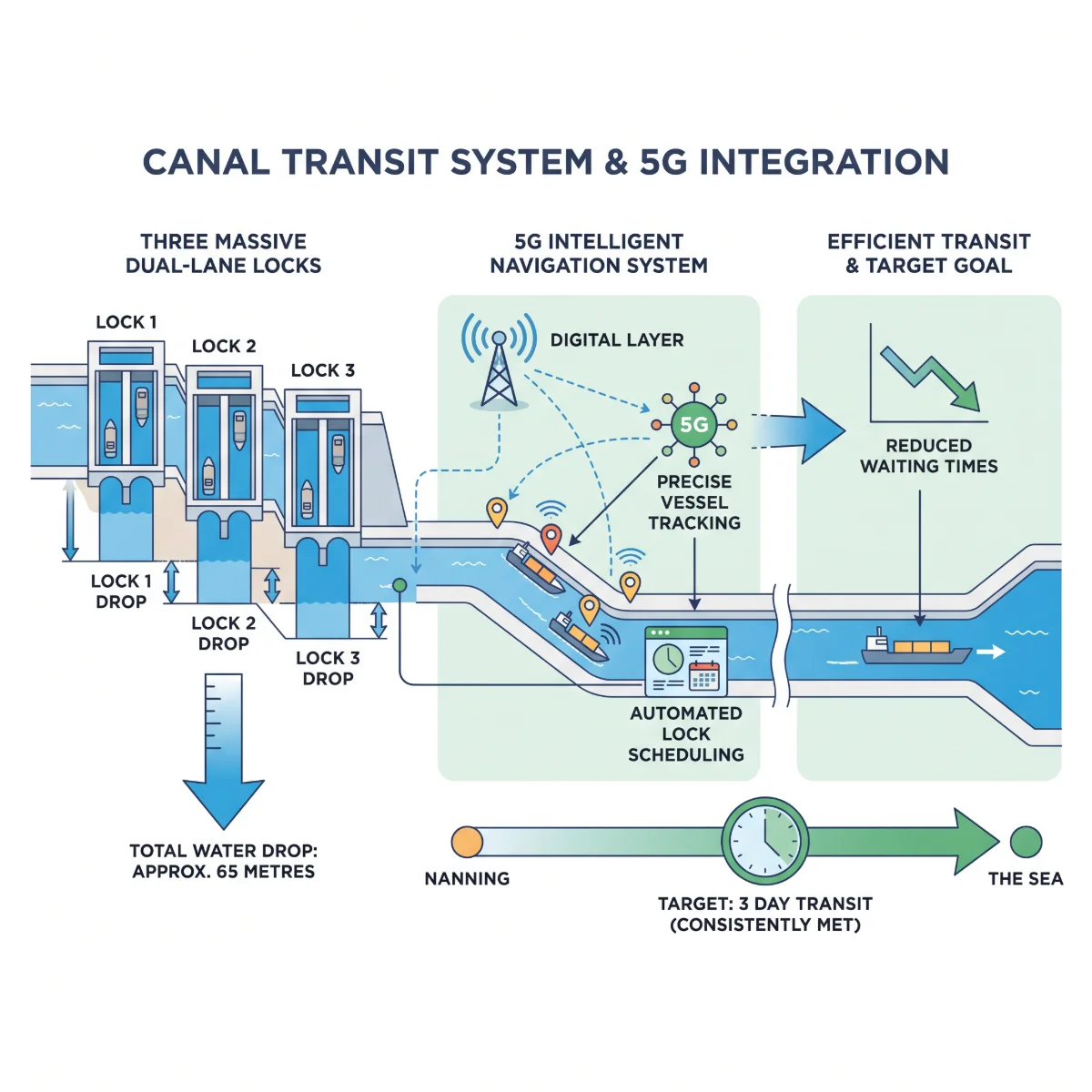
The technical achievements of the Pinglu Canal are centered on its innovative navigation hubs and water management systems. China Communications Construction Company, acting as the lead EPC contractor, implemented a three tier stacked water saving basin system at the Madao Hub. This hydraulic technology is a world first for a project of this scale. It recycles over 60 percent of the water used during each lockage cycle. This ensures that the canal remains operational even during dry seasons while minimizing the impact on local agricultural water resources.
The canal features three massive dual lane locks. These structures are designed to manage a total water drop of approximately 65 metres across the length of the channel. The integration of 5G based intelligent navigation systems allows for precise vessel tracking and automated lock scheduling. This digital layer reduces waiting times at the hubs, ensuring that the target of a three day transit from Nanning to the sea is consistently met. Prior to the canal’s completion, this journey often took up to ten days via traditional river routes.
Driving ASEAN Trade Integration
The economic implications for ASEAN trade are immediate. Data from the General Administration of Customs of China indicates that bilateral trade between China and ASEAN reached 4.34 trillion yuan in the first half of 2026. This represents a significant increase in volume that traditional road and rail infrastructure struggled to accommodate. The Pinglu Canal provides a high volume, low cost alternative that is expected to save over 5.2 billion yuan in annual logistics costs.
Regional ports such as Qinzhou and Fangchenggang have undergone extensive upgrades to handle the influx of canal traffic. Guangxi Beibu Gulf Port Group has commissioned specialized river sea direct vessels that can navigate both the inland canal and coastal waters. This capability eliminates the need for time consuming transshipment at the river mouth. It allows containerized goods from Nanning to reach Vietnamese seaports like Haiphong or Can Tho in a single voyage.
Strategic Company Roles in the Corridor
Major global companies have played a vital role in bringing the Pinglu Canal from a conceptual project to a fully operational logistics corridor:
- China Communications Construction Company (CCCC): As the prime designer and contractor, CCCC managed the complex excavation and dredging of the 134.2 kilometre channel. Their focus on the cascade navigation hubs ensured that the project met its 2026 operational deadline.
- Guangxi Beibu Gulf Port Group: This group leads the operational side of the canal. They are responsible for the management of the Beibu Gulf Port gateway and the deployment of the first generation of river sea direct compatible vessels.
- PSA International: Through its partnership in the Beibu Gulf PSA International Container Terminal, PSA has introduced automated yard technology in Qinzhou. This allows for the rapid handling of container flows entering from the canal and transferring to deep sea lines.
- COSCO SHIPPING Group: The group has integrated Pinglu Canal schedules into its global intermodal booking system. This allows international shippers to book door to door services that utilize the new waterway as a core component of the Asian supply chain.
- Shanghai Zhenhua Heavy Industries (ZPMC): ZPMC supplied the automated container handling cranes and intelligent guided vehicles used at the Qinzhou automated terminal. These systems are optimized for the high frequency feeder services that the canal supports.
Connectivity Beyond Physical Infrastructure
The success of the Pinglu Canal relies as much on its digital infrastructure as its physical locks. The Digital Twin Smart Canal platform provides real time hydrological monitoring and navigation dispatching. This system uses IoT sensors embedded throughout the channel to provide vessel operators with precise data on water depths and traffic density. This level of transparency is essential for maintaining the safety of 5,000 tonne vessels in narrow sections of the waterway.
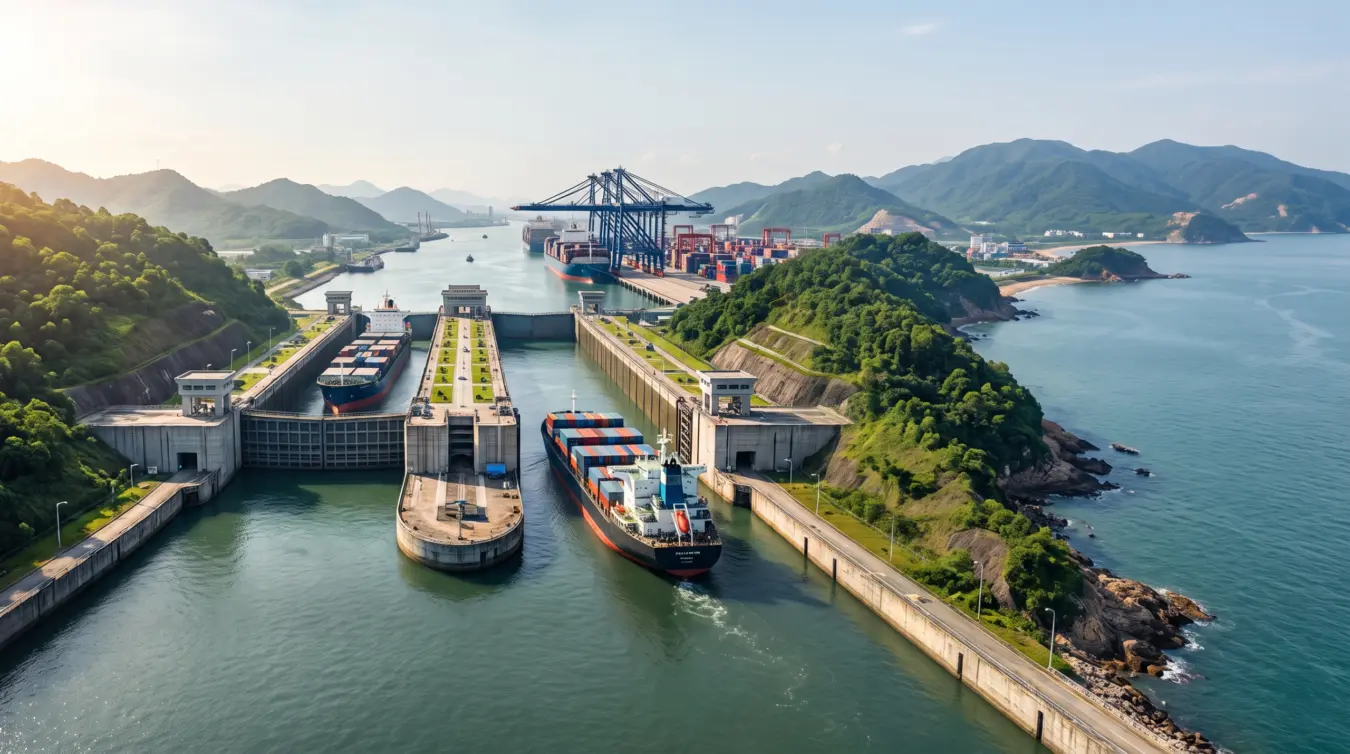
The canal also serves as a catalyst for broader regional development. New industrial parks are emerging along its banks, focusing on electronics, green energy, and high value manufacturing. These facilities benefit from the proximity to low cost water transport, making them highly competitive in the global market. The integration of the canal into the ASEAN logistics network is not merely an isolated project but part of a wider trend toward smarter waterway management.
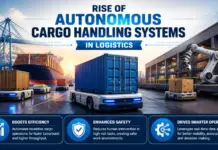
Advanced technology in water transport is not limited to Asian corridors. In many regions, the focus is shifting toward how these new routes are navigated. The efficiency gains seen in the Pinglu Canal provide a strong argument for the adoption of autonomous barge navigation systems to further optimize vessel movements and reduce operational risks in complex river environments.
Future Perspectives on Regional Logistics
Looking toward 2027 and beyond, the Pinglu Canal is expected to handle an annual one way cargo volume exceeding 89 million metric tons. This capacity will be critical as trade volumes between China and Southeast Asia continue to expand. The shift toward inland waterways also supports broader sustainability goals. Waterborne transport is significantly more fuel efficient than road freight, helping to lower the overall carbon footprint of regional trade.
The canal is a benchmark for future infrastructure projects in the ASEAN region. Its combination of advanced hydraulic engineering, digital navigation, and strategic port integration demonstrates the potential of modern inland waterways. As the network matures, Transport Advancement believes that it will continue to foster deeper economic ties and more resilient supply chains across the Asian continent and beyond.
References
- “Pinglu Canal Construction Progress Report 2026” – Pinglu Canal Group
- “China-ASEAN Bilateral Trade Statistics H1 2026” – General Administration of Customs of China
- “Beibu Gulf Port Operational Data 2025” – Guangxi Beibu Gulf Port Group
- “Annual Report on the New International Land-Sea Trade Corridor” – China Communications Construction Company
- “Logistics Cost Reduction Analysis for Southwest China” – National Development and Reform Commission
