










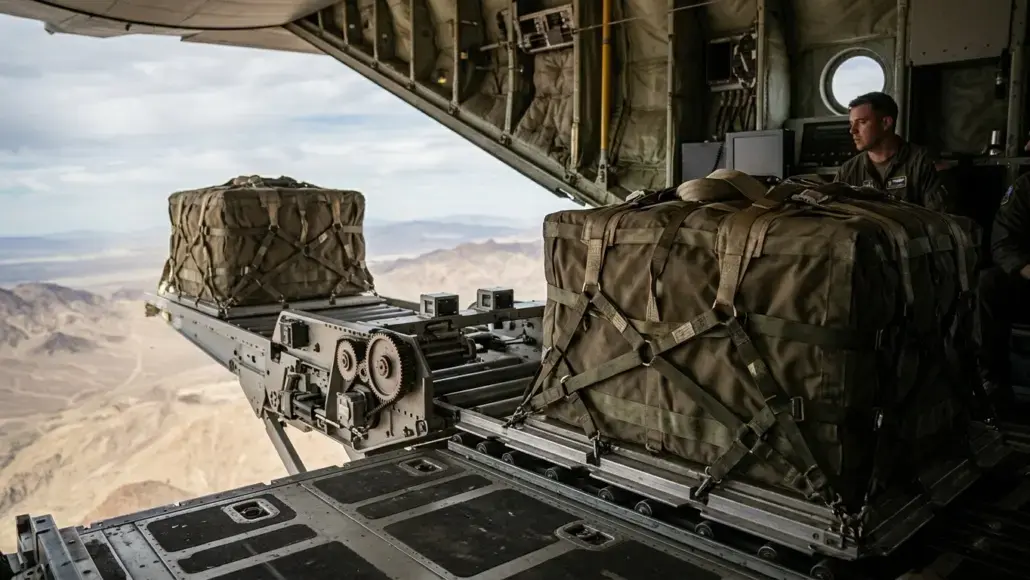
Autonomous cargo ejection is rapidly becoming the cornerstone of a new era in smart air logistics, promising to revolutionize how supplies are deployed in both civilian and military environments. By removing the reliance on manual triggers and human-timed releases, this technology ensures that cargo is delivered with unprecedented precision and safety. As the demand for rapid, on-demand logistics grows, the integration of autonomous systems into the cargo hold of aircraft represents a significant leap forward. No longer is the success of a delivery mission solely dependent on the perfect coordination between a pilot and a loadmaster. Instead, sophisticated algorithms and real-time sensor data now govern the exact moment an extraction parachute is deployed, ensuring that the payload reaches its intended coordinates regardless of external variables.
The shift toward autonomous cargo ejection is driven by the need for higher operational efficiency and the increasing complexity of modern supply chains. In traditional aerial delivery, human error—however slight—can result in a pallet landing hundreds of yards off-target, which in a tactical or disaster-relief scenario can mean the difference between life and death. Transport Advancement notes that autonomous systems mitigate this risk by processing vast amounts of data, including wind speed, altitude, aircraft pitch, and GPS coordinates, in milliseconds. This data is then used to calculate the optimal ejection window. When the aircraft reaches that window, the system automatically engages the release mechanism, ejecting the cargo with a consistency that human operators simply cannot match. This level of automation is not just an upgrade. It is a fundamental reimagining of the aerial delivery process.
The Technological Architecture of Smart Cargo Systems
To fully appreciate the impact of autonomous cargo ejection, one must understand the complex technological architecture that supports it. At the heart of these smart cargo systems is a suite of high-fidelity sensors and a powerful onboard processing unit. These sensors, which include LiDAR, radar, and advanced inertial measurement units (IMUs), provide a continuous stream of information about the aircraft’s environment and internal state. The processing unit runs specialized software that creates a predictive model of the cargo’s trajectory. This model accounts for the aerodynamic drag of the extraction parachute and the weight of the pallet, allowing the system to see where the cargo will land before it ever leaves the plane.
Furthermore, the mechanical components of the ejection system have been redesigned for digital control. Traditional hydraulic or manual release latches have been replaced by high-speed electromechanical actuators that can respond instantly to a digital command. This ensures that there is no mechanical lag between the system’s decision and the actual ejection. For autonomous aircraft, this integration is even more seamless, as the cargo system can communicate directly with the flight control computer. This allows the plane to adjust its flight path or speed in real-time to create the perfect ejection conditions, further enhancing the accuracy of the drop.
Integration of the Extraction Parachute in Autonomous Workflows
The extraction parachute remains a vital component of the autonomous cargo ejection process, but its role has evolved from a simple drag device to a smart, controllable tool. In an autonomous workflow, the parachute is often equipped with its own set of sensors and even small actuators that can steer it during the initial phase of deployment. When the autonomous system triggers the ejection, it doesn’t just dump the cargo; it manages the entire extraction sequence. This includes monitoring the inflation of the pilot chute and the subsequent deployment of the main extraction chute to ensure that the force applied to the cargo is within safe limits.
This level of control is particularly important when delivering sensitive equipment or medical supplies. By modulating the extraction force, the autonomous system can prevent the sudden jolts that often damage fragile items in manual drops. Moreover, the system can detect if a parachute has failed to open correctly and can immediately trigger a backup chute or abort the ejection sequence if safety parameters are breached. This fail-safe capability is a major selling point for commercial logistics providers who are wary of the liabilities associated with traditional aerial delivery. As these systems become more prevalent, the extraction parachute will increasingly be seen as a precision instrument rather than a blunt force tool.
Operational Advantages and the Rise of Autonomous Aircraft
The adoption of autonomous cargo ejection is inextricably linked to the broader rise of autonomous aircraft. Unmanned aerial vehicles (UAVs) and large-scale cargo drones are designed from the ground up to operate without human intervention, making them the perfect platform for automated delivery systems. In these platforms, the cargo ejection system is not an add-on but a core part of the mission software. This allows for complex delivery patterns, such as daisy-chaining multiple drops across a wide geographic area in a single flight. An autonomous cargo drone could, for instance, deliver medical supplies to three different remote villages, calculating the unique ejection requirements for each site on the fly.
Beyond the logistical flexibility, there are significant safety and cost benefits. Autonomous cargo ejection reduces the number of personnel required on the aircraft, which is especially critical in hazardous environments. In military transport, removing the need for a loadmaster to be near an open ramp during a high-speed extraction significantly reduces the risk of injury. From a cost perspective, the increased accuracy of autonomous drops reduces the amount of lost cargo and the need for expensive ground recovery teams. Over time, these savings can offset the initial investment in autonomous technology, making it a sustainable choice for large-scale logistics operations.
Enhancing Military Transport and Tactical Airlift
In the realm of military transport, autonomous cargo ejection is a force multiplier. Tactical airlift missions often take place in contested environments where aircraft must fly at extreme low altitudes to avoid radar detection. In these situations, the window for a successful cargo drop is incredibly narrow. Autonomous systems can operate in these high-pressure environments with a level of calm and precision that is difficult for humans to maintain. By automating the ejection process, the military can ensure that troops on the ground receive their ammunition, fuel, and food exactly when and where they need it, even in the middle of a chaotic engagement.
Moreover, the data collected by these systems during every mission can be used to improve future operations. By analyzing the digital twin of each drop, military planners can identify patterns and refine their delivery tactics. This creates a cycle of continuous improvement that is characteristic of the modern, data-driven battlefield. As military transport becomes more networked and autonomous, the ability to eject cargo with robotic precision will be a defining characteristic of successful tactical airlift operations. The future of the frontline depends on a supply chain that is as smart and agile as the soldiers it supports.
The Future Landscape of Autonomous Aerial Logistics
Looking ahead, the potential applications for autonomous cargo ejection extend far beyond traditional delivery. We are moving toward a future where the air cargo hold is a fully robotic environment. In this vision, smart cargo systems will not only eject pallets but also rearrange them in-flight to optimize the aircraft’s center of gravity or to prepare for the next drop. This active cargo management will be synchronized with the autonomous flight computer, creating a truly integrated aerial logistics platform. The boundaries between the aircraft, the cargo, and the delivery system will continue to blur, resulting in a more efficient and responsive global logistics network.
Furthermore, as public and regulatory trust in autonomous systems grows, we may see these technologies being used for urban last-mile delivery on a much larger scale. While current systems are focused on heavy pallets in remote areas, the underlying principles of autonomous ejection can be scaled down for smaller, high-frequency deliveries in populated regions. The development of silent extraction parachutes and low-impact landing technologies will be key to making this a reality. In the end, autonomous cargo ejection is not just about moving boxes; it is about building the infrastructure for a world where goods can move through the air with the same ease and reliability as information moves through the internet.
Conclusion: A Paradigm Shift in Delivery
In summary, autonomous cargo ejection represents a paradigm shift in the field of logistics. Transport Advancement believes that by combining advanced sensors, predictive algorithms, and robotic actuators, it transforms the act of aerial delivery from a high-stakes gamble into a precise, repeatable science. This technology is the key to unlocking the full potential of both manned and unmanned cargo aircraft, providing a level of accuracy and safety that was previously unimaginable. Whether it is delivering life-saving aid to a disaster zone or sustaining a military unit in a remote outpost, the ability to eject cargo autonomously ensures that the mission is accomplished with maximum efficiency and minimal risk.
The journey toward fully autonomous air logistics is well underway, and the ejection system is at its very heart. As we continue to refine the extraction parachute and the software that controls it, we are laying the foundation for a more resilient and capable global supply chain. The innovations we see today in autonomous cargo ejection are just the beginning of a transformation that will eventually touch every aspect of how we move materials around the planet. It is a future defined by intelligence, automation, and an unwavering commitment to precision.
