















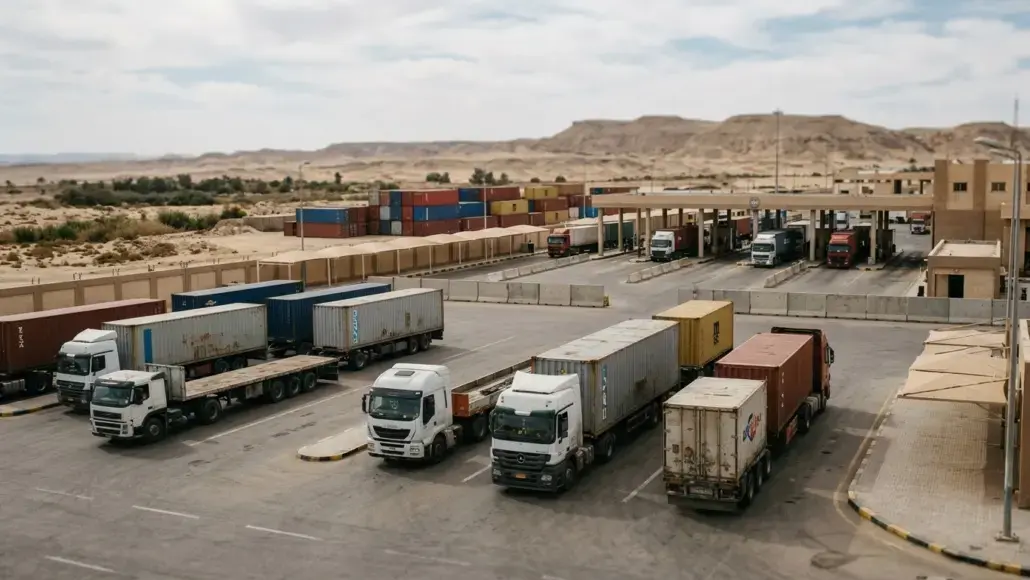
Egypt has taken a major step toward strengthening its international logistics corridors by signing a guarantee agreement under the United Nations TIR Convention. The initiative is expected to reduce road transport costs by up to 40 per cent while cutting transit times by as much as 80 per cent. At the same time, the government announced the implementation of eight international logistics corridors that will connect Europe, the Gulf, and Africa.
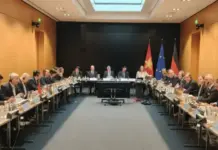
The agreement, signed between the Egyptian Customs Authority and the General Federation of Egyptian Chambers of Commerce, brings into effect a presidential decree approving Egypt’s accession to the international customs treaty. The signing ceremony was attended by Egypt’s Minister of Finance Ahmed Kouchouk, Egypt’s Minister of Transport Kamel El-Wazir, Egypt’s Minister of Investment and Foreign Trade Mohamed Farid, International Road Transport Union (IRU) Secretary General Umberto de Pretto and Arab Academy for Science, Technology and Maritime Transport President Ismail Abdel Ghaffar.
El-Wazir stated that Egypt is moving beyond the construction of standalone roads and railways to establish integrated developmental logistics corridors linking the Red and Mediterranean seas and the Suez Canal with dry ports as well as industrial, agricultural, and mining zones. He identified the eight corridors:
- Arish/Taba corridor
- Sokhna/Alexandria corridor
- Safaga/Qena/Abu Tartour corridor
- Cairo/Alexandria corridor
- Tanta/Mansoura/Damietta corridor
- Gargoub/Sallum corridor
- Cairo/Aswan/Abu Simbel corridor
- Bernice/Aswan/East Oweinat/Kufra/N’Djamena corridor
According to El-Wazir, the final route carries strategic importance because it connects the Red Sea with Libya, Chad, and Central Africa through the development of the Egypt-Chad road via Libya. He also described two key Arab trade corridors that will complement these international logistics corridors.
The Northern Arab Trade Corridor links Europe with the Levant—including Jordan, Iraq, and Syria—through the Arish/Taba route and the Arab Bridge Maritime Company fleet. Meanwhile, the Southern Arab Trade Corridor connects Europe with Saudi Arabia and the wider Gulf through Safaga port to NEOM (formerly Duba) using Egyptian national fleets. These routes integrate with the India-Middle East-Europe Economic Corridor (IMEC), China’s Belt and Road Initiative, and the Iraq-Turkey Development Road.
El-Wazir further noted that Egypt has advanced 100 places to rank 18th globally in road quality, highlighting the construction of a dedicated concrete truck lane on the Western Desert Upper Egypt road, continued concrete paving on the Aswan-Bernice road, and the investment of 3 billion Egyptian pounds in developing the Sallum land port to strengthen Egyptian-Libyan trade. He also referred to the Ro-Ro shipping line between Damietta and Trieste, Italy, which serves as a bridge for cargo travelling between Europe and Saudi Arabia. The minister concluded by thanking ministry workers and transport authorities, adding that the high-speed electric train will extend to Abu Simbel for the first time to support tourism and other sectors.
Ministers Highlight Trade, Customs and Export Benefits
Minister of Investment and Foreign Trade Mohamed Farid said activating the TIR system will reduce road transport costs by 25 to 40 per cent and cut the time required for goods to cross borders by up to 80 per cent. In line with directives from President Abdel Fattah al-Sisi to position Egypt as a global logistics hub, Farid said his ministry is working alongside the finance ministry and customs authorities to establish a digital risk management system that balances trade facilitation with regulatory compliance.
Minister of Finance Ahmed Kouchouk disclosed that transit trade has increased by 40 per cent since March and instructed the creation of an executive department within the Customs Authority to oversee the effective implementation of the TIR system. He also confirmed that, under the government’s second package of tax facilities, transit goods and their related services are exempt from value-added tax.
Head of the Customs Authority Ahmed Amoui explained that the TIR agreement, established under the UN and managed by the IRU, remains the only global customs transit system enabling goods to cross international borders without intermediate inspections. He added that the authority is broadening international agreements while advancing digital transformation to support trade facilitation and safeguard public treasury rights.
El-Wakil stated that the agreement will provide Egyptian transport companies with broader access to regional and international markets, reduce supply chain costs, and strengthen exports through the expansion of international logistics corridors.
