


















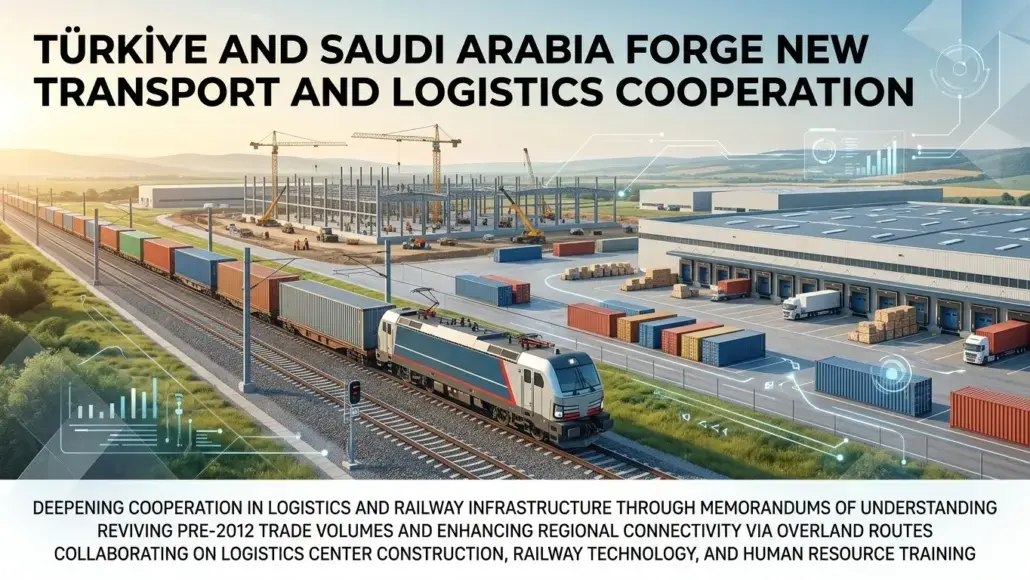
Marking a significant advancement in bilateral relations, Türkiye and Saudi Arabia have entered into new agreements designed to bolster cooperation in transport and logistics, with a particular emphasis on railway infrastructure. The transport and railway agreements were finalized on 9th June 2026, signaling a new era of technical exchange and collaboration between the two nations.
The transport and railway agreements were officially signed by Turkish Transport Minister Abdulkadir Uraloglu and his Saudi counterpart Saleh bin Nasser Al-Jasser. These agreements lay the groundwork for joint efforts in critical areas, including the construction of logistics centers, the advancement of railway technology, and the development of human resources within the transport sector.
Uraloglu expressed optimism regarding the potential impact of these agreements, stating that they will foster the sharing of expertise and the implementation of modern practices across both logistics and railway sectors.
A central objective of the renewed transport and railway agreements is the revival of overland trade corridors. Both countries are closely observing the dynamics along the Syria-Jordan-Iraq routes with the aim of restoring transport volumes to pre-2012 levels that previously reached approximately 20,000 units annually. Although current geopolitical circumstances have temporarily impacted bilateral trade figures, test runs conducted from Türkiye through Iraq to Saudi Arabia have already demonstrated the viability of this overland corridor.
Uraloglu further stresses that the logistics memorandum specifically addresses the development and management of logistics centers, alongside opportunities for joint operational activities. Concurrently, the railway cooperation agreement encompasses a comprehensive approach to the sector, from enhancing infrastructure to implementing training programs.
In early June, Uraloglu had unveiled plans to modernize the historic Hejaz Railway and stretch it to Oman, creating an alternative global trade route that bypasses the Strait of Hormuz. The primary stage involves connecting Türkiye to Aleppo while utilizing the existing Aleppo-Damascus-Jordan network.Officials will continue negotiations with Saudi authorities to integrate the line into a broader regional network serving both tourism and modern transit needs.
The minister explained that reviving the Hejaz Railway line is part of Ankara’s broader strategy to enhance connectivity with the Gulf region through railway infrastructure. Technical teams from both ministries are expected to advance feasibility studies and coordination mechanisms in the upcoming months as part of the newly signed framework.
