














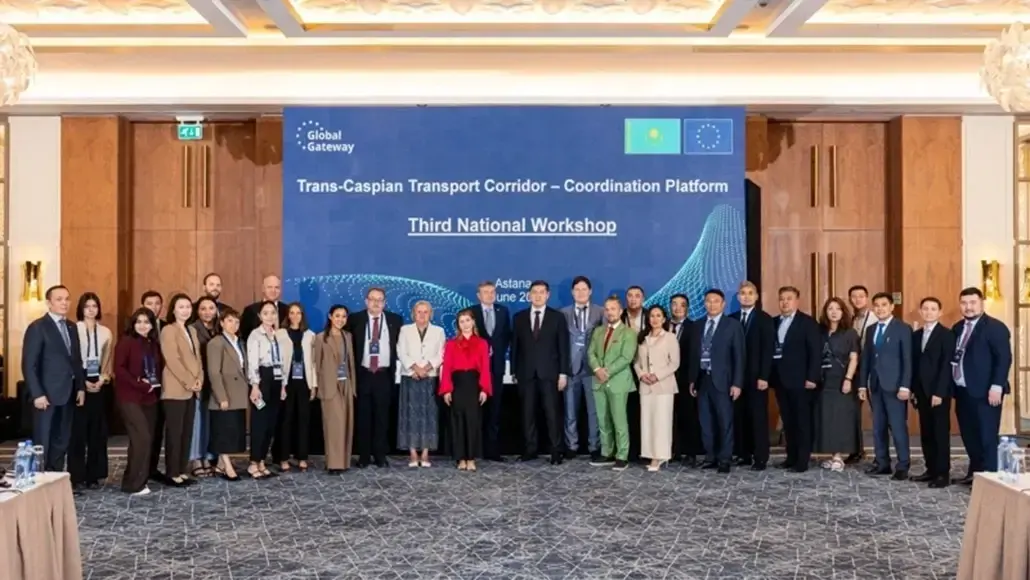
The European Union and Kazakhstan have jointly reaffirmed their dedication to advancing the Trans-Caspian transport route at the Third National Workshop of the TITR Coordination Platform held in Astana. The event brought together key stakeholders including government representatives, international financial institutions, national corporations, development partners, and private sector players to evaluate ongoing progress and chart the course for enhanced transport connectivity linking Europe with Central Asia.
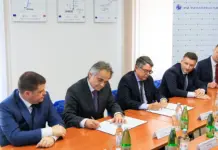
The workshop was jointly led by Kazakh Deputy Minister of Transport Talgat Lastayev and EU Ambassador to Kazakhstan Aleska Simkic. This gathering preceded a significant high-level meeting on the Trans-Caspian transport route scheduled for June 23, 2026, designed to broaden collaborative efforts among nations positioned along this strategic corridor.
Simkic emphasized the European Union’s substantial commitment to the corridor’s development through multiple channels. The EU’s €30 million Trans-Caspian Transport Support Programme supports critical infrastructure improvements, including the modernization of Port of Aktau facilities and comprehensive upgrades to the Beyneu–Sekseul road network. Furthermore, the initiative facilitates the harmonization and digitalization of cross-border procedures to streamline operations across the region.
Working alongside EU financial institutions, businesses, EU member states, and Central Asian partners, these collaborative efforts have yielded measurable progress in making the corridor faster, more dependable, and increasingly efficient for trade and transport operations.
Kazakhstan serves as a critical Eurasian transport hub, positioning itself at the heart of regional connectivity. Over the past several years, cargo volumes traveling along the route have expanded dramatically, surpassing a 3.5-fold increase. This remarkable growth has been accompanied by substantial reductions in transit time between China and Europe, achievements made possible through strategic infrastructure projects and continuous improvements in transport logistics processes.
Since 2024, the financial commitment to corridor development has intensified, with the European Union and international financial institutions collectively allocating approximately €2.5 billion specifically designated for projects throughout the region. This substantial investment demonstrates the strategic priority placed on strengthening this crucial transport artery.
During the workshop, participating stakeholders engaged in detailed discussions regarding multiple dimensions of corridor enhancement. Key agenda items included modernization plans for both Port of Aktau and Port of Kuryk, advancement of road, rail, and logistics infrastructure along primary TITR corridors, strategies for mobilizing private sector investment, and additional initiatives aimed at boosting corridor efficiency and capacity.
As the workshop concluded, all participants renewed their commitment to sustained cooperation across several critical areas. These commitments encompassed infrastructure development, digital transformation initiatives, regulatory improvements, and the pursuit of new investment projects. The collective resolve centers on further strengthening the position of the Trans-Caspian Transport Route as one of Eurasia’s most vital trade and transport arteries.
