


















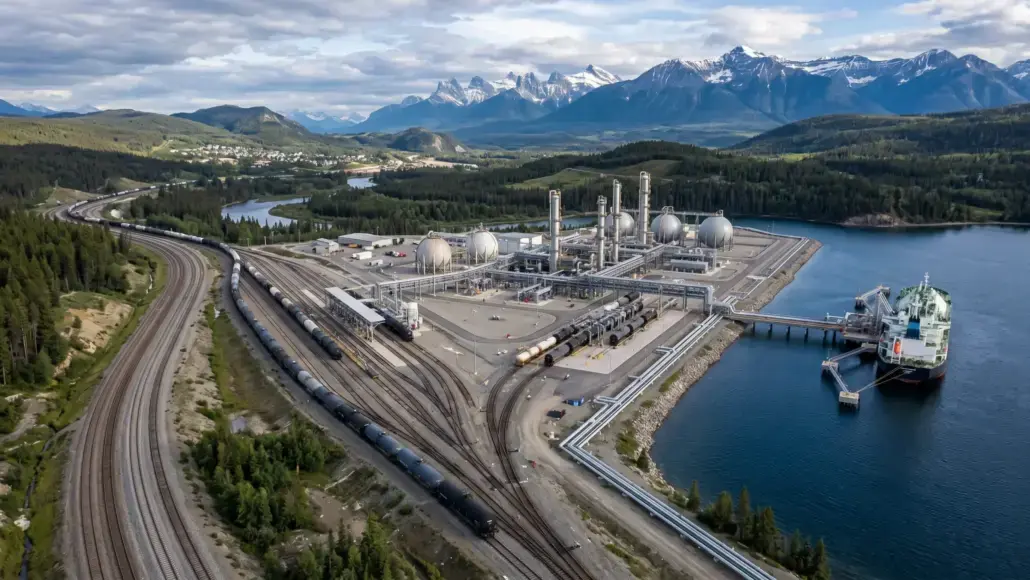
In a strategic initiative poised to redefine Canada’s position in the global energy marketplace, Canadian National (CN), Keyera Corp., and AltaGas Ltd. have joined forces to develop the Alberta Corridor Export Demonstration Railway Terminal. This ambitious partnership targets the enhancement of Alberta’s export capabilities, specifically for liquefied petroleum gases (LPG), aiming to streamline their transportation to international markets.
The Alberta Corridor Project is a direct response to the recognized limitations in Canada’s existing export infrastructure, which has historically struggled to match the pace of global energy demand. Current logistical corridors are often fragmented, leading to inefficiencies and restricted access to key global markets. The Alberta Corridor seeks to overcome these challenges by creating an integrated rail network designed to link Alberta’s production centers directly with the Pacific Rim, with Prince Rupert serving as a crucial gateway.
At the heart of the Alberta Corridor Project is the development of the ACE Railway Terminal. This advanced facility is engineered to process an estimated 45,000 barrels of propane and butane daily. Its design incorporates cutting-edge technology intended to maximize throughput and minimize the time involved in handling these vital energy commodities.
The terminal’s prime location in Fort Saskatchewan, on land owned by Keyera, is a significant strategic advantage. This site will function as a consolidated point for LPG shipments originating from surrounding production fields before they are dispatched via rail.
Crucially, the terminal will possess direct rail links to the Port of Prince Rupert in British Columbia. This connection is designed to provide a reliable, all-weather route for the efficient export of Alberta’s hydrocarbon products to international destinations, particularly in the Asia-Pacific region. The project’s commitment to enhancing LPG exports underscores its importance for Canadian energy.
A key technical innovation within the Alberta Corridor Project is the implementation of unit train capabilities. This system allows for multiple railcars to be consolidated into single, highly efficient trains. These trains can be dispatched multiple times daily, a feature that is expected to significantly reduce transit times and associated costs. This method contrasts with traditional block trains, as unit trains carry a single commodity from origin to destination, thereby minimizing loading, unloading, and transfer delays. This operational efficiency and predictability are critical for competitiveness in global energy markets.
The development of the Alberta Corridor Project involves an initial investment of approximately $240 million. These funds are primarily allocated for the construction of the terminal and the expansion of necessary rail infrastructure. The project is underpinned by a series of long-term commercial agreements involving oil and gas producers, pipeline operators, and international shipping firms, ensuring consistent demand and operational stability.
With an anticipated commencement of operations by 2028, the Alberta Corridor is positioned to solidify Alberta’s status as a primary supplier of LPG to Asia-Pacific nations. The economic ramifications are expected to be substantial, including the creation of hundreds of skilled jobs during both the construction and operational phases, a significant boost to regional industries, and an enhancement of Canada’s overall export profile.
This project represents a strategic diversification of Canada’s energy export methods. While pipelines have traditionally been the primary export route, the Alberta Corridor offers a complementary and resilient logistics network. This rail-based solution provides an alternative that can mitigate bottlenecks associated with pipeline capacity and navigate geopolitical complexities, ensuring greater flexibility and resilience in meeting global demand for LPG.
Looking ahead, there is potential for further expansion of the Alberta Corridor, incorporating additional rail lines, storage facilities, and port infrastructure. This aligns with Canada’s broader strategic objectives to diversify exports and strengthen its position as a global energy supplier. The innovative approach to rail and terminal solutions adopted by the Alberta Corridor Project may also serve as a model for other regions facing similar export infrastructure challenges.
