

















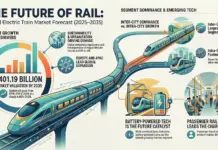
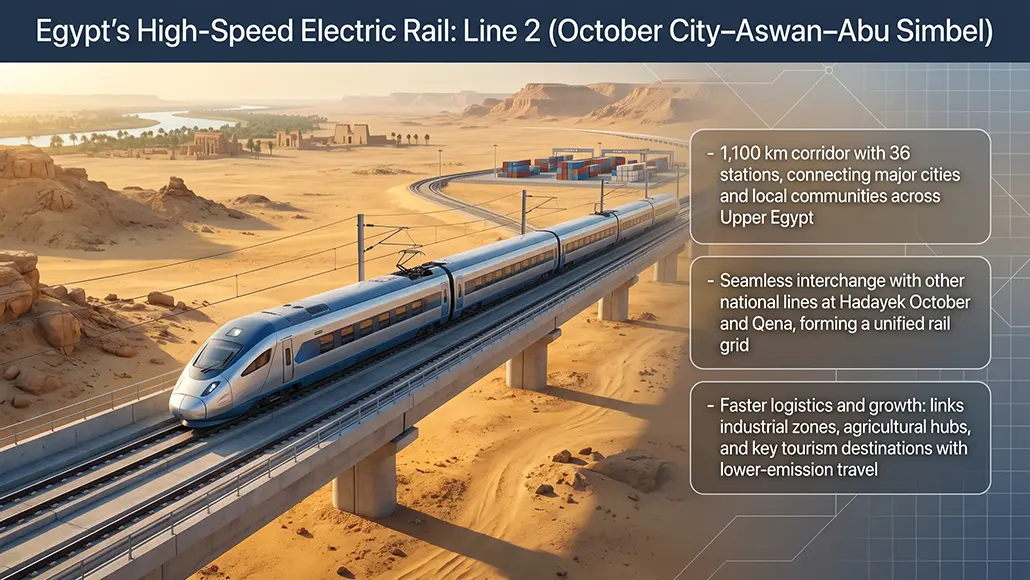
Egypt is advancing a pivotal phase in its transport development agenda with the rollout of its high-speed electric rail electric network, a flagship infrastructure initiative designed to connect Upper Egypt while supporting a transition toward greener and more sustainable mobility. The project marks a major step in reshaping the country’s transportation landscape, with the second line standing out as one of its most ambitious elements. Extending roughly 1,100 kilometers, this high-speed electric rail corridor will run from October City to Aswan and Abu Simbel, underscoring the scale and national importance of the undertaking.
The construction effort reflects a broad domestic push, with thousands of Egyptian engineers and workers engaged in delivering the network as part of a wider plan to modernize infrastructure and improve efficiency. The route stretches from the Fayoum/Beni Suef region to Abu Simbel in southern Egypt, tracking west of the Western Desert Road. Designed with 36 stations, the line will feature 10 high-speed stations linking major urban centers and 26 regional stations that cater to smaller towns and local communities. This configuration is intended to enhance daily travel while reinforcing connectivity across regions through the high-speed electric rail system.
Integration lies at the core of the network’s design, enabling seamless connections with other national lines. The second line will intersect with the first line at Hadayek October station and connect with the third line at Qena, creating a unified transport grid that allows passengers to move efficiently from north to south and east to west. This interconnected high-speed electric rail network is expected to improve mobility for residents and visitors alike. Beyond passenger transport, the project will also support economic activity by linking major industrial hubs such as Helwan, 15 May City, 6th of October, New Minya, and New Assiut, alongside agricultural development zones including the New Delta, Mostaqbal Misr, Toshka, and East Oweinat.
In addition, the railway is set to strengthen logistics by facilitating the movement of goods between production areas, domestic markets, and export gateways. It is also positioned to enhance tourism by connecting key cultural destinations in Upper Egypt, such as Luxor, Aswan, and Abu Simbel, with Red Sea coastal locations, enabling more efficient travel between diverse attractions. The broader impact of the high-speed electric rail initiative includes job creation across direct and indirect sectors, as well as environmental benefits through reduced reliance on conventional transport. Altogether, the project represents a transformative investment in Egypt’s infrastructure, reinforcing its ambitions to become a regional center for modern transportation and logistics while supporting long-term economic growth.
