









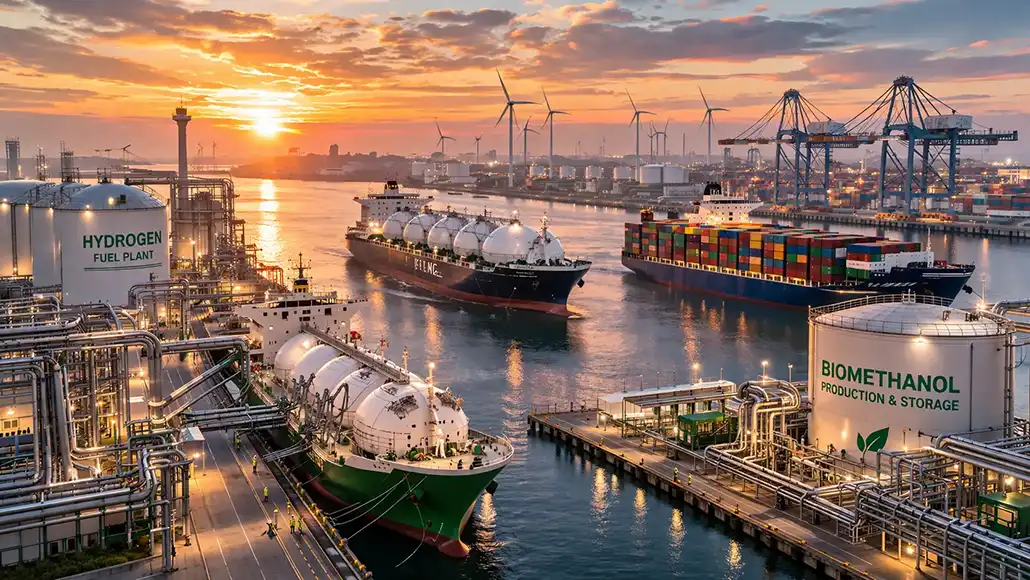
For centuries, the maritime industry has served as the invisible yet indispensable backbone of international trade, quietly powering the global economy while relying almost exclusively on traditional, carbon-heavy fossil fuels. Today, however, Transport Advancement observes that the maritime sector stands at a monumental historic crossroads. The imperative to mitigate climate change has transformed from a distant regulatory aspiration into an immediate, unrelenting operational mandate for fleet operators worldwide. At the very heart of this industrial evolution is the push for global shipping decarbonization, a complex and multifaceted endeavor that demands unprecedented technological innovation, strategic cross-border partnerships, and massive capital investment.
As prominent maritime stakeholders confidently commit to ambitious net-zero carbon targets by 2050, we are witnessing a complete paradigm shift in energy procurement and vessel engineering. The industry is rapidly abandoning its monolithic reliance on conventional marine fuels, pivoting instead toward a highly diversified, multi-fuel ecosystem. Recent technological breakthroughs highlight this rapid transition, proving unequivocally that cleaner, low-carbon maritime transport is no longer just a theoretical environmental goal, it is an impending commercial and operational reality. By examining the latest milestones across biomethanol, ethanol, and hydrogen applications, maritime professionals and corporate executives can gain a vital, comprehensive understanding of how these alternative energy sources are fundamentally reshaping global fleet strategies.
The Rise of Biomethanol: Scaling Up Low-Carbon Bunkering Infrastructure
The arduous journey toward global shipping decarbonization has recently witnessed one of its most significant contemporary victories in the realm of biomethanol adoption. Produced primarily from renewable or waste-based biomass, biomethanol presents an immediately viable pathway for drastic emissions reduction. Crucially, it offers a lifecycle greenhouse gas (GHG) emission reduction of more than 65% when compared head-to-head with conventional marine fuels.
Recently, a landmark maritime event materialized in China, underscoring the maturation and readiness of biomethanol supply chains on a global scale. The CMA CGM Group, acting in close collaboration with SIPG Energy, successfully executed the bunkering of 3,643 tons of biomethanol for the CMA CGM OSMIUM at Yangshan Port’s Shengdong Terminal. This newly delivered 13,000 TEU biomethanol dual-fuel containership is slated to operate on the bustling M2X service connecting Asia with Mexico, acting as a massive floating testament to sustainable, modern logistics.
This complex operation is far more than a mere technical achievement. It represents the largest single biomethanol bunkering volume ever completed at a Chinese port and marks CMA CGM’s first-ever biomethanol bunkering operation worldwide.
For executive leadership assessing long-term fleet transitions, the strategic takeaways from this milestone are profound and actionable:
- Integrated Supply Chains: The flawless execution of this bunkering was underpinned by robust resource coordination involving key suppliers like the Shanghai Electric Group, coupled with the established infrastructure support and bunkering services provided by SIPG Energy.
- Aggressive Fleet Expansion: Aligning tightly with its overarching commitment to achieving Net Zero Carbon by 2050, CMA CGM is preparing to operate approximately 200 dual-fuel container vessels by 2031. These vessels will be fully capable of running on advanced low-carbon energy sources, including bio-methanol, e-methanol, bio-LNG, and e-LNG.
- Global Hub Development: This operation solidifies Shanghai Port’s trajectory toward becoming a premier international sustainable marine fuel bunkering hub, directly supporting China’s broader national objectives for low-carbon and sustainable shipping.
Ethanol: A Commercially Scalable Alternative Fuel Pathway
As the push for global shipping decarbonization intensifies, ethanol is rapidly emerging as a formidable contender in the future multi-fuel landscape. Ethanol possesses unique chemical, environmental, and logistical properties that make it an exceptionally attractive candidate for large-scale fleet operations. It boasts lifecycle carbon neutrality, effectively reducing carbon emissions compared to traditional fossil fuels, while containing absolutely zero sulfur and exhibiting very low toxicity. Furthermore, because ethanol is biodegradable, water-soluble, and remains liquid at ambient temperatures and pressures, it allows for the use of standardized handling procedures during bunkering, dramatically simplifying otherwise complex and time-consuming onboard operations.
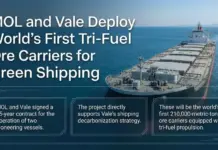
Recognizing this immense commercial potential, Everllence and Vale have recently forged a strategic cooperation agreement. This forward-thinking partnership is singularly focused on developing an advanced ethanol-powered engine based on the globally proven Everllence B&W ME-LGI (Liquid Gas Injection) platform.
This initiative perfectly aligns with Vale’s future-ready, multifuel strategy, which is designed to increase fleet flexibility and aggressively reduce greenhouse gas emissions across its vast affreighted fleet. Everllence’s foundational technical groundwork in this arena is already highly advanced. In late 2025, the company successfully ran a large 90-bore, two-stroke ME-LGIM (Liquid Gas Injection Methanol) engine entirely on ethanol at all load points during rigorous tests in Japan. Simultaneously, successful load tests were conducted on a four-stroke 21/31 dual-fuel GenSet at the company’s testing facilities in Denmark.
Key developmental focus areas for this pioneering ethanol pathway include:
- Technological Maturation: Expanding technical frameworks to seamlessly incorporate robust G70 and/or G80 engine platforms, specifically engineered for the heavy demands of large commercial vessels.
- Market Resonance and Localization: Targeting heavy logistics corridors, particularly in Brazil and China. These two markets are expected to see strong resonance due to their robust advocacy for ethanol as a premier energy-transition fuel.
- Future-Proofing Merchant Fleets: Delivering scalable, commercially viable engine technologies that empower maritime operators to responsibly transition away from fossil fuels while maintaining strict market competitiveness.
Breaking the Hydrogen Frontier in Deep-Sea Commercial Shipping
For decades, hydrogen has been heralded as the ultimate zero-emission holy grail of energy. However, its practical application in maritime contexts has historically been limited to short-distance, short-duration, and low-output vessels such as local sightseeing boats or harbor tugboats that rely entirely on compressed hydrogen. To achieve true, holistic global shipping decarbonization, the maritime industry must conquer the deep-sea, high-output commercial frontier.
A monumental breakthrough has now dramatically accelerated this timeline. Japan Engine Corporation (J-ENG), in a powerful strategic consortium with Kawasaki Heavy Industries, Mitsui O.S.K. Lines (MOL), MOL Drybulk, Onomichi Dockyard, and ClassNK, has successfully executed the world’s first factory operation of a hydrogen-fueled main engine designed specifically for a large commercial vessel.
Supported by the New Energy and Industrial Technology Development Organization’s (NEDO) Green Innovation Fund, J-ENG meticulously developed the 6UEC35LSGH a fully Japan-made, large, low-speed, two-stroke hydrogen-fueled engine. In groundbreaking factory testing phases, this engine achieved an unprecedented hydrogen co-firing ratio of over 95% at 100% load, unequivocally confirming both its profound greenhouse gas reduction capabilities and its stable operational performance under demanding conditions.
This massive leap in heavy engineering transitions hydrogen from a niche coastal novelty into a reliable powerhouse for global trade. The industrial implications are vast and transformative:
- Endurance and Raw Power: By pairing this high-efficiency, high-output, low-speed engine with liquefied hydrogen fuel (supplied via a state-of-the-art Marine Hydrogen Fuel System developed by Kawasaki), commercial ships can now confidently achieve the long-distance and long-duration operations required for exhaustive transoceanic voyages.
- Concrete Deployment Timelines: The newly developed marine engine is officially slated for shipment in January 2027. It will serve as the primary propulsion system for a robust 17,500-DWT hydrogen-fueled multi-purpose vessel constructed by Onomichi Dockyard.
- Rigorous Field Testing and Safety: Beginning in FY2028, MOL and MOL Drybulk will seamlessly operate the vessel for a comprehensive three-year demonstration period. Throughout the engine’s development, vessel design, and operation, ClassNK will conduct stringent safety evaluations to ensure commercial readiness.
Conclusion
The era of merely theoretical environmentalism in the maritime sector has firmly ended, rapidly replaced by an era of applied, heavy-industrial green innovation. As clearly evidenced by CMA CGM’s record-breaking biomethanol bunkering success, the highly strategic Everllence-Vale ethanol engine development, and the revolutionary ocean-going hydrogen engine engineered by J-ENG, MOL, and Kawasaki, the physical tools for ecological transformation are being actively forged and deployed today.
Transport Advancement believes that navigating the immense logistical complexities of global shipping decarbonization requires a concerted, adaptable multi-fuel approach. It is increasingly clear that no single alternative fuel will act as an absolute remedy. Instead, the future unquestionably belongs to those visionary operators who embrace technological flexibility, invest heavily in dual-fuel capabilities, and actively collaborate across the global supply chain. For maritime executives and corporate leaders, the underlying message is remarkably clear. The decarbonized future of global shipping is no longer waiting over the distant horizon. It is already docking at the port, ready to completely reshape the economics and environmental footprint of international trade.
