











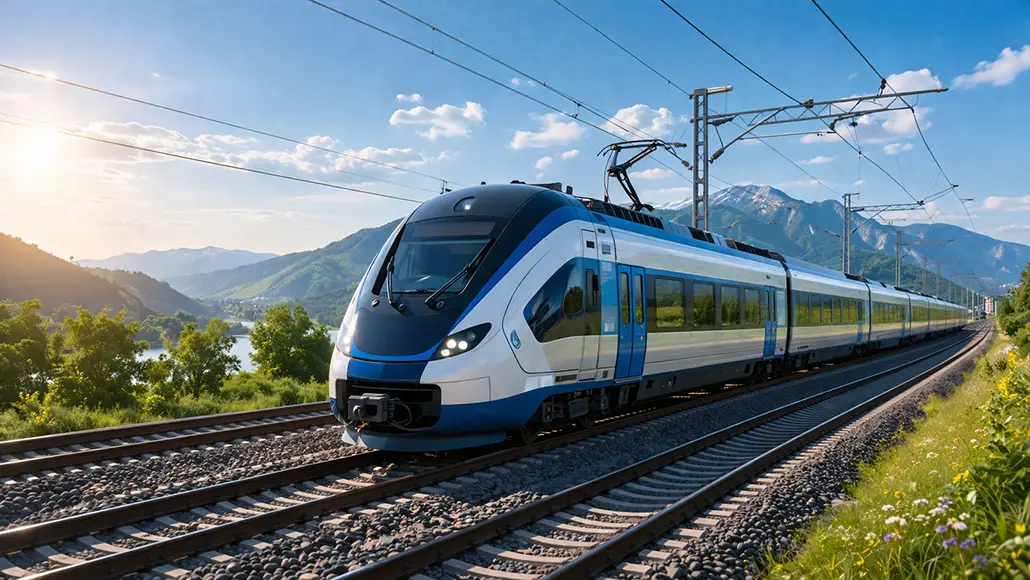
The global railway sector is currently in the midst of a transformative period, spurred by an increasing imperative to address climate change, enhance operational efficiency, and deliver more sustainable transportation options. Central to this paradigm shift are two pivotal technologies: rail electrification and battery trains. Transport Advancement believes these innovations are not merely incremental upgrades but represent fundamental changes in how rail networks operate, rapidly gaining momentum across continents as operators strategically pivot away from a reliance on fossil fuels. This significant transition is driven by a clear vision for zero-emission rail, aiming to create cleaner, quieter, and more cost-effective mobility solutions that are essential for modern societies.
The Imperative for a Cleaner, More Efficient Rail Future
For decades, diesel locomotives have been the workhorses of rail networks, offering robust power and flexibility, particularly in regions without extensive overhead line infrastructure. However, the environmental footprint of diesel combustion, coupled with volatile fuel prices and a global push towards decarbonization, has underscored the urgent need for viable alternatives. The call for sustainable rail transport is resonating louder than ever, necessitating solutions that can drastically reduce greenhouse gas emissions and particulate matter. This growing demand is precisely why the adoption of both rail electrification and battery trains is accelerating, promising significant strides in green mobility and setting new benchmarks for regional rail modernization. The collective ambition is clear: to systematically implement diesel train replacement strategies wherever feasible, paving the way for a truly sustainable railway ecosystem.
Understanding the Drivers Behind This Shift
Several intertwined factors are propelling the widespread interest and investment in these technologies. Foremost among them is the pressing global climate crisis, which mandates a dramatic reduction in carbon emissions across all sectors, including transport. Rail, often lauded as one of the most environmentally friendly modes of transport per passenger-kilometer, still has a substantial role to play in further reducing its carbon intensity. Beyond environmental considerations, there are compelling economic advantages. The long-term operational costs associated with electricity, especially when sourced from renewable energy, are generally more stable and often lower than those of diesel fuel. Furthermore, reducing reliance on fossil fuels enhances energy security and insulates operators from global market fluctuations. Lastly, societal expectations for quieter, cleaner travel experiences are influencing policy and investment decisions, putting sustainable rail transport at the forefront of public consciousness.
Rail Electrification: The Enduring Backbone of High-Performance Rail
Electrification has long been the gold standard for high-capacity, high-speed rail lines, offering unparalleled power, speed, and efficiency. This method involves supplying electricity to trains through overhead lines (catenary systems) or a third rail. While the initial investment in electric rail infrastructure can be substantial, the long-term operational benefits are profound. Electrified lines can handle greater traffic volumes, offer faster acceleration, and typically have lower maintenance costs for the locomotives themselves, as electric motors are simpler and more durable than their diesel counterparts.
The Advantages and Challenges of Extensive Electrification
The primary advantage of extensive rail electrification lies in its ability to deliver continuous, high-power supply, making it ideal for densely populated corridors and high-speed networks. Trains operating on these lines benefit from consistent performance, reduced noise levels, and zero tailpipe emissions. From an energy perspective, electricity can be generated from a diverse range of sources, including renewables, further enhancing the green credentials of the rail network. Many European countries, for instance, have highly electrified networks, demonstrating the immense potential of this approach to achieve zero-emission rail.
However, the path to full electrification is not without its hurdles. The capital expenditure required for installing overhead lines, substations, and associated civil engineering works is considerable. Furthermore, the installation process can be disruptive, necessitating careful planning to minimize impact on existing services. Grid capacity and ensuring a reliable power supply also represent significant planning challenges. Despite these challenges, governments and rail operators worldwide are increasingly committing to ambitious electrification programs, recognizing it as a foundational step towards modernizing their rail networks and delivering superior sustainable rail transport.
Battery Trains: A Flexible Solution for Non-Electrified Routes
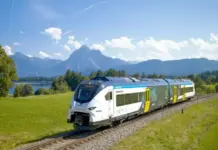
While full rail electrification remains critical for core networks, it is not always economically or practically feasible for every line, especially in rural or less frequently used regional routes. This is precisely where battery trains emerge as a revolutionary solution. These innovative trains, essentially electric multiple units equipped with powerful onboard battery packs, can operate independently of overhead lines for significant distances. They charge at electrified sections or dedicated charging stations, offering a flexible and cost-effective alternative to diesel on lines where overhead infrastructure might be prohibitively expensive or disruptive to install.
How Battery Trains Are Reshaping Regional Mobility
The operational concept of battery trains is elegant in its simplicity and profound in its impact. They function similarly to conventional electric trains when under overhead lines, drawing power directly. However, upon reaching non-electrified sections, they seamlessly switch to battery power, providing silent, emission-free operation. This capability is rapidly transforming regional rail modernization efforts, enabling the replacement of diesel trains on routes previously thought to be unelectrifiable. For instance, battery trains are proving particularly effective for branch lines, short-distance commuter routes, and shunting operations where the cost of electric rail infrastructure for a full catenary system would be disproportionate to the traffic volume.
The benefits of battery trains extend beyond just cost savings on infrastructure. They offer a tangible step towards zero-emission rail on routes that would otherwise remain dependent on diesel. They contribute significantly to local air quality, reduce noise pollution in residential areas, and align perfectly with broader green mobility objectives. While battery technology continues to evolve, current advancements in energy density and charging speeds are making these trains increasingly viable for longer routes. Challenges such as battery weight, charging time, and performance in extreme temperatures are actively being addressed through ongoing research and development, continuously expanding their operational envelope.
The Synergy of Rail Electrification and Battery Trains
The future of sustainable rail transport is unlikely to be dominated by a single technology but rather by an intelligent integration of both rail electrification and battery trains. A hybrid approach, often referred to as “discontinuous electrification” or “electric island” operation, allows battery trains to utilize existing electrified sections for both propulsion and recharging, extending their range into non-electrified territories. This strategy maximizes the benefits of existing electric rail infrastructure while providing a cost-effective path to decarbonization for the remaining network.
Building a Comprehensive Zero-Emission Rail Network
Imagine a scenario where core arterial routes are fully electrified, supporting high-speed intercity services and heavy freight. Branching off these main lines, battery trains seamlessly take over, ferrying passengers and goods to regional towns and remote communities without the need for additional costly overhead lines. This synergistic model ensures that the entire network can transition to zero-emission rail, creating a truly comprehensive and interconnected system of green mobility. Such an integrated approach avoids the “all or nothing” dilemma of electrification, offering a pragmatic and scalable pathway for regional rail modernization across diverse geographical and economic landscapes. The combination means that diesel train replacement can occur not just on major lines, but across the entire network.
Economic and Operational Advantages of Sustainable Rail Transport
Beyond the undeniable environmental benefits, the widespread adoption of rail electrification and battery trains brings forth a multitude of economic and operational advantages that are attractive to operators and governments alike.
Fuel Cost Savings and Reduced Maintenance
One of the most immediate and significant benefits is the substantial reduction in fuel costs. As previously mentioned, electricity typically offers more stable pricing than diesel, leading to predictable operational budgets and significant savings over the lifetime of the rolling stock. Furthermore, electric motors found in both fully electric and battery trains are inherently simpler than complex diesel engines, featuring fewer moving parts. This translates into lower maintenance requirements, reduced downtime for repairs, and a longer operational lifespan for locomotives and multiple units. These savings contribute directly to the financial sustainability of railway operations, making the investment in electric rail infrastructure and battery technology a sound economic decision.
Enhanced Service Quality and Public Perception
The shift to zero-emission rail also positively impacts service quality and public perception. Electric and battery trains are considerably quieter than diesel locomotives, leading to a more pleasant experience for passengers and reduced noise pollution for communities along the railway lines. Their smoother acceleration and often higher power output can lead to improved journey times and enhanced schedule reliability. In an era where sustainability is a growing concern for consumers, promoting a green mobility railway network serves to attract more passengers and freight, reinforcing rail’s position as a preferred mode of transport and supporting regional rail modernization efforts.
Addressing Hurdles and Charting the Course Forward
While the momentum for rail electrification and battery trains is undeniable, the transition requires concerted effort and strategic planning to overcome inherent challenges. Funding models, technological advancements, and supportive policy frameworks are crucial for success.
Funding and Policy Frameworks
The substantial upfront investment required for electric rail infrastructure necessitates innovative funding approaches. Public-private partnerships, government grants, and green bonds are emerging as viable mechanisms to finance these ambitious projects. Policy frameworks that incentivize zero-emission rail, such as carbon pricing, emission reduction targets, and direct subsidies for sustainable technologies, play a vital role in accelerating adoption. Clear regulatory pathways for the deployment of new electric and battery rolling stock, along with harmonized technical standards, are also essential to facilitate widespread implementation.
Continued Technological Advancements
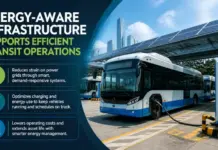
The rapid pace of technological innovation, particularly in battery chemistry and charging infrastructure, will continue to shape the capabilities of battery trains. Improvements in energy density will extend range, while faster charging solutions will reduce turnaround times. For traditional electrification, advancements in smart grid integration and energy management systems will optimize power consumption and enhance network resilience. Research into lightweight materials and regenerative braking systems will further improve the efficiency of both types of electric rolling stock, continually pushing the boundaries of what sustainable rail transport can achieve. These ongoing developments are critical for the long-term viability of diesel train replacement across all lines.
Conclusion
The railway sector stands at a pivotal juncture, poised for a transformative future driven by sustainability and efficiency. Transport Advancement notes that the increasing momentum behind rail electrification and battery trains is a testament to their critical role in achieving global decarbonization targets and modernizing transport networks. From the enduring power of extensive electric rail infrastructure to the flexible innovation of battery trains providing solutions for regional rail modernization, these technologies collectively offer a compelling pathway to a future of zero-emission rail.
As operators continue to invest in diesel train replacement and embrace these cleaner alternatives, the benefits, ranging from significant cost savings and reduced environmental impact to enhanced service quality and a better experience for passengers and communities, become increasingly apparent. The journey towards a fully sustainable rail transport system will require continued collaboration between governments, industry, and technology innovators. Yet, with the combined power of rail electrification and battery trains, the vision of a truly green mobility network, quiet, efficient, and emission-free, is not just a distant dream, but a rapidly approaching reality.
