













The control rooms of the global transportation network whether managing the flow of air traffic over the Atlantic, the movement of thousands of shipping containers in a major port, or the intricate scheduling of a metropolitan rail system are the nerve centers of the modern world. In these high-stakes environments, operators are tasked with monitoring an overwhelming amount of data in real-time, often under intense pressure. The effectiveness of these individuals is directly tied to the quality of the systems they use to interact with technology. This is why the evolution of the human machine interface in transport control rooms is so critical. No longer just a collection of buttons and screens, the modern HMI is a sophisticated, human-centric ecosystem designed to optimize cognitive load, enhance situational awareness, and ensure that safety remains the paramount priority in an increasingly automated world.
The Shift from Information Overload to Situational Awareness
In the early days of transport management, control rooms were dominated by physical dials, switches, and analog maps. As the industry digitized, these were replaced by a multitude of computer monitors, which, while more versatile, often led to a new problem: information overload. An operator in a modern railway control center might be responsible for monitoring track status, power distribution, weather alerts, and CCTV feeds simultaneously. If the human machine interface in transport control rooms is poorly designed, the operator can become overwhelmed, leading to “alarm fatigue” where critical warnings are lost in a sea of non-essential data.
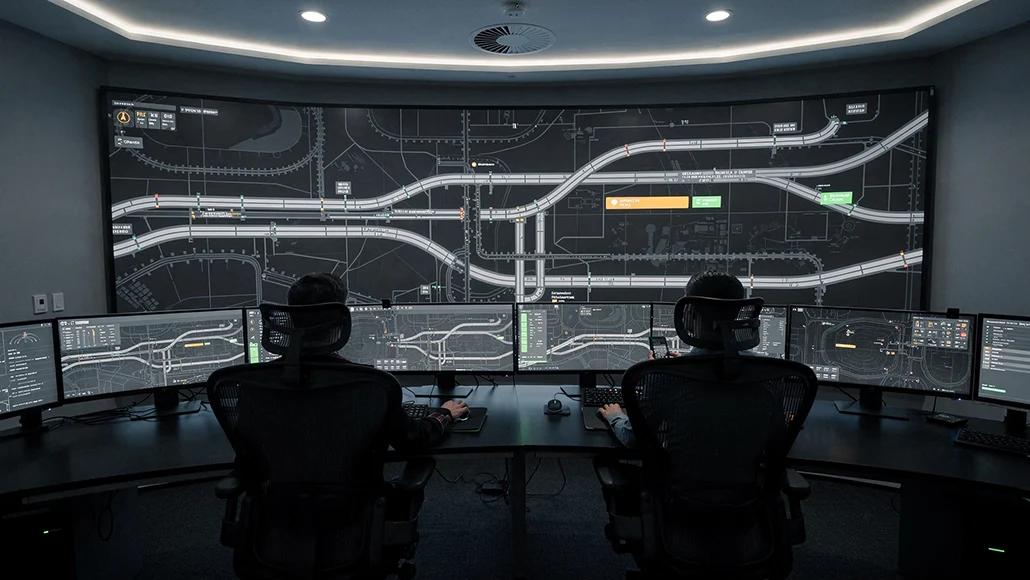
The modern HMI addresses this by prioritizing situational awareness over raw data delivery. Through the use of “dark cockpit” design principles where the interface remains uncluttered and neutral until a specific event requires attention operators can focus on the broad picture of the network. When an anomaly occurs, the HMI uses hierarchical visual cues, such as color-coding and spatial alerts, to draw the operator’s eye exactly where it needs to be. This intelligent filtering of information ensures that the human brain can process the most relevant data at the right time, drastically reducing the likelihood of human error in safety-critical situations.
Ergonomics and the Psychology of Interface Design
Designing an effective human machine interface in transport control rooms requires a deep understanding of human factors and cognitive psychology. Ergonomics in this context goes far beyond the physical comfort of a chair or the height of a desk; it involves the “cognitive ergonomics” of how information is structured and presented. For instance, the way a high-speed rail line is visualized on a screen must align with the operator’s mental model of the physical track. If the digital representation is counter-intuitive, it increases the mental effort required to perform tasks, leading to faster exhaustion and decreased vigilance.
Modern digital control centers utilize UX/UI (User Experience/User Interface) principles borrowed from the world of consumer technology but hardened for industrial reliability. High-contrast displays with matte finishes reduce eye strain over long shifts, while touch-sensitive surfaces and gesture control allow for more natural interaction with complex datasets. Furthermore, the use of large-scale “video walls” allows for a shared mental model among all operators in the room, facilitating better communication and teamwork during a crisis. By treating the operator as a central part of the system rather than just a monitor of it, HMI design is bridging the gap between human intuition and machine precision.
The Integration of AI and Decision Support Systems
A major trend in the development of the human machine interface in transport control rooms is the integration of Artificial Intelligence as a collaborative partner. In the aviation sector, for example, air traffic controllers are increasingly supported by AI assistants that can predict potential flight path conflicts several minutes before they would be apparent to a human. These systems do not replace the human controller; instead, they provide a “decision support” layer within the HMI.
The AI analyzes the vast array of incoming data and presents the operator with a limited set of high-confidence options. This reduces the cognitive burden of problem-solving, allowing the human to focus on the higher-level task of ethical judgment and communication. To be effective, this relationship requires a high degree of trust, which is built through transparent HMI design. The interface must not only tell the operator what to do but also provide a brief explanation of why the AI is suggesting a particular course of action. This “explainable AI” is essential for maintaining operator confidence in automated systems.
Multimodal Interfaces: Beyond the Screen
As transport networks become more complex, the human machine interface in transport control rooms is expanding beyond traditional 2D screens. Multimodal interfaces use a combination of sight, sound, and touch to convey information. For example, directional audio can alert a port operator to a collision risk by making the warning sound like it is coming from the specific direction of the incident. This utilizes the human brain’s natural ability to localize sound, triggering a faster reaction than a visual icon on a crowded screen.
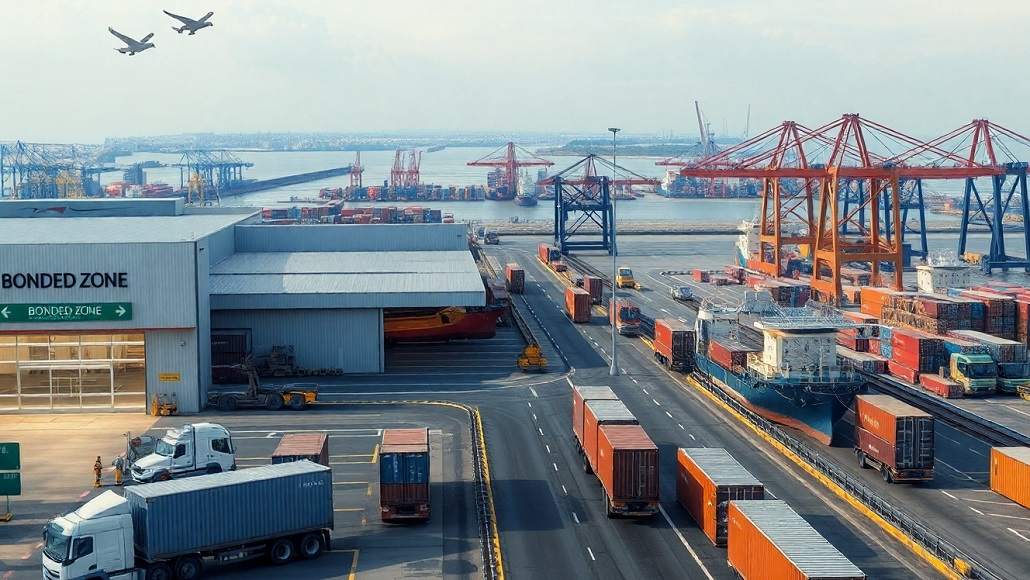
In some advanced maritime and rail control centers, Augmented Reality (AR) is being used to overlay digital data directly onto a view of the physical environment. A port manager could use AR glasses to see the contents, destination, and weight of a shipping container just by looking at it, with the data projected into their field of vision. This seamless integration of the digital and physical worlds reduces the “head-down” time spent looking at monitors and allows for a more intuitive understanding of complex operations.
The Role of Immersive Training in HMI Mastery
As the human machine interface in transport control rooms becomes more complex, the methods used to train operators must also evolve. Traditional classroom learning is being replaced by immersive simulations using Virtual Reality (VR) and Mixed Reality (MR). By recreating the HMI in a virtual environment, trainees can practice responding to rare but high-impact events such as a major signal failure or a cyber-breach without any risk to real-world operations.
These simulations also allow designers to test new HMI layouts with real users. By tracking the eye movements and heart rates of trainees during a simulation, designers can identify areas of the interface that cause confusion or stress. This “data-driven design” ensures that by the time an HMI is deployed in a real control room, it has been optimized for the human beings who will use it. This continuous loop of training and design refinement is what will allow transport networks to maintain their safety records as the underlying technology becomes increasingly automated.
Cybersecurity and the Human Element
The digitalization of control rooms also introduces significant cybersecurity risks. A compromised human machine interface in transport control rooms could allow a malicious actor to manipulate sensor data or issue false commands to vehicles and infrastructure. Therefore, modern HMI design must incorporate security at the interface level. This includes biometric authentication, such as iris or fingerprint scanning, to ensure that only authorized personnel can access critical controls.
Furthermore, the interface itself can be a tool for cybersecurity awareness. By visualizing the health of the network’s data streams, the HMI can alert operators to suspicious patterns or “spoofed” data that might indicate a cyber-attack. Training operators to recognize these digital anomalies is just as important as training them to handle mechanical failures. The human remains the final line of defense in both physical and digital security, and the HMI is their primary weapon.
Key Takeaways
The evolution of the human machine interface in transport control rooms is a testament to the importance of human-centric design in an era of rapid automation. By focusing on situational awareness, cognitive ergonomics, and the collaborative potential of AI, transport authorities are creating control environments that are both safer and more efficient. These systems ensure that as the volume of data grows, the clarity of human decision-making remains sharp.
As we look toward the future, the boundaries between the operator and the machine will continue to blur. From neural interfaces to fully immersive holographic control rooms, the technology will continue to advance, but the core objective will remain the same: to empower human beings to manage the world’s most complex systems with confidence and precision. The HMI is not just a tool; it is the vital bridge that allows human intelligence to navigate the vast digital landscape of modern transport.
