













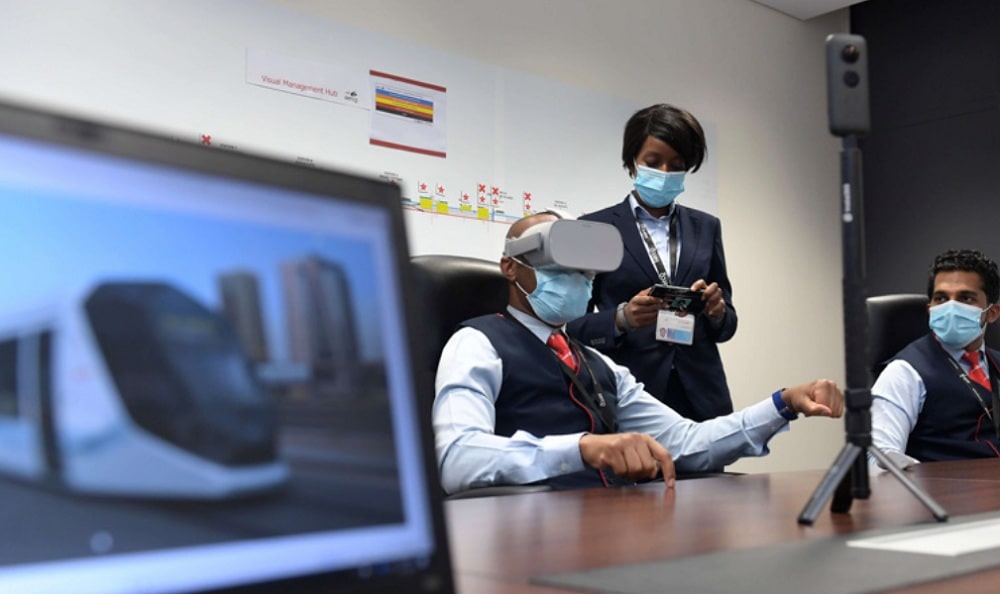
Dubai’s Roads and Transport Authority (RTA) and Serco Company – the Dubai Metro and Tram operator – recently launched an initiative to train tram drivers via virtual reality (VR) technology.
The Rail Agency at the RTA launched the first phase of the programme in July to enhance the training system for tram drivers, which aims to contribute to the development of their performance and the reduction of accidents related to them.
Hassan Muhammad Al Mutawa, Director of the Trains Operation Department at the Railways Corporation at the RTA, said: “RTA’s efforts continue to enhance integration between technical development and training methods, and we are pleased to work with our partners in using innovative technologies, such as VR, to enhance the impact of the educational and development programmes we provide. This is based on the authority’s keenness to adopt international best practices with the aim of improving the quality of training outputs through continuous development and updating to contribute to achieving the authority’s vision of ‘safe and easy transportation for all’.”
Al-Mutawa explained that adopting the latest technologies for training purposes will provide opportunities and interactive experiences for trained drivers, by subjecting the driver to different scenarios, through which they can develop skills in controlling the train to avoid traffic accidents, ensuring the safety of passengers.
Al Mutawa added: “By collecting and analysing operational data since the commencement of Dubai Tram operations in 2014, the RTA has decided the need to provide appropriate educational tools to improve tram drivers’ knowledge of the risks and raise their level of awareness. The surrounding environment constitutes the highest danger rate in the accident data that was collected, and therefore we have detailed data for intersection risks.”
Several experiments have been conducted to ensure that the cameras used in the training do not affect the optical range of tram drivers, or that they do not cause distraction.
Al-Mutawa continued: “The next stage is working with the tram training team and developing VR content. It complements the training inside the hall and encourages the use of VR-based training in all future training courses for tram drivers, in addition to expanding the use of technology in other areas in the transportation sector. And we believe that the interactive nature of VR training will transform skills development into an impactful and risk-free training experience.”
