



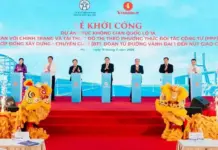
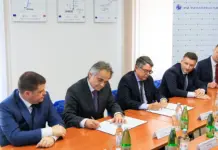






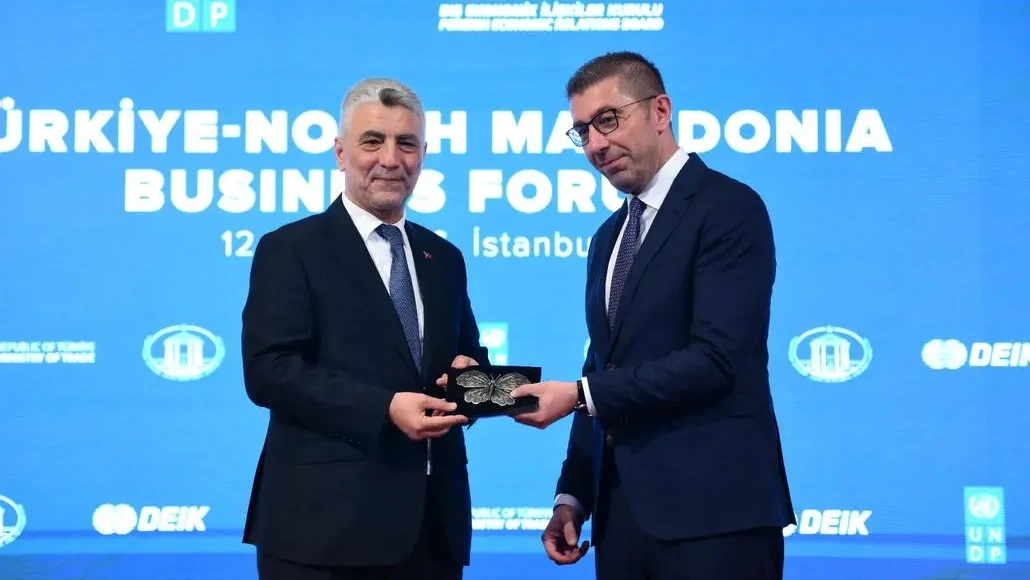
Officials and business leaders from Türkiye and North Macedonia convened in Istanbul to deliberate on expanding bilateral trade, reinforcing transport corridors, and identifying fresh investment opportunities. This significant Türkiye-North Macedonia Business Forum, orchestrated by Türkiye’s Foreign Economic Relations Board (DEIK), brought together high-ranking representatives from both nations, including North Macedonian Prime Minister Hristijan Mickoski.
Turkish Minister of Transport and Infrastructure, Abdulkadir Uraloglu, highlighted the enduring historical bonds between Türkiye and North Macedonia, emphasizing their continuous deepening and the strategic imperative of developing alternative transport routes amidst prevailing regional instability. He pointed out that ongoing conflicts have underscored the urgent necessity for diversifying transportation corridors. Uraloglu further elaborated on Türkiye’s substantial infrastructure investments, exceeding $355 billion over the past 23 years, with a particular focus on transportation projects. These investments are projected to contribute $2 trillion to the national economy and support the annual employment of 1.2 million people.
A transport cooperation agreement between Turkish State Railways and North Macedonia’s Railway Infrastructure Agency is set to bolster bilateral partnership. Uraloglu stressed Türkiye’s strategic position connecting Europe and Asia, with a continuous effort to expand transit points. He also mentioned a recent financing achievement of $6.75 billion from six international institutions, led by the World Bank, for a crucial railway line spanning approximately 120 kilometers across Istanbul’s Yavuz Sultan Selim Bridge.
The planned Development Road Corridor, connecting the Gulf region with Türkiye, is expected to reduce reliance on existing maritime chokepoints. Uraloglu expressed Türkiye’s readiness to collaborate with North Macedonia and share its considerable expertise in transport cooperation.
North Macedonian Government Secretary General Igor Janushev detailed his country’s efforts in developing Corridors 8 and 10 to fortify its strategic standing within regional transport networks. He unveiled plans for a €5.5 billion ($6.4 billion) investment in infrastructure over the next five to seven years, supported by a strategic partnership agreement with the United Kingdom for project financing.
Janushev lauded the contributions of Turkish companies in railway and highway construction for transport cooperation, announcing that a €450 million tender for the third section of Corridor 8, backed by the European Investment Bank and the European Union, is slated for launch soon. Mickoski extended a warm invitation to Turkish investors, encouraging them to broaden their presence in North Macedonia and emphasizing the open doors and tangible opportunities for joint future building.
He characterized North Macedonia as a vital gateway linking the Middle East, Türkiye, and Southeast Europe with the rest of the continent, positioning it as a strategic base for Turkish manufacturers to access European markets. Mickoski also highlighted ongoing reforms aimed at improving the business environment, streamlining bureaucracy, and digitizing public services, with the overarching goal of fostering long-term partnerships that generate mutual value.
DEIK Chairman Nail Olpak expressed Turkish businesses’ ambition to double the current $1 billion trade volume with North Macedonia. He pointed to the country’s advantageous location along major European transport corridors as a key opportunity for Turkish construction and logistics firms. Olpak also suggested that Türkiye’s expertise in solar power, wind energy, and energy efficiency could support North Macedonia’s renewable energy objectives, while acknowledging that financing constraints and skilled labor shortages require attention to foster further investment. The ongoing Türkiye – North Macedonia trade dialogues are crucial for addressing these areas.
Meanwhile, United Nations Development Program’s (UNDP) Deputy Regional Director Nick Hartmann shared that North Macedonia’s long-term development strategy incorporates structural reforms designed to enhance investor confidence. He mentioned that the UNDP has developed an investor map to align national priorities with global development goals and facilitate the mobilization of international capital by providing data on risks and potential returns, thereby supporting increased investment opportunities.
