

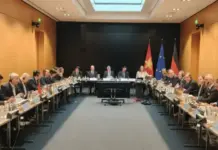


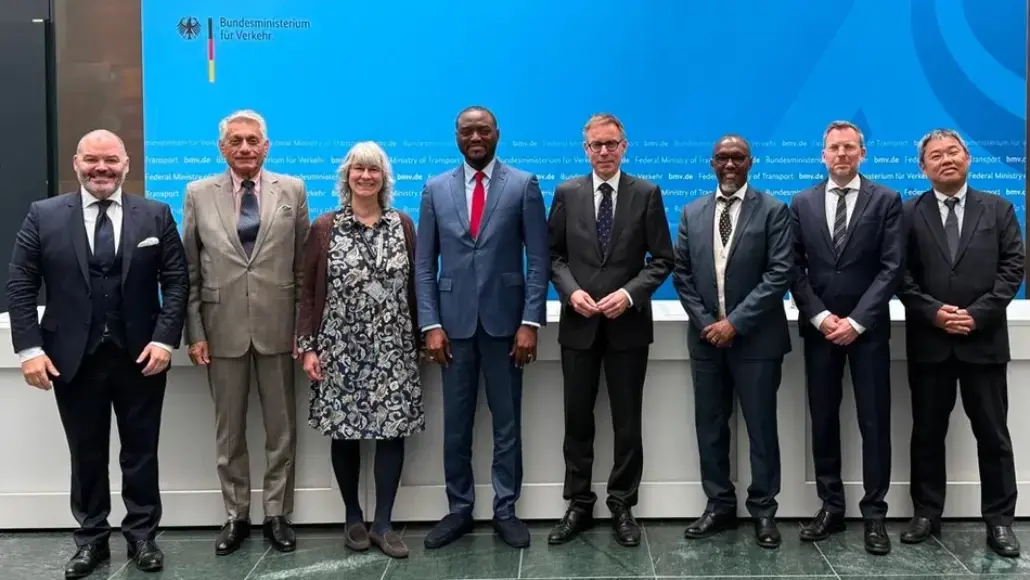
The African Development Bank Group (AfDB) is significantly enhancing its collaboration with Germany to foster the development of modern, sustainable, and integrated transport infrastructure across the African continent. This deepened partnership emerged from a recent mission to Germany, where an AfDB delegation engaged in crucial discussions with key German government bodies and transport sector organizations.
A central theme of the engagement was the advancement of railway infrastructure, urban mobility, and digital connectivity. The AfDB delegation, led by Mike Salawou, held productive meetings with DB Engineering & Consulting (DB E&C), the engineering and consulting arm of Germany’s national railway operator, Deutsche Bahn. These discussions specifically explored how technical training, skills enhancement, and STEM (Science, Technology, Engineering, and Mathematics) education can bolster African nations in their efforts to modernize and expand their railway networks as well as look for more sustainable transport solutions.
During the visit, the delegation experienced firsthand the comprehensive training capabilities at the DB Railway Academy in Potsdam. This institution is recognized globally for its extensive railway training programs, having delivered over 2,500 training courses and educated approximately 250,000 individuals annually since its inception in 1995.
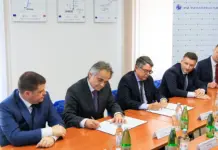
A landmark achievement of these discussions was the signing of a Letter of Intent (LOI) between the African Development Bank Group and DB E&C. This pivotal agreement lays the groundwork for a collaborative feasibility study to establish an African Rail Competence Centre. This proposed center is envisioned as a continental hub for railway knowledge, innovation, research, and technical education, designed to accelerate the long-term modernization and development of rail infrastructure throughout Africa. Both organizations will jointly assess various institutional models, including decentralized, cooperative, and centralized structures, to identify the most effective framework to meet the continent’s evolving railway sector needs.
Mike Salawou highlighted the significance of this collaboration, stating that it represents an important step forward for Africa’s railway industry. He emphasized that by drawing upon Deutsche Bahn’s extensive expertise and operational experience, the initiative aims to build local technical capacities, elevate workforce skills, and support the creation of efficient and sustainable railway systems across Africa. Salawou underscored the critical role of strategic international partnerships in driving continent-wide skills transformation and constructing resilient infrastructure.
The AfDB delegation also gained valuable insights into Germany’s approach to integrated multimodal transport systems. They observed how Germany effectively integrates rail, tram, bus, and cycling networks to create accessible and walkable urban environments. AfDB representatives noted that this German model demonstrates how coordinated urban planning, coupled with reliable rail systems, can diminish reliance on private vehicles, foster economic activity, encourage mixed-use development, and promote environmentally sound mobility solutions. Salawou further suggested that African cities could adopt similar transit-oriented development principles as they expand their railway infrastructure, promoting compact urban growth, enhanced accessibility, and climate-resilient city planning.
Following the agreement with DB E&C, the delegation engaged with the German Federal Ministry for Economic Cooperation and Development (BMZ). The BMZ affirmed its support for railway sector capacity-building initiatives, channeling assistance through its implementing agency, the German Agency for International Cooperation (GIZ).
Further discussions were held with other influential German institutions, including the Federal Ministry of Transport (BMV), the Federal Ministry for Economic Affairs and Energy (BMWE), and KfW IPEX-Bank. These meetings addressed broader infrastructure priorities, encompassing regional economic corridor development, critical minerals and electric vehicle supply chains, and support programs for small and medium-sized enterprises (SMEs) engaged in infrastructure projects. Discussions with KfW IPEX-Bank specifically explored avenues for enhanced cooperation and co-investment in substantial infrastructure developments across Africa. The talks also touched upon key strategic projects such as the Lobito Corridor, the Abidjan–Lagos Corridor Highway, the Uganda–Kenya Standard Gauge Railway, and Ethiopia’s Bishoftu International Airport. Both parties reaffirmed their commitment to backing high-quality, sustainable transport projects that are crucial for strengthening regional connectivity, fostering economic integration, and driving long-term development across Africa.
The delegation also visited the EUREF Campus in Berlin, where they explored pioneering approaches in urban development, clean energy systems, and smart mobility solutions. This visit aligned with the mission’s overarching objective to promote future-ready and environmentally sustainable transport systems for Africa.
Stefan Geisperger of DB Engineering & Consulting emphasized the necessity of developing sustainable railway systems in tandem with robust local expertise and workforce training. He confirmed DB E&C’s readiness to collaborate with the African Development Bank on long-term training programs, aimed at equipping local professionals with the essential technical skills for designing, operating, and maintaining advanced rail infrastructure. Geisperger added that this partnership seeks to deliver lasting impact by supporting Africa’s growing railway sector and contributing to Germany’s commitment to resilient and connected mobility solutions.
Daphne Gross-Jansen from the German Federal Ministry for Economic Cooperation and Development reiterated the ministry’s longstanding dedication to supporting Africa’s economic and social development objectives. She noted that the cooperation between AfDB and Deutsche Bahn on railway training and capacity-building can significantly contribute to creating employment, stimulating private sector investment in transport and energy, and advancing the Bank’s goal of developing an electrified railway network across Africa.
