




















UAE is preparing to introduce Abu Dhabi air taxi services by the end of 2026 or in the early months of 2027, representing a significant milestone in the emirate’s wider vision of creating a fully integrated transportation network that connects road, maritime and air mobility services.
During the Forbes Middle East Building the Future Summit, Dr Abdulla Hamad Al Ghfeli, Acting Director-General of the Integrated Transport Centre (ITC), outlined the latest developments surrounding the project and indicated that preparations are entering their final stages.
Speaking about the upcoming launch, he said, “The air taxi will soon start operating in Abu Dhabi by the end of this year or the beginning of next year.”
Alongside the rollout of the Abu Dhabi air taxi network, ITC is also preparing to launch a mobility-as-a-service platform in the coming months. The digital solution will allow passengers to plan, reserve and pay for trips covering multiple modes of transportation through a single application.
According to Al Ghfeli, the platform has been designed in a similar manner to the UAE government’s TAMM platform and aims to deliver a seamless travel experience from beginning to end. The authority has already implemented an automated fare collection system and is continuing efforts to integrate payment systems throughout Abu Dhabi’s transport network.
Archer Aviation Partnership Drives Air Taxi Ecosystem Development
Development of the commercial Abu Dhabi air taxi ecosystem began in 2024 through a collaboration between Archer Aviation and the Abu Dhabi Investment Office. Progress continued in 2025 when Abu Dhabi Aviation became Archer’s first Launch Edition customer, creating a pathway toward commercial deployment.
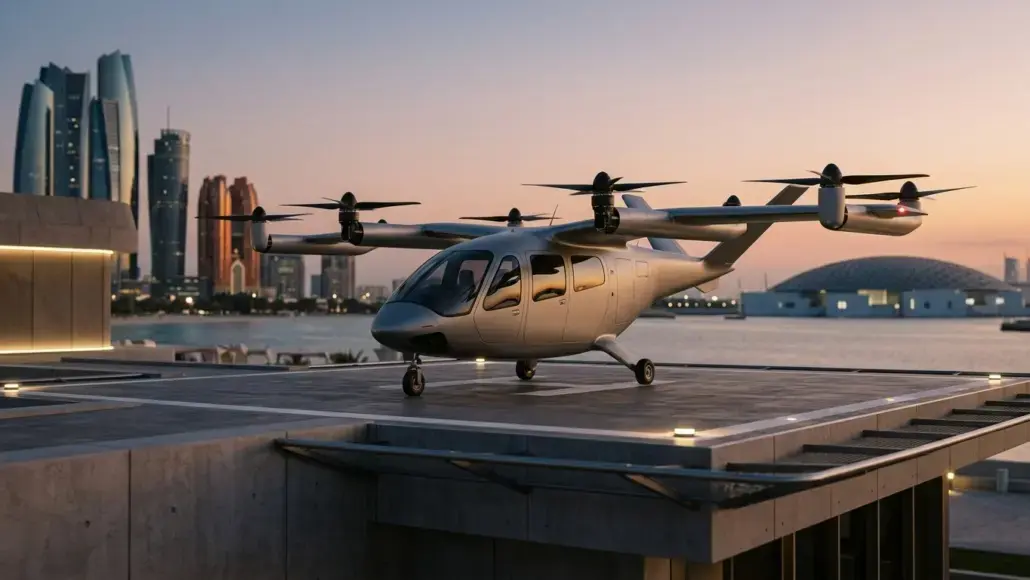
A further breakthrough was achieved on July 2, 2025, when Archer Aviation conducted the first demonstration flight of its Midnight electric vertical take-off and landing (eVTOL) aircraft at Al Bateen Executive Airport in Abu Dhabi. The all-electric aircraft is configured to carry four passengers and a pilot for short urban trips. It offers a range of up to 161 kilometres and can reach speeds of 241 km/h.
The Midnight aircraft incorporates a fixed-wing design together with 12 electric motors. Six forward tilt motors rotate during flight, enabling the transition from vertical lift to forward flight in approximately 45 seconds, while six rear motors provide additional lift during take-off and landing operations.
Archer Aviation plans to deploy an initial Midnight fleet in Abu Dhabi, supported by trained pilots, maintenance personnel, operational software and a dedicated passenger booking platform.
Infrastructure Expansion Supports Future Air Mobility
Infrastructure development is progressing in parallel with aircraft deployment plans. Authorities are transforming the Abu Dhabi Cruise Terminal helipad into a hybrid facility capable of serving both helicopters and eVTOL aircraft. In addition, plans call for the construction of more than 10 vertiports across the emirate. Initial locations include Zayed International Airport, Al Bateen Executive Airport, Yas Island, Saadiyat Island and Abu Dhabi Island.
Artificial Intelligence and Connectivity Shape Future Transport
Al Ghfeli explained that artificial intelligence now plays a central role in transport planning throughout Abu Dhabi. Authorities are leveraging information from population growth trends, housing projects, public transport networks, taxi services and road sensors to predict demand, enhance traffic management and guide infrastructure investment.
The integrated command platform is designed to help authorities anticipate congestion, improve incident response times and optimise the movement of people throughout the transport system.
Abu Dhabi Mobility, formerly known as the Integrated Transport Centre, continues to oversee the emirate’s transition toward an integrated transport system that incorporates future-focused technologies, including commercial Abu Dhabi air taxi services.
