

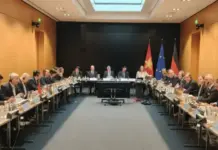









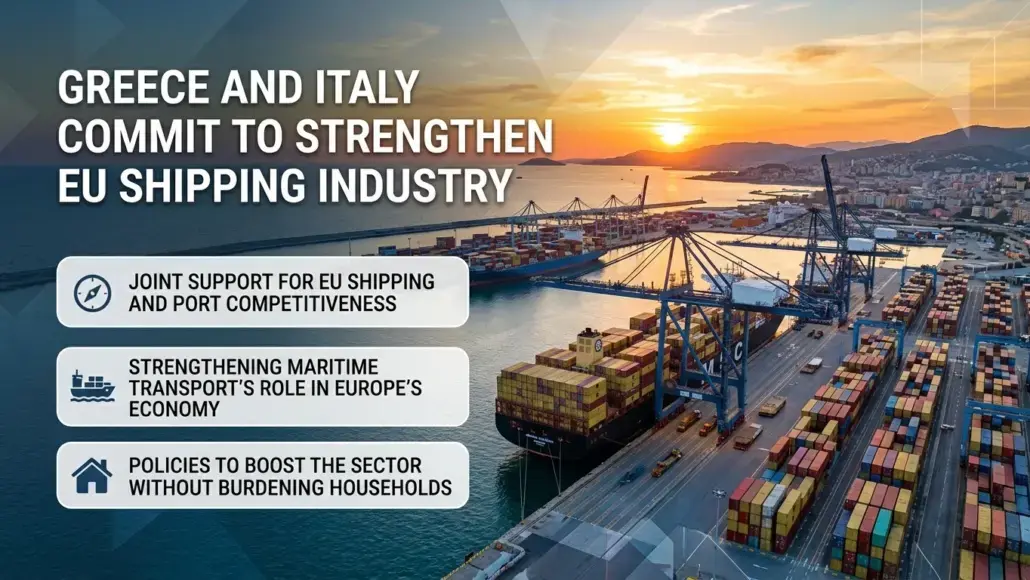
Greece and Italy are committed to continue working jointly in support of EU shipping and the competitiveness of European ports, according to Greek Minister of Maritime Affairs and Insular Policy Vassilis Kikilias. Speaking at an international shipping conference in Rome, Kikilias underlined the crucial role maritime transport plays in Europe’s economy and highlighted the need for policies that strengthen the sector without placing additional burdens on European households.
Addressing participants at the conference, he emphasized the importance of ensuring that EU shipping remains competitive while navigating the industry’s transition toward cleaner energy solutions.
“Greece and Italy will continue to fight together for the competitiveness of European shipping and European ports, as well as for a fair and realistic energy transition of the maritime industry,” Kikilias said.
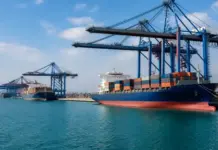
During a ministerial panel at the International Chamber of Shipping Summit, Kikilias pointed to the strategic value of shipping and port infrastructure, noting that approximately 90% of global trade moves by sea. He said Europe should capitalize on its maritime capabilities as an advantage while facing increasing economic competition from the United States and China.
According to the minister, future agreements involving shipyards, energy, shipping, marinas and the cruise sector are expected to remain closely tied to maritime activity, creating opportunities for both employment and economic expansion. He also highlighted the importance of cooperation among Southern European countries, stating that the Greek and Italian shipping communities are central to the European economy and maintain strong links with society and productive economic sectors.
Calls for Practical Energy Transition Measures
Kikilias also discussed the shift toward alternative fuels and the European Emissions Trading System (ETS), stressing that policy measures should be realistic and should not undermine EU shipping or encourage maritime traffic to relocate to non-European Mediterranean ports.
“We want ports where global shipping will find hubs, not policies that push our ships toward non-European ports in the southern Mediterranean,” he said.
The minister cautioned that excessive costs imposed on the shipping sector could eventually be passed through the economy, resulting in higher prices and additional pressure on consumers. He argued that European decision-makers should carefully consider the effects of policy measures on competitiveness, energy, transport and supply chains, warning that unrealistic approaches could negatively affect the industry’s long-term prospects.
Greece and Italy Deepen Maritime Cooperation
On the sidelines of the summit, Kikilias held talks with Italian Deputy Prime Minister and Minister of Transport and Infrastructure Matteo Salvini. Discussions focused on shared challenges facing the Greek and Italian maritime sectors, which together account for a significant share of European maritime activity.
Both sides agreed to continue coordinating efforts aimed at safeguarding European ports and supporting a balanced energy transition. The talks also covered supply chain resilience, closer bilateral cooperation and the promotion of common positions concerning the future of European shipping and Mediterranean ports.
Kikilias additionally met representatives from Cyprus, Italy and Malta, highlighting the common interests of Mediterranean nations within European shipping. He noted that these countries have developed a shared understanding through their maritime position and that cooperation among them has delivered results in a sector that remains vital to their economies and societies.
Further meetings were held with representatives of the International Chamber of Shipping and major maritime groups, where discussions centered on the contribution of global maritime organizations to the future direction of shipping. Participants also highlighted the importance of free navigation and protecting seafarers in the face of growing geopolitical challenges.
Speaking about Greece’s maritime sector, Kikilias said the Greek-owned fleet continues to rank among the strongest globally. He linked shipping with opportunities for younger generations, describing the industry as a source of well-paid employment and economic development. He also emphasized the historic role of Greece, Italy and Malta in building prosperity through maritime trade.
