

















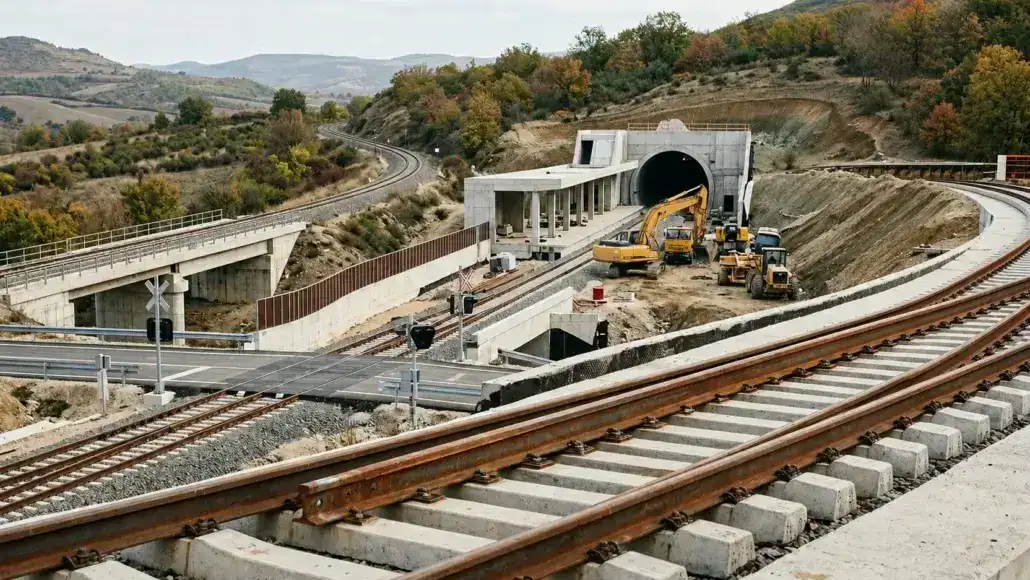
The intricate world of rail infrastructure, with its complex web of tracks, tunnels, bridges, stations, and signaling systems, has long grappled with the challenges inherent in large-scale engineering endeavors. Historically, these projects have been managed through fragmented processes, relying on a patchwork of 2D drawings, disparate spreadsheets, and often siloed communication channels. Such methods, while foundational for decades, inevitably led to inefficiencies, costly rework, and prolonged timelines. However, a profound transformation is sweeping through the industry, spearheaded by a powerful digital methodology: Building Information Modeling (BIM). The application of building information modeling in rail projects is not merely an incremental improvement. Transport Advancement highlights the shift to BIM in rail projects represents a paradigm shift towards integrated, data-rich project delivery, promising unprecedented levels of precision, collaboration, and efficiency.
At its core, BIM transcends the traditional notion of design by creating an intelligent, 3D model-based process that provides architects, engineers, constructors, and operators with the insights and tools to more efficiently plan, design, construct, and manage buildings and infrastructure. When applied to the unique demands of railway systems, building information modeling in rail projects offers a holistic digital environment where every aspect of a rail asset, from its underground foundations to the overhead catenary systems, is digitally represented and interconnected. This guide delves into the transformative impact of BIM, exploring its multifaceted benefits, implementation considerations, and its pivotal role in shaping the future of global rail networks.
The Imperative for Digital Transformation in Rail Infrastructure
Rail projects are notoriously complex, characterized by vast scales, multi-disciplinary requirements, stringent safety regulations, and often constrained urban environments. From high-speed lines connecting major cities to intricate urban metro systems, each project demands meticulous planning, seamless coordination among diverse stakeholders, and robust risk management. Traditional design and construction methodologies, often reliant on static drawings and manual data exchange, struggle to keep pace with these escalating complexities. Misinterpretations of design documents, undetected clashes between different system components, and difficulties in visualizing the final outcome often lead to costly delays and budget overruns.
This is precisely where BIM in rail projects emerges as an indispensable tool. It moves beyond geometry, embedding rich information into every element of the model – data related to materials, specifications, performance characteristics, costs, and scheduling. This integrated data environment provides a single source of truth for all project participants, fostering a level of transparency and collaboration previously unattainable. The ability to simulate various scenarios, identify potential conflicts virtually, and visualize the entire project lifecycle digitally empowers decision-makers with a comprehensive understanding, significantly de-risking the entire construction process. This digital approach is fundamental to modern rail infrastructure BIM, laying the groundwork for more resilient and future-proof transportation networks.
Core Benefits of Building Information Modeling in Rail Projects
The adoption of building information modeling in rail projects unlocks a cascade of advantages that fundamentally reshape how rail infrastructure is conceived, delivered, and maintained. These benefits span the entire project lifecycle, delivering value from initial feasibility studies through to operation and eventual decommissioning.
Enhanced Design Coordination and Collaboration Across Disciplines
One of the most significant challenges in large-scale rail projects is the seamless integration of work from numerous disciplines – civil engineering, structural engineering, track design, signaling, telecommunications, electrical systems, and architectural design for stations. Traditionally, this coordination involved exchanging countless 2D drawings and documents, often leading to version control issues and miscommunications. BIM consolidates all these disparate designs into a unified 3D model. This central repository ensures that all stakeholders are working with the most current information, improving rail design coordination dramatically. Engineers can visualize how their components fit into the larger system, identify interfaces, and collaborate in real-time within a shared digital space. This reduces ambiguities, minimizes design errors, and fosters a more cohesive and efficient design process.
Minimizing Risks with Advanced Clash Detection
Perhaps one of BIM’s most celebrated capabilities in complex infrastructure projects is its ability to perform automated clash detection in rail. In conventional workflows, clashes between elements – such as a utility pipe intersecting with a structural beam, or an electrical conduit conflicting with a signaling cable route – might only be discovered during construction, leading to expensive rework, material waste, and significant delays. With BIM, the integrated 3D model allows for proactive identification of these spatial conflicts during the design phase itself. Advanced software can automatically flag clashes, enabling design teams to resolve them virtually before any physical construction begins. This preventative approach dramatically reduces on-site surprises, enhances safety, and saves substantial time and cost, directly contributing to more predictable project outcomes.
Optimized Cost Control and Resource Management
BIM models are not just visual representations; they are information-rich databases. Every object within the model can be linked to cost data, material specifications, and resource requirements. This enables much more accurate quantity take-offs and cost estimations from the earliest stages of a project. Project managers can use the BIM model to track material usage, manage procurement schedules, and monitor budget adherence with unprecedented precision. The ability to simulate construction sequences (4D BIM, linking the model to time schedules) and resource allocation (5D BIM, integrating cost) further empowers teams to optimize expenditure, identify potential cost overruns proactively, and make informed decisions to keep projects on budget. This robust financial oversight is critical for successful rail project management.
Streamlined Project Scheduling and Phasing
Integrating the project schedule with the 3D BIM model creates a 4D BIM environment, offering a dynamic visualization of the construction sequence over time. This capability is invaluable for rail projects, which often involve complex phasing, working around operational rail lines, and managing tight timelines for critical components. By simulating the construction process, project teams can identify potential bottlenecks, optimize logistics, manage site access more effectively, and communicate construction plans clearly to all stakeholders. This visual, time-based planning reduces delays, improves on-site coordination, and helps maintain the project on its critical path, leading to faster and more predictable project delivery.
Improved Asset Delivery and Lifecycle Management
The benefits of building information modeling in rail projects extend far beyond the construction phase. The rich data embedded within the BIM model forms the foundation for effective BIM asset delivery and rail lifecycle management. Upon project completion, the BIM model transforms into an “as-built” digital twin of the railway infrastructure. This digital twin contains comprehensive information about every asset, including its specifications, maintenance history, performance data, and manufacturer details. This allows operators to streamline maintenance planning, predict equipment failures, manage inventory of spare parts, and optimize operational efficiency. For instance, knowing the exact location and specifications of a signaling component or track section can significantly reduce inspection times and improve the speed of repairs, ultimately enhancing the reliability and longevity of the entire rail network. This seamless transition from construction to operations ensures that the digital investment pays dividends throughout the asset’s lifespan.
Navigating the Implementation of BIM in Rail Projects: Challenges and Solutions
While the advantages of building information modeling in rail projects are clear, its full-scale implementation is not without its challenges. The rail industry, with its long-standing traditions and significant capital investments, can be slow to adopt new technologies. However, these hurdles are surmountable with strategic planning and commitment.
One primary challenge is the initial investment in software, hardware, and, crucially, training. Transitioning an entire workforce from traditional CAD workflows to a BIM-centric approach requires significant upfront expenditure and a steep learning curve. The solution lies in phased implementation, starting with pilot projects, and investing in comprehensive training programs tailored to different roles within the project team. Partnering with experienced BIM consultants can also provide valuable guidance.
Another significant hurdle is data interoperability. Rail projects often involve multiple software platforms and proprietary formats from different vendors. Ensuring that data can flow seamlessly between these systems without loss of information is critical. Industry standards like IFC (Industry Foundation Classes) are evolving to address this, and increasingly, software vendors are committed to open BIM principles. Establishing clear data exchange protocols and common data environments (CDEs) from the outset of a project is essential for successful digital rail construction.
Furthermore, cultural resistance to change can be a factor. Overcoming this requires strong leadership, clear communication about the benefits of BIM, and demonstrating quick wins to build confidence and buy-in across the organization. Emphasizing that BIM is not just a technology but a fundamental shift in process and collaboration is key to fostering an innovative mindset.
The Future of Rail: BIM as a Foundation for Smart Infrastructure
With passing time Transport Advancement highlights the increasing role of building information modeling in rail projects. BIM is not merely a tool for design and construction. It is the foundational layer for creating truly smart, interconnected, and sustainable rail infrastructure. The concept of a “digital twin”, a living, dynamic virtual replica of the physical rail asset, is increasingly becoming a reality, powered by BIM data combined with IoT sensors, real-time operational data, and artificial intelligence.
These digital twins will enable predictive maintenance, dynamic scheduling based on real-time conditions, enhanced safety monitoring, and optimized energy consumption. For instance, sensors on tracks and trains could feed data back into the BIM-based digital twin, allowing operators to detect potential issues before they become critical failures, improving safety and reducing downtime. The integration of BIM with GIS (Geographic Information Systems) further enriches the model with geographical context, which is crucial for linear infrastructure like railways. This convergence of technologies marks a significant step forward in railway engineering technology, promising a new era of efficiency and resilience.
Ultimately, the widespread adoption of building information modeling in rail projects is critical for building the next generation of transportation networks. It supports the development of greener, more efficient, and safer rail systems that can meet the demands of growing populations and evolving environmental standards. Transport Advancement notes thta by embracing this digital transformation, the rail industry can ensure its continued role as a backbone of sustainable mobility for decades to come. The journey towards a fully digital rail ecosystem is underway, and BIM is undeniably leading the charge.
