

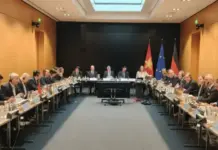



















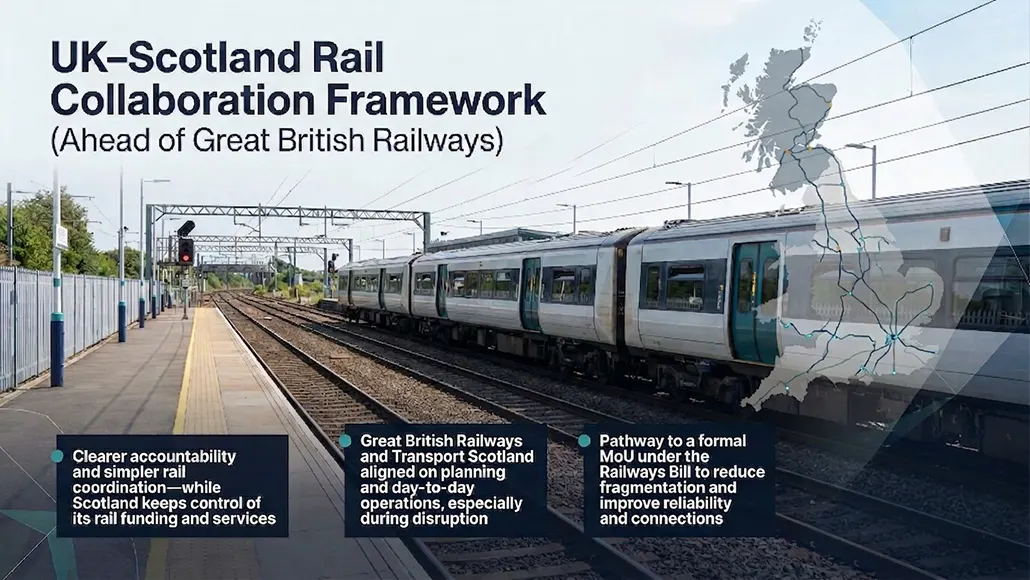
On 25th March 2026, the UK and Scottish Governments jointly published the foundations of a new agreement outlining how they will collaborate on their respective rail responsibilities once Great British Railways (GBR) is established. The proposed rail function framework forms the basis of a memorandum of understanding (MoU) between Transport Secretary Heidi Alexander and Scottish ministers, marking a significant step in advancing the UK government’s rail reform agenda. By setting out how both administrations will coordinate under this rail function framework, the initiative reflects a shared commitment to delivering a more streamlined and integrated railway system for Scotland.
The rail function framework is designed to improve the overall passenger experience by creating a system that is easier to navigate, more responsive to local priorities, and clearer in terms of accountability for service delivery. While promoting integration, the agreement preserves devolved powers, ensuring that Scottish ministers maintain full control over funding for rail infrastructure and continue to oversee the specification and provision of Scottish-designated passenger services. At the same time, the framework establishes a structured approach for collaboration between both governments and GBR, with clearly defined governance and responsibilities aimed at strengthening coordination across the network.
A central element of the rail function framework is the closer alignment between Great British Railways and Transport Scotland in planning and managing rail services. This coordinated approach is expected to result in more reliable operations, improved communication during service disruptions, and upgrades focused on passenger priorities such as smoother connections and better punctuality. The framework also highlights several anticipated benefits for Scotland, including enhanced integration of track and train operations, allowing the country to share in the wider advantages of GBR reforms across Great Britain. Importantly, Scottish ministers will continue to set strategic direction and funding priorities, ensuring that decisions remain tailored to local community needs.
Looking ahead, the framework establishes a pathway toward a formal MoU to be agreed by both governments, forming a cornerstone of the wider reforms under the Railways Bill. The legislation will create GBR as a new public body responsible for running and managing tracks and trains, with a focus on safety, sustainability and performance. By addressing fragmentation within the existing system, GBR aims to improve service standards and deliver better value for passengers and taxpayers alike. The rail function framework therefore lays the groundwork for a more unified and efficient railway system, supporting long-term improvements across Scotland and the broader UK network.
