



















The modern transportation landscape is currently defined by a relentless surge in data generation. From high-speed rail networks equipped with thousands of vibration sensors to urban environments filled with connected vehicles and smart cameras, the sheer volume of information being produced is staggering. Traditionally, this data was funneled to centralized cloud servers for analysis, but the inherent delays in this model known as latency have become a bottleneck for safety-critical applications. As a result, the industry is pivoting toward a more decentralized architecture. The implementation of edge computing in transport real time systems is transforming how fleets and infrastructure interact, allowing for instantaneous decision-making that was previously impossible. By moving the “brain” of the operation closer to the sensors, transport networks are becoming faster, safer, and significantly more resilient.
The Critical Need for Low Latency in Connected Mobility
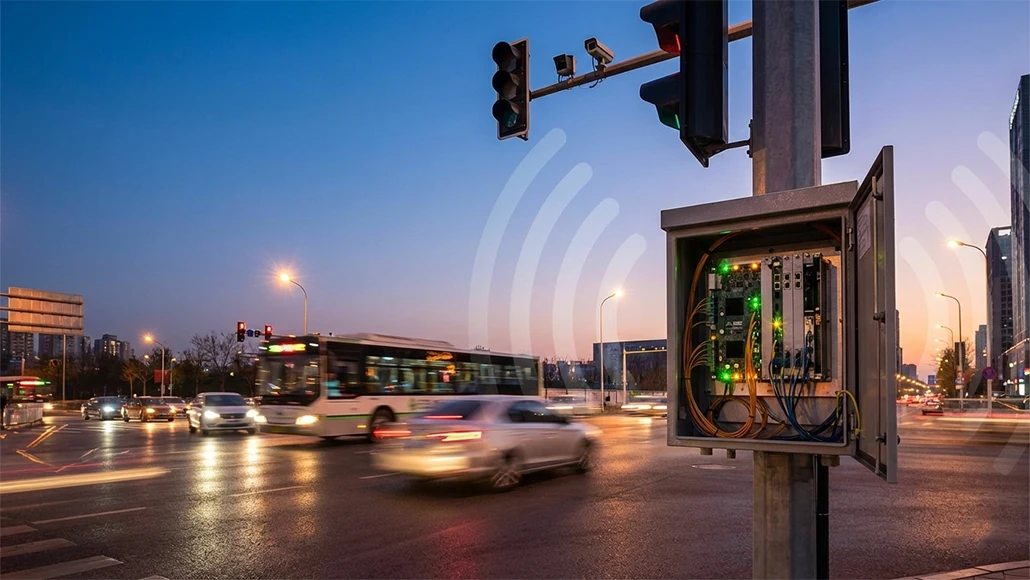
In the world of autonomous and semi-autonomous transport, milliseconds can be the difference between a successful collision avoidance maneuver and a catastrophic accident. When a vehicle encounters an unexpected obstacle, the time it takes to transmit data to a distant cloud server, process that data, and send a command back is simply too long. Edge computing in transport real time systems solves this by performing the heavy lifting of data processing within the vehicle itself or at localized infrastructure nodes, such as smart traffic lights or roadside units. This proximity allows for ultra-low latency response times, ensuring that the vehicle can perceive its environment and act upon it in real-time.
This shift is particularly relevant for the development of Vehicle-to-Everything (V2X) communication. For a truly connected ecosystem to function, vehicles must constantly exchange information about their speed, position, and intentions with one another and with the surrounding infrastructure. If this exchange is managed through a central cloud, the network would quickly become congested, leading to delays that compromise safety. By utilizing edge nodes, the communication remains localized and efficient. Localized “micro-clouds” can manage the traffic within a specific intersection or highway segment, ensuring that only the most relevant, high-level data is eventually passed up to the central system for long-term analytics and reporting.
Optimizing Urban Traffic Flow with Distributed Intelligence
Beyond individual vehicle safety, edge computing in transport real time systems is playing a pivotal role in the management of entire urban ecosystems. Smart cities are increasingly deploying edge-enabled sensors to monitor traffic density, pedestrian movements, and environmental conditions. Unlike traditional systems that rely on pre-programmed cycles, edge-powered traffic management can adapt dynamically to changing conditions. For instance, if an edge node detects a sudden influx of emergency vehicles, it can instantly adjust the timing of traffic signals across multiple blocks to create a “green corridor,” all without needing a command from a central command center.
This localized intelligence also extends to the management of public transit. Buses and trams equipped with edge devices can analyze their own performance and passenger loads in real-time. If a vehicle is running behind schedule due to unexpected congestion, the edge system can communicate directly with the smart city infrastructure to request priority at upcoming signals. This level of granular control reduces fuel consumption, minimizes idle time, and improves the overall reliability of public transport, making it a more attractive alternative to private car ownership. The ability to process data locally also means that these systems can continue to function even if the broader internet connection is temporarily lost, providing a layer of operational redundancy that is essential for public infrastructure.
Predictive Maintenance at the Edge
One of the most valuable applications of edge computing in transport real time systems lies in the realm of predictive maintenance. For rail operators and commercial fleet managers, the health of the asset is paramount. Edge devices installed on locomotives or heavy-duty trucks can monitor engine vibrations, temperature fluctuations, and acoustic signatures in real-time. By applying machine learning algorithms directly at the edge, the system can identify the early warning signs of component failure before it actually happens.
Instead of streaming hours of raw sensor data to the cloud which is both expensive and bandwidth-intensive the edge device only alerts the maintenance team when an anomaly is detected. This “exception-based” reporting ensures that maintenance crews can intervene exactly when needed, preventing costly breakdowns and extending the lifespan of the equipment. In the maritime industry, where ships may spend weeks in areas with limited satellite connectivity, this localized diagnostic capability is indispensable, allowing the crew to perform repairs while at sea using the insights generated by the onboard edge system.
Enhancing Security and Data Privacy
As transport systems become more connected, they also become more vulnerable to cyber threats. Centralized databases are attractive targets for hackers, as a single breach can expose the data of an entire network. Edge computing in transport real time systems offers an inherent security advantage by distributing data across thousands of individual nodes. Because the vast majority of raw data is processed and discarded locally, there is less sensitive information traveling over the network. This “privacy by design” approach is especially important when dealing with video feeds from traffic cameras or GPS data from private vehicles. By anonymizing and processing this information at the edge, transport authorities can gain valuable insights into traffic patterns without ever storing or transmitting personally identifiable information.
Navigating the Challenges of Edge Infrastructure
While the benefits are clear, the transition to an edge-centric model requires a significant investment in physical infrastructure. The deployment of 5G networks is a critical enabler, providing the high-bandwidth, low-latency communication pipe required to link edge nodes together. Furthermore, the hardware itself must be ruggedized to withstand the harsh environments often found in transport ranging from the extreme vibrations of a railway track to the high temperatures of a roadside cabinet. As the cost of high-performance computing hardware continues to fall, the feasibility of deploying these “mini-datacenters” across the transport network becomes increasingly realistic.
One of the primary hurdles is the standardization of communication protocols. In a typical transport environment, devices from dozens of different manufacturers must work together seamlessly. Without universal standards for edge-to-edge and edge-to-cloud communication, the industry risks creating “silos” of data that cannot be shared. This is where network slicing a feature of 5G becomes invaluable. It allows transport authorities to create a dedicated, virtualized segment of the network specifically for mission-critical edge traffic, ensuring that safety-related data is never delayed by lower-priority consumer traffic.
The Imperative of Cyber-Physical Security
As we distribute intelligence across the network, we also increase the “attack surface” for cybercriminals. Each edge node represents a potential entry point into the transport system. To mitigate this, edge computing in transport real time systems must incorporate hardware-based security, such as Trusted Platform Modules (TPM) and encrypted boot sequences. Furthermore, because these nodes are often located in remote or public areas, physical security is just as important as digital security. Manufacturers are developing tamper-evident enclosures and remote “kill switches” that can wipe a node’s data if unauthorized physical access is detected. These layers of protection are essential for maintaining public trust in the smart transport systems that will soon govern our daily commutes.
The Infrastructure Requirements for an Edge-Enabled Future
While the benefits are clear, the transition to an edge-centric model requires a significant investment in physical infrastructure. The deployment of 5G networks is a critical enabler, providing the high-bandwidth, low-latency communication pipe required to link edge nodes together. Furthermore, the hardware itself must be ruggedized to withstand the harsh environments often found in transport ranging from the extreme vibrations of a railway track to the high temperatures of a roadside cabinet. As the cost of high-performance computing hardware continues to fall, the feasibility of deploying these “mini-datacenters” across the transport network becomes increasingly realistic.
The software side of the equation is equally important. To manage a distributed network of edge devices, transport operators need sophisticated orchestration platforms that can deploy updates, monitor health, and reallocate processing power as needed. This requires a new set of skills for transport engineers, who must now be as proficient in data science and network architecture as they are in mechanical engineering. The convergence of these disciplines is what will ultimately define the success of the smart transport revolution.
Key Takeaways
The integration of edge computing in transport real time systems is a necessary evolution in the face of the modern data explosion. By moving processing power to the periphery of the network, the industry is achieving the ultra-low latency required for autonomous safety, the scalability needed for smart city traffic management, and the efficiency required for predictive maintenance. This decentralized approach not only improves the immediate performance of transport assets but also builds a more resilient and secure foundation for the future of global mobility.
As we look toward the next decade, the role of the edge will only grow in significance. It serves as the vital link that allows disparate systems vehicles, infrastructure, and passengers to communicate in a unified, intelligent harmony. By embracing this technology, transport operators are not just upgrading their hardware; they are fundamentally enhancing the safety, sustainability, and reliability of the networks that keep the world moving.
