





YIWU, China—The wholesale markets for cheap knickknacks in this trading hub a few hours from Shanghai have prospered by sending their goods across the oceans.
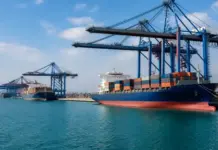
Arab and African traders mix with buyers from Europe to pick out gaudy plastic flowers, hairpins and bracelets, Day-Glo sticks and flashlights that are trucked to nearby ports for loading onto container ships.
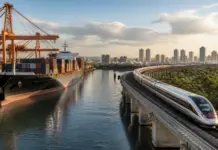
In November, however, some of the city’s wares went the other way: A freight train rumbled out of Yiwu bound for Madrid.
It inaugurated the world’s longest rail link, an 8,000-mile journey along the ancient Silk Road through Central Asia. It is part of one of the most ambitious transport and infrastructure projects in history as China under President Xi Jinping chases new continental dreams.
Mr. Xi is driven by insecurity. China may be projecting an image of swaggering self-confidence by grabbing reefs and constructing artificial islands in the South China Sea, but the reality is very different. Beijing is looking westward precisely because the view out toward the Pacific is filled with peril.
China feels strangled by a chain of American military alliances that extends from South Korea and Japan through the Philippines and all the way to Australia. And even though China is rapidly building up its military strength, the U.S. Navy still rules the waves. In any conflict, American warships and submarines could choke China’s economy with a naval blockade.
Beijing also sees risk in a new regional trading order taking shape. U.S. President Barack Obama is putting fresh energy into finalizing the Trans-Pacific Partnership, a giant free-trade agreement that would link 12 countries and cover 40% of global GDP, but exclude China.
The arrangement is the economic centerpiece of Mr. Obama’s “pivot†to Asia, which Beijing interprets as a Cold War-style plot to block a rising global challenger.