


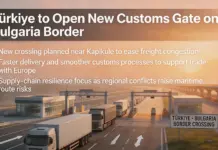
















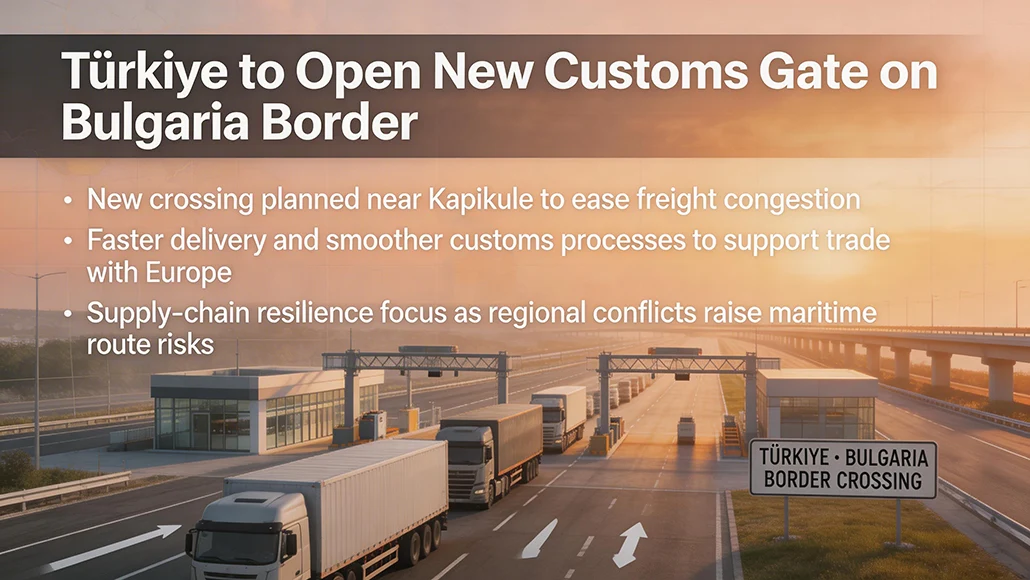
Türkiye is preparing to introduce a new Bulgaria customs checkpoint along its border with Bulgaria, positioned north of the Kapikule crossing, in a move designed to reduce freight congestion and strengthen trade links with Europe. The plan was outlined by Omer Bolat, Türkiye’s Trade Minister, during a meeting with representatives from the transportation sector on 13th March 2026. According to Bolat, the Bulgarian parliament has already forwarded a draft agreement related to establishing the additional crossing point between the two countries. The proposed new Bulgaria customs checkpoint is expected to enhance transport efficiency and open additional routes for commercial shipments moving between Türkiye and European markets. Bolat emphasized the importance of the initiative for cross-border logistics, stating, “This will be very important for our transport to Europe and will allow new commercial shipments.”
The planned crossing aims to relieve heavy traffic at several major land gateways that currently handle the bulk of road freight between Türkiye and Europe. In particular, authorities expect the new Bulgaria customs checkpoint to ease pressure on the Kapikule, Hamzabeyli, and Ipsala border crossings. These three crossings collectively processed 4.86 million vehicles in 2025, accounting for around 47.2% of the 10.31 million total border crossings recorded that year, according to data released by the Trade Ministry. Officials say the initiative forms part of a broader strategy focused on improving logistics infrastructure and border procedures in order to accelerate cargo movement and strengthen trade connectivity. Bolat highlighted that streamlining customs procedures, improving delivery times, expanding logistics capabilities, and upgrading infrastructure remain among the government’s central priorities.
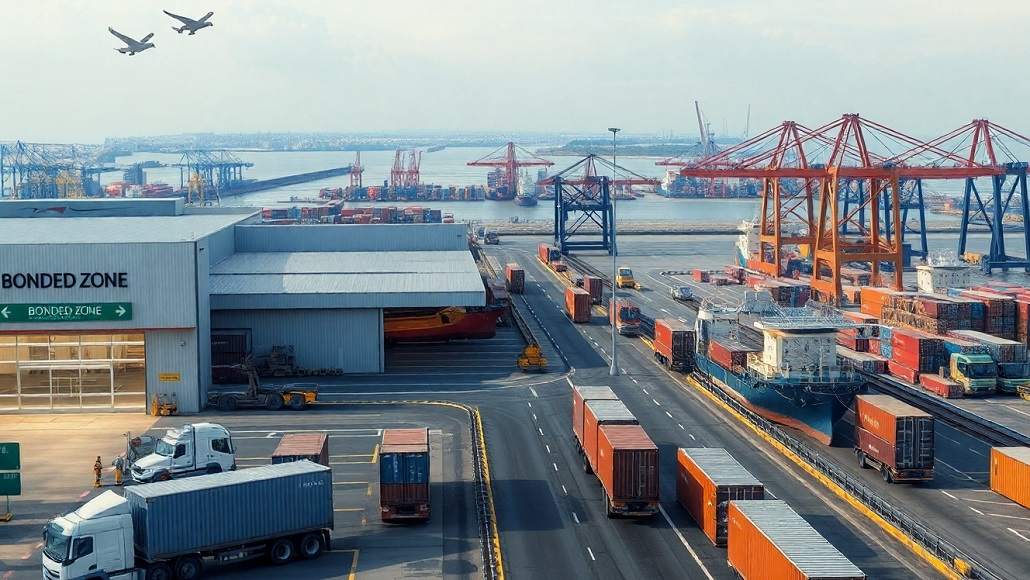
Beyond expanding border capacity, the government is also pursuing reforms aimed at modernising the country’s logistics ecosystem. Bolat noted that efforts are underway to reduce emissions linked to transportation activities while also advancing digitalisation across customs operations. Introducing modern customs practices and strengthening digital tools are part of the broader plan to optimise logistics performance. In addition, the minister highlighted the scale of Türkiye’s bonded storage network supporting international trade. The country currently operates 1,124 bonded warehouses, including 747 type A and B facilities along with 377 type C and E facilities, which provide secure storage for goods involved in cross-border commerce. The new Bulgaria customs checkpoint is expected to complement this infrastructure by improving the efficiency of freight flows at the border.
Bolat also addressed risks facing global trade routes, noting that the ongoing war conditions in the Gulf region have created uncertainty for maritime shipping, particularly around the Strait of Hormuz. He warned that rising energy and petrochemical prices linked to these tensions could place additional inflationary pressure on economies and disrupt international trade channels. Officials say projects such as the new Bulgaria customs checkpoint are part of Türkiye’s broader efforts to safeguard supply chains and maintain stable trade connections with Europe despite evolving global challenges.
