













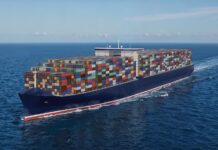






Global shipping giant Maersk has reported that it has completed a first, successful trial of mixing ethanol with methanol so as to create an alternative fuel for its vessels. It plans to proceed with growing levels of ethanol along with 100% ethanol tests as it delves deep into steps in order to enlarge the availability as well as the sourcing pool for alternative fuels for its dual-fuel vessels.
One of the barriers, or you may call it that, which Maersk as well as other shipowners have pointed towards, is the availability of methanol along with other alternative fuels and the capacity of suppliers to go ahead and expand production so as to meet the potential requirements of the shipping industry. Maersk plans to run trials that could very well develop alternatives that can continue with the supply to the company as it moves forward with its decarbonization endeavors.
Mixing ethanol with methanol is indeed a possibility since they are both alcohols, and there has been a longstanding history that dates back to the 1970s when ethanol was first used in order to extend the gasoline supplies. Many countries use a 10% ethanol mix for cars, while the U.S. as well as Brazil supply around 80% of the ethanol.
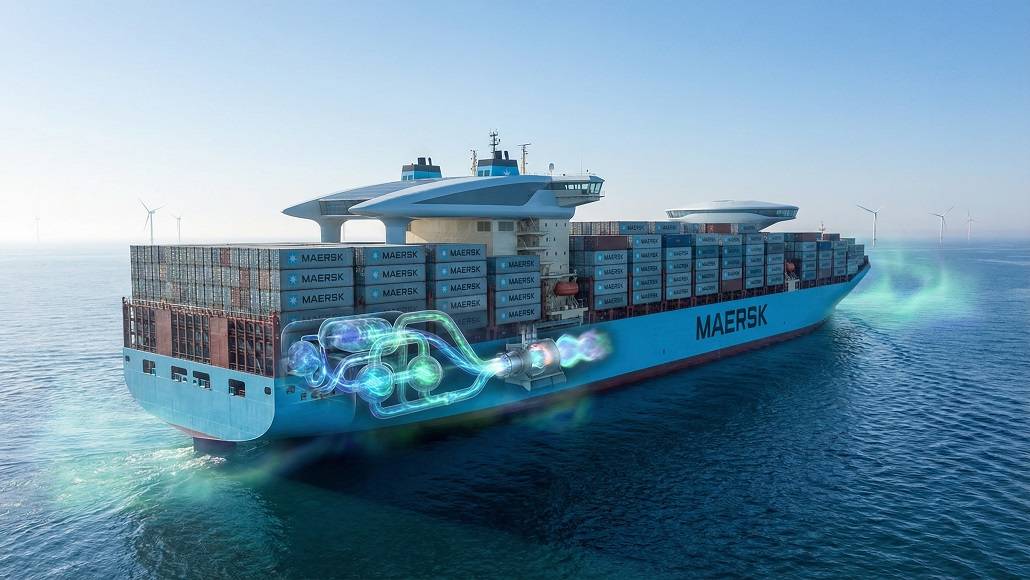
Apparently, Maersk went on to launch its dual-fuel feeder vessel named Laura Maersk in 2023 for operations across the Baltic region. It has offered a test bed for methanol, which, as per the company, has been used for three years without any challenges.
It is worth noting that the first trial with E10, which is a 10% ethanol–90% methanol blend, started in October and supplied Laura Maersk with fuel for almost a month to a month and a half. They have gone on to report that performance was not compromised and also confirmed that ethanol can be very safely and effectively integrated within the fuel mix. Among the challenges they were monitoring pointed toward ignition quality, in the way the fuel was burning, corrosion, and the effect on emissions. They traced for changes within the NOx emissions.
Based upon the confirmation in the first test, Maersk now has plans to test E50, which is a 50-50 blend of ethanol as well as methanol. Apart from this, beyond the E50 trials, the company also plans to conduct a trial by using 100% ethanol.
Maersk at present has 19 dual-fuel vessels that are in operation, and there are more scheduled for delivery. It will also in 2027 start using time-chartered dual-fuel LNG vessels. The company goes on to underscore that it is broadening its low-emission fuel alternatives, including the likes of bio- and e-methanol and biodiesel, as well as the liquified biomethane of LNG vessels.
