

















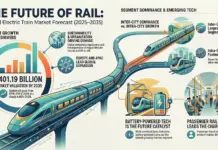
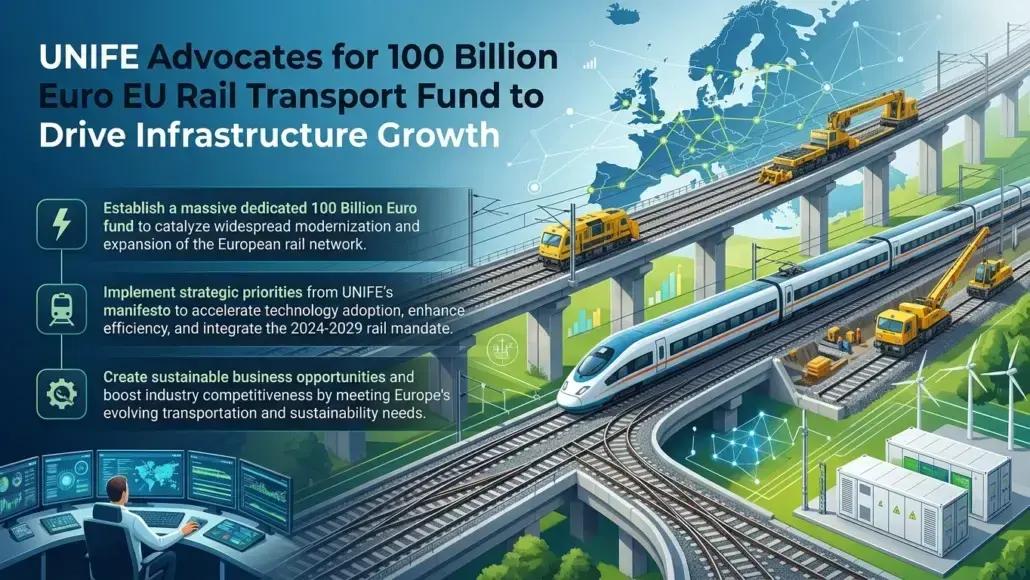
The European Rail Supply Industry Association, UNIFE, has called on Ireland to use its future presidency of the Council of the EU to advocate for a significantly larger allocation to the Connecting Europe Facility in the European Union’s 2028–2034 budget framework. The organisation is seeking an EUR 100 billion transport fund through an expanded Connecting Europe Facility, arguing that increased investment is necessary to support heavy rail, light rail and wider transport infrastructure projects across Europe.
Under the European Commission’s current proposal, the Connecting Europe Facility would receive €51.5 billion for the 2028–2034 period, with only a portion of that funding earmarked for rail-related developments. UNIFE believes this level of funding falls short of what is required and has urged the Irish government to promote an increase to at least €100 billion during negotiations on the next EU budget.
Ireland’s Rail Ambitions Highlighted
UNIFE pointed to Ireland’s 2025 Rail Project Prioritisation Strategy as evidence of the country’s growing infrastructure ambitions. The strategy includes planned investment in signalling systems, track upgrades, level crossings and rolling stock, with the objective of improving service frequency and extending access to the national rail network. The association cited estimates showing that successful delivery of the programme could place an additional 700,000 people within five kilometres of a railway station, representing an increase of approximately 25%.
Commenting on the need for stronger financial support, Enno Wiebe, Director General of UNIFE, said, “It is encouraging to see Metrolink underway, but it is just the start. Ireland needs significantly more EU funding to assist with its rail plans.”
UNIFE further stressed that congestion challenges in Dublin, Cork and Galway demonstrate the need for rail investment beyond Dublin’s Metrolink project. In that context, the association reiterated its support for an EUR 100 billion transport fund, arguing that a larger Connecting Europe Facility budget would unlock additional resources for rail development projects across the country.
“With an investment of at least €100 billion in the next EU budget for the Connecting Europe Facility, more funds could be available to support a range of rail and tram projects across Ireland,” Wiebe added.
Broader Rail Funding and Regulatory Reform Agenda
Beyond infrastructure funding, UNIFE noted that Ireland’s forthcoming Council presidency could influence discussions on public procurement reform and railway regulation at the European level. The association said the country would be well positioned to help advance proposed changes to EU public procurement rules while also contributing to the revision of the regulation governing the European Union Agency for Railways.
