

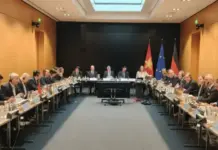


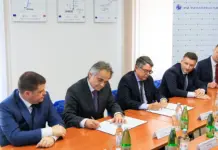













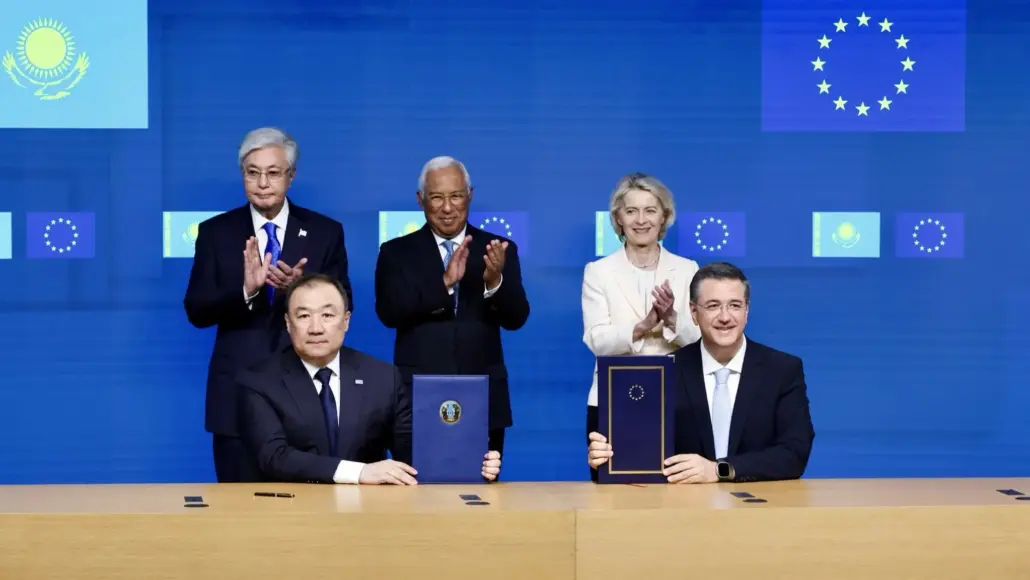
The European Union and Kazakhstan have formalized a Horizontal Aviation Agreement, a move intended to expand air connectivity and create new commercial avenues for airlines and passengers. The signing occurred in Brussels, involving European Commissioner for Sustainable Transport and Tourism, Apostolos Tzitzikostas, and Kazakhstan’s Minister of Transport, Nurlan Sauranbayev. The ceremony was attended by European Commission President Ursula von der Leyen, European Council President António Costa, and Kazakh President Kassym-Jomart Tokayev.
Enhancing market access and competition
This EU-Kazakhstan aviation agreement allows eligible airlines from the European Union to operate flights to Kazakhstan from any of the 17 Member States currently holding bilateral air services agreements with the country. By extending market access, the aviation agreement is expected to foster competition and provide greater legal certainty for operators.
The 17 Member States included in this arrangement are Austria, Belgium, Bulgaria, Cyprus, Czechia, Denmark, Estonia, Finland, France, Germany, Hungary, Latvia, Lithuania, Luxembourg, the Netherlands, Poland, and Sweden.
“This milestone reflects our shared commitment to strengthening cooperation, enhancing connectivity between our regions, and bringing our people and economies closer together,” Commissioner Tzitzikostas said following the signing.
A long-term diplomatic achievement
The EU-Kazakhstan aviation agreement represents a significant breakthrough, concluding negotiations that spanned more than two decades. Kazakhstan’s Ambassador to the European Union, Roman Vassilenko, characterized the deal as a vital step in improving air connectivity.
Integration into a broader strategic partnership
The EU-Kazakhstan aviation agreement was part of a comprehensive package of initiatives signed during the presidential visit. This includes a framework loan of up to €150 million from the European Investment Bank to enhance road links along the Trans-Caspian transport corridor. Additionally, the two parties established cooperation for a chemical analytical laboratory in Astana focused on critical raw materials.
Economic ties and future cooperation
Furthering the strategic partnership, negotiations were concluded on a Visa Facilitation Agreement and a Readmission Agreement to simplify travel for Kazakh citizens. During a concurrent business roundtable, Kazakhstan entered an agreement to purchase up to 50 planes from Airbus. The European Union remains the primary trade and investment partner for Kazakhstan, representing roughly one-third of its external trade. These developments follow the 2025 EU-Central Asia Summit, which elevated the bilateral relationship to a strategic partnership.
The aviation agreement will now undergo internal ratification procedures for both parties before it officially enters into force.
