







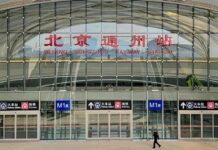













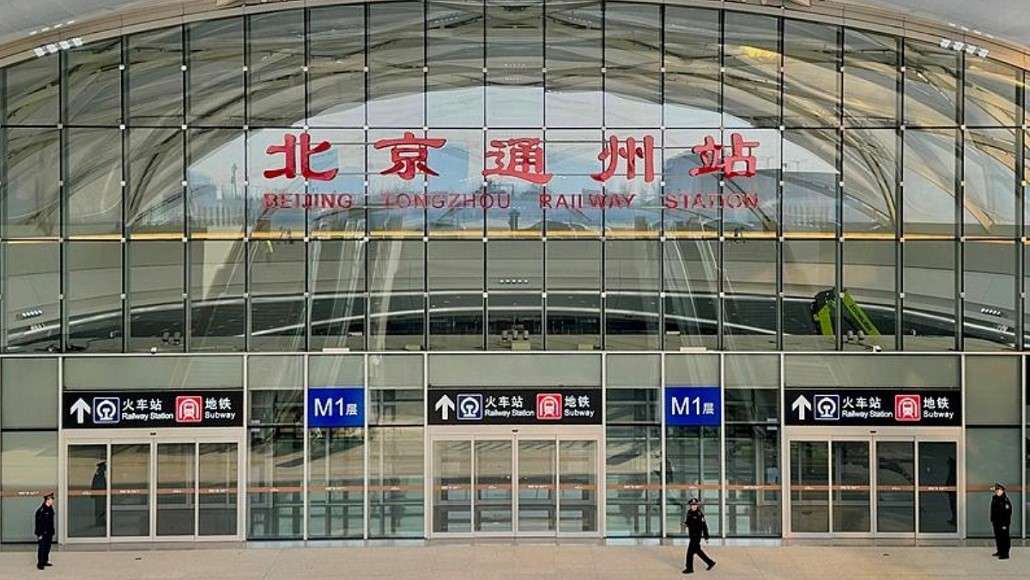
In a recent update, the Beijing Tongzhou Railway Station, which is a major node in the Beijing-Tianjin-Hebei rail network, went on to officially open to traffic on December 30, 2025. Located in the southeastern transport hub of the capital, this new facility is going to integrate high-speed, intercity as well as commuter rail services, as per reports.
It is worth noting that departing from the new station, travelers can go ahead and reach Baodi in Tianjin in only 26 minutes, with Beichen just 56 minutes away and Qinhuangdao in Hebei Province very much accessible in under 90 minutes through the intercity train. The new line indeed expands the cross-provincial travel alternatives and also brings cities in the Beijing-Tianjin-Hebei region much closer, hence filling that critical gap in terms of regional connectivity and also boosting the coordinated development when it comes to the region, as per the statement.
The Beijing Tongzhou Station is crafted as a major hub when it comes to multi-network integration, having plans to link the metro lines, intercity as well as suburban railways, and also bus services, while at the same time, reserving for the future cruise along with airport check-in facilities, remarked one of the deputy chief engineers of the China Railway Design Co., Qin Baolai, reported China Media Group – CMG.
Interestingly, the opening of Beijing Tongzhou Station goes on to mark the launch of a new eight-station and two-airport transport hub layout when it comes to the Chinese capital. A 1- to 1.5-hour travel circle that connects major cities within the Beijing-Tianjin-Hebei region has already taken shape and is complemented by a one-hour commuter belt around Beijing, thereby infusing fresh momentum in the development of the area, says CMG.
Covering almost 216,000 square kilometers and also home to over 100 million people, the Beijing-Tianjin-Hebei region goes on to get served by a rail network that is built around the four main corridors and also eight radial lines, which, by the way, is a layout that is well suited to its scale as well as mobility requirements, opines CMG.
From a market viewpoint, the station goes on to shorten the economic distance between the cities, advances the regional market integration, and also expands the market accessibility of the firm. Greater connectivity is most likely going to attract more external investment, infusing some fresh momentum within regional growth and also strengthening the region as a major economic engine.
As the development focus of Beijing shifts eastward, Tongzhou has popped up as a major hub when it comes to government bodies and businesses as well as talent, Yongzu added. The opening of the station sharply goes on to decrease the travel times, easing the cross-regional commuting constraints and also supporting much more efficient flows of people along with resources.
