

















The global logistics landscape is currently standing at the precipice of its most significant transformation since the invention of the internal combustion engine. The shift toward electrification is no longer a distant theoretical goal discussed in climate summits; it has become an immediate operational imperative for businesses worldwide. Embarking on an electric fleet transition for commercial vehicles requires a nuanced understanding of how mechanical reliability, energy infrastructure, and financial modeling intersect in a rapidly evolving market. This transition is not merely about swapping a diesel engine for a battery pack; it is about redesigning the very DNA of how goods move across cities and continents. As regulatory pressures mount and urban centers implement increasingly stringent clean air zones, the motivation for change has shifted from corporate social responsibility to core business survival. However, the path to a fully electrified operation is paved with complexities that demand a high level of strategic foresight. Professional fleet managers are finding that the traditional metrics of vehicle ownership such as simple fuel costs and mechanical maintenance are being replaced by a broader set of variables including grid capacity, peak demand charges, and battery degradation curves. Navigating these variables requires a departure from the “fill and go” mentality that has dominated the industry for over a century.
The historical reliance on fossil fuels created a sense of operational simplicity that is now being challenged. In the past, fueling was a secondary concern, often outsourced to a vast network of third-party service stations. In the new era of electric commercial vehicles, energy procurement becomes a primary logistics function. This means that a fleet manager must now act as a part-time energy trader and a part-time infrastructure developer. The complexity of this shift cannot be overstated, as it involves coordinating with stakeholders who have traditionally operated outside the transportation sphere, such as electrical engineers, utility providers, and local government planning departments. This multidisciplinary approach is essential because the success of the transition is as much about the “fuel” as it is about the “vehicle.”
Strategic Foundations of Fleet Electrification
The initial phase of any successful migration involves a deep-dive analysis of current operational patterns. Before a single electric vehicle is ordered, one must understand the specific duty cycles of the existing fleet. Not all routes are created equal, and the suitability of electric commercial vehicles often depends on the intersection of payload requirements, topography, and ambient temperatures. For instance, a last-mile delivery van operating in a temperate urban environment faces vastly different energy demands than an electric HGV tasked with regional haulage across mountainous terrain. Identifying the “low-hanging fruit” those routes where the range and charging windows align perfectly with current technology allows for a phased approach that minimizes risk while maximizing early wins. This initial audit phase should also include a rigorous assessment of current downtime patterns, as these intervals now represent potential “charging windows” that must be optimized to ensure maximum fleet availability.
Furthermore, the strategic foundation must include a long-term vision for scalability. Many companies make the mistake of planning for their first five electric vehicles without considering what happens when they have fifty. A pilot project that works in isolation may fail when integrated into a larger system if the underlying infrastructure was not designed for growth. This means that when a company installs its first chargers, it should also be laying the conduit and upgrading the switchgear for the eventual full electrification of the site. This “build once, scale often” philosophy significantly reduces the long-term capital expenditure and prevents the costly rework that often plagues poorly planned transitions.
Infrastructure Development and Grid Integration
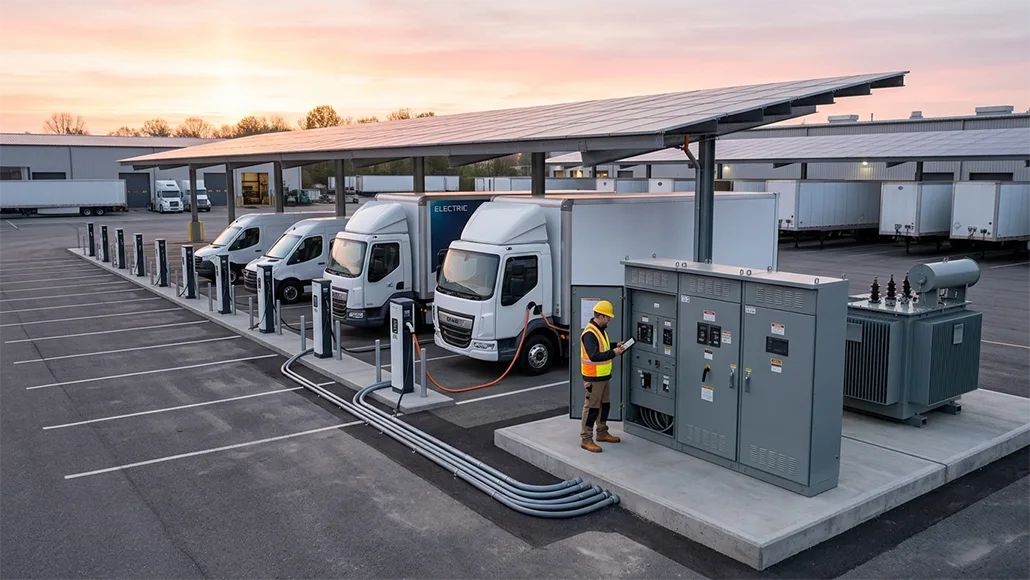
One of the most significant hurdles in the electric fleet transition for commercial vehicles is the development of robust charging infrastructure. Relying solely on public charging networks is rarely a viable long-term strategy for commercial operations due to cost, availability, and scheduling unpredictability. Instead, depot-based charging becomes the cornerstone of the operation. This necessitates a close partnership with local utility providers to ensure that the site has sufficient power capacity to support multiple high-output chargers simultaneously. Often, this requires upgrades to transformers and switchgear that can take months, if not years, to commission. These infrastructure projects are frequently the primary bottleneck in the transition, making it essential to engage with utility companies at the very beginning of the planning process.
To mitigate the costs associated with high energy demand, smart charging systems have become indispensable. These platforms allow fleet managers to schedule charging sessions during off-peak hours when electricity prices are lower and the strain on the grid is reduced. Furthermore, the integration of on-site renewable energy sources, such as solar arrays and battery energy storage systems, can provide an additional layer of resilience and cost control. By decoupling the fleet’s energy needs from the volatile fluctuations of the wholesale electricity market, businesses can achieve a level of price stability that was never possible with fossil fuels. In many cases, these on-site energy systems can even become a source of revenue, as the fleet’s batteries can be used to provide frequency response services back to the grid during periods of high demand.
Technical Nuances of Charging Hardware and Software
Choosing the right charging hardware is a decision that involves balancing speed, cost, and longevity. While ultra-rapid DC chargers are necessary for quick turnarounds, they can be significantly more expensive to install and may contribute to faster battery degradation if used exclusively. A balanced approach often involves a mix of overnight AC charging for vehicles that remain at the depot for eight hours or more, and selective DC fast charging for vehicles that need a mid-day “top-up.” The software layer that manages these assets is equally critical. A high-quality charging management system (CMS) provides real-time visibility into the state of charge for every vehicle, allowing dispatchers to make informed decisions about route assignments. This integration between the “fueling” system and the “dispatch” system is a hallmark of a mature electrified operation.
Operational Realities of EV Trucks Adoption
The introduction of EV trucks into a commercial fleet brings about a fundamental change in the daily lives of drivers and dispatchers. Unlike diesel vehicles, which can be refueled in minutes, electric vehicles require a more disciplined approach to energy management. Drivers must be trained in regenerative braking techniques to maximize range, and dispatchers must account for “state of charge” when assigning tasks. This cultural shift is often underestimated but is critical to the long-term success of the transition. A driver who understands the nuances of electric propulsion can significantly extend the vehicle’s range and reduce wear on components like braking systems. This human element is the “soft” infrastructure of the fleet, and it requires as much investment as the hardware itself.
The transition also offers an opportunity to rethink driver recruitment and retention. Electric commercial vehicles are generally quieter, smoother, and have less vibration than diesel trucks, which significantly reduces driver fatigue and improves the overall working environment. In a market where skilled drivers are in short supply, offering a fleet of modern, high-tech, and comfortable electric vehicles can be a powerful tool for attracting top talent. However, this transition must be accompanied by comprehensive training programs that demystify the technology and address any concerns drivers may have about range anxiety or safety. When drivers feel empowered and knowledgeable, they become the best advocates for the new technology.
Maintenance and Total Cost of Ownership
From a maintenance perspective, electric commercial vehicles offer a compelling proposition. With significantly fewer moving parts than their internal combustion counterparts no complex transmissions, no exhaust after-treatment systems, and no oil changes the mechanical reliability of these vehicles is inherently higher. This leads to a reduction in unplanned downtime, which is the bane of any logistics operation. However, the maintenance profile does not disappear; it simply changes. Technicians must be upskilled to handle high-voltage systems, and there is a renewed focus on thermal management systems and tire wear, as the increased weight of battery packs can put additional stress on certain components. The predictability of electric motor maintenance allows for more precise financial forecasting and reduces the volatility often associated with diesel engine repairs.
When calculating the total cost of ownership, the higher upfront purchase price of electric vehicles is often the primary concern. However, when viewed through a five-to-seven-year lens, the savings in fuel and maintenance often offset the initial capital expenditure. Furthermore, various government incentives, tax credits, and grants are available to bridge the gap. Forward-thinking companies are also exploring “As-a-Service” models, where vehicles and infrastructure are bundled into a monthly operating expense, further smoothing the financial transition and de-risking the technology curve. These models shift the risk of technology obsolescence away from the fleet operator and onto the service provider, which can be an attractive option for companies that are hesitant to commit to a specific battery chemistry or charging standard.
Financial Modeling and Risk Management
A robust financial model for an electric fleet must account for the residual value of the vehicles, which is currently a subject of much debate in the industry. As battery technology improves, older vehicles may see their values decline more rapidly than traditional diesel trucks. To mitigate this risk, many companies are looking at secondary life applications for batteries, such as stationary energy storage for buildings. This “circular economy” approach ensures that the battery retains value even after it is no longer suitable for the demanding duty cycles of a commercial vehicle. Additionally, risk management must include a plan for energy price volatility. While electricity is generally cheaper than diesel, the introduction of demand-based pricing and time-of-use tariffs means that the timing of energy consumption is now just as important as the amount consumed.
Navigating Zero Emission Logistics and the Future
The move toward zero emission logistics is part of a larger trend toward transparency in the supply chain. Customers and investors are increasingly demanding data on the carbon footprint of every product. By electrifying the commercial fleet, businesses can provide tangible evidence of their commitment to sustainability. This not only helps in meeting ESG (Environmental, Social, and Governance) targets but also serves as a competitive advantage in securing contracts with large multinational corporations that have their own ambitious net-zero goals. The ability to offer “green lanes” for high-value customers is becoming a key differentiator in the bidding process for logistics contracts.
The technology is advancing at a breathtaking pace. We are seeing the emergence of mega-watt charging systems that can add hundreds of miles of range in the time it takes for a driver to take a mandatory rest break. Battery chemistries are becoming more energy-dense and less reliant on rare earth minerals. As these advancements continue to mature, the barriers to the electric fleet transition for commercial vehicles will continue to fall, making electrification the standard rather than the exception. The future of logistics is not just about moving boxes; it is about moving them with the least possible impact on the planet, and the electric commercial vehicle is the primary vehicle for that mission.
Furthermore, the integration of autonomous features into electric platforms is creating a synergy that will define the next decade. Electric vehicles are inherently easier for computer systems to control, and the absence of complex mechanical linkages simplifies the integration of sensors and actuators. As we move toward more automated logistics hubs, the electric commercial vehicle will become the centerpiece of a highly efficient, silent, and clean transportation network that operates around the clock. The transition we are seeing today is the first chapter in a much larger story of human ingenuity and environmental stewardship.
Key Takeaways
Strategic Planning and Grid Readiness
Successful fleet electrification is heavily dependent on early engagement with utility providers and a thorough audit of site power capacity. Developing a depot-based charging infrastructure requires significant lead times for hardware installation and grid upgrades, making it essential to treat energy procurement as a primary logistics function rather than a secondary utility concern. A “build once, scale often” approach is necessary to ensure that initial pilots can transition into full-scale operations without costly rework or infrastructure bottlenecks.
Operational Adaptation and Driver Upskilling
The transition necessitates a shift in organizational culture, particularly regarding energy management and driving habits. Educating drivers on the benefits of regenerative braking and training maintenance staff on high-voltage safety are crucial steps. This human element ensures that the technical advantages of EV trucks are fully realized through optimized range and reduced component wear. Furthermore, the improved working environment of electric vehicles can serve as a key differentiator in driver recruitment and retention strategies in a competitive labor market.
