












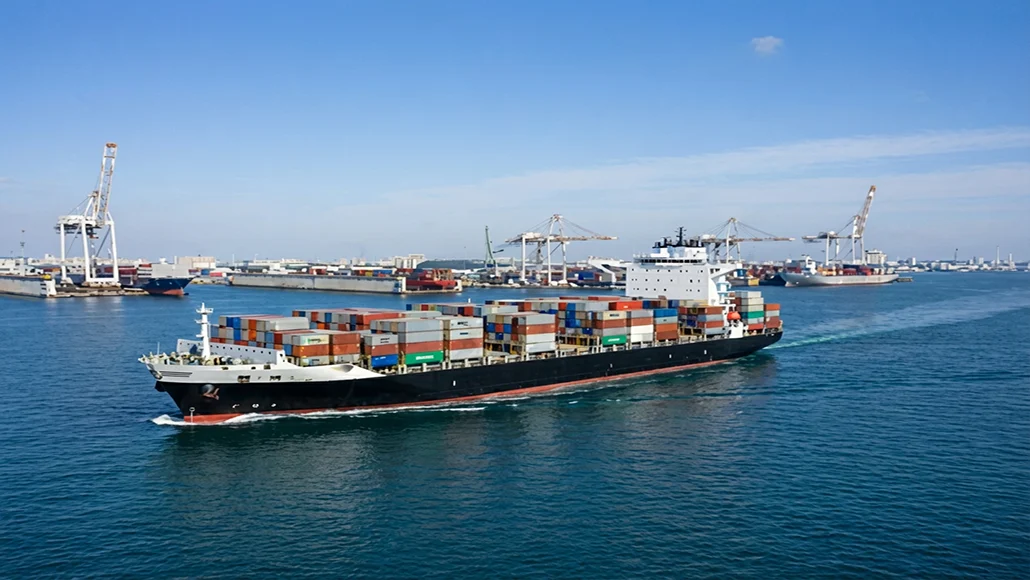
Germany-based container carrier Hapag-Lloyd expands fleet capacity with a commitment of more than $500m to its low-emissions program, placing an order for eight new container vessels at Chinese shipyard CIMC Raffles. The contract covers eight 4,500-TEU vessels scheduled for delivery across 2028 and 2029 and represents the company’s first newbuilding program centered on dual-fuel methanol container ships. The vessels will be equipped with dual-fuel methanol engines designed to deliver up to 30% higher efficiency compared with older tonnage and, when operated on methanol propulsion, to reduce carbon dioxide equivalent emissions by as much as 350,000 metric tons annually. The investment forms part of a broader fleet renewal effort focused on improving operational efficiency and lowering the environmental footprint of Hapag-Lloyd’s transport operations.
The newly ordered dual-fuel methanol container ships will add to an expanding portfolio of alternative-fuel assets within the Hapag-Lloyd fleet, as Hapag-Lloyd expands fleet capabilities across multiple propulsion pathways. The carrier currently operates or has planned a total of 37 dual-fuel liquefied natural gas vessels, all of which are capable of running on biomethane. Alongside the newbuild order, Hapag-Lloyd has already entered into an agreement with Seaspan Corporation to convert five 10,100-TEU container ships to dual-fuel methanol propulsion, with conversions scheduled for 2026 and 2027. Fuel supply arrangements have also been addressed, following an agreement with Chinese energy producer Goldwind for the delivery of 250,000 metric tons of green methanol per year. Together, these measures are intended to support the operational deployment of dual-fuel methanol container ships at scale.
Beyond the newly owned buildings, Hapag-Lloyd has decided to charter a further 14 vessels on a long-term basis, spanning size classes of 1,800 TEU, 3,500 TEU, and 4,500 TEU, with deliveries planned between 2027 and 2029. In total, the carrier is investing in 22 ships with capacities below 5,000 TEU. “Continuously modernizing our fleet is firmly anchored in our Strategy 2030. The new ships will help replace older tonnage, further decarbonize the Hapag-Lloyd fleet, and reduce our dependence on the charter market. What’s more, operating these state-of-the-art ships will be much more cost-efficient,” said Rolf Habben Jansen, chief executive officer of Hapag-Lloyd AG. With 305 container ships and a total transport capacity of 2.5 million TEU, the company aims to cut absolute greenhouse gas emissions from fleet operations by around one-third by 2030 compared with 2022 levels, with net-zero fleet operations targeted for 2045.
